
When Is the Best Time to Visit Japan?
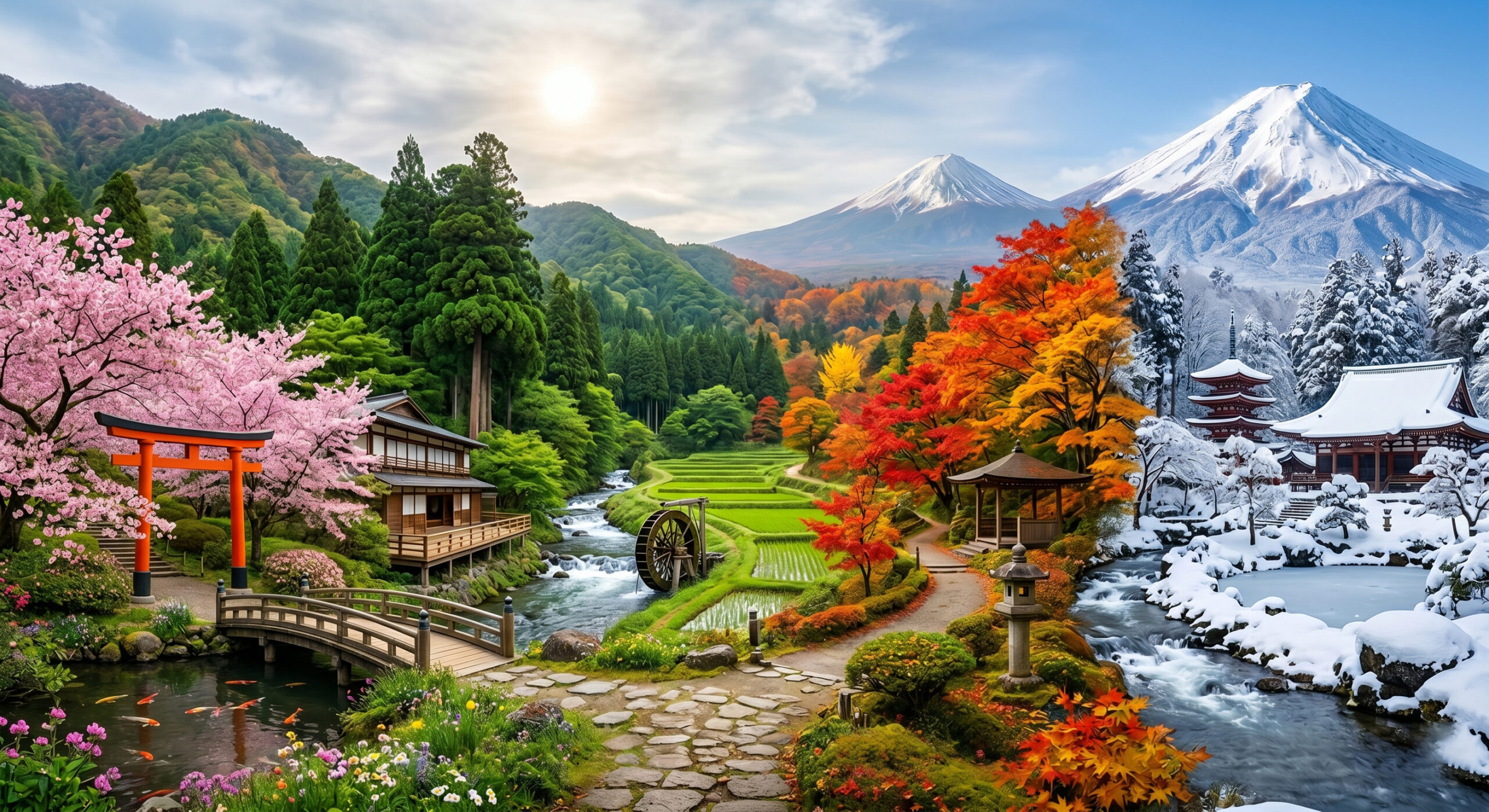
Japan is a destination worth exploring throughout all four seasons with its ancient cultural heritage and captivating natural beauty. However, the “best” time to visit this unique country may vary depending on your expectations, interests, and climate preferences. In this guide, we examine the seasonal characteristics and the unique experiences each period offers to help you plan your trip to Japan.
- Spring (March – May): Rebirth and the Magic of Sakura
Spring is the most preferred and visually spectacular season in Japan. As nature awakens, the country is covered in its iconic pink and white blanket, offering visitors a fairytale-like atmosphere.
- Sakura (Cherry Blossom) Season: This short but impressive period, lasting from late March to early April, transforms cities like Tokyo, Kyoto, and Osaka into living paintings. Local festivals (Hanami) combine this visual spectacle with a cultural ritual.
- Climate Conditions: Temperatures ranging between 10°C and 20°C provide the most comfortable environment for travelers who want to explore on foot.
- Highlighted Activities: Botanical garden tours, outdoor festivals, and riverside walks.
- Summer (June – August): Energy and Festival Spirit
Summer is the most lively and dynamic season in Japan. Despite the increase in temperature and humidity, the intensity of cultural events makes this period attractive.
- Traditional Festivals: Summer hosts some of Japan’s most established festivals (Matsuri). Kyoto’s Gion Matsuri and Tokyo’s magnificent fireworks event, Sumida Gawa Hanabi Taikai, are among the must-experience events.
- Climate Conditions: Temperatures range between 25°C and 35°C, and high humidity can make it feel even hotter. June is also the rainy season (Tsuyu).
- Highlighted Activities: Traveling to cooler northern regions (Hokkaido), beach activities, and vibrant night festivals.
- Autumn (September – November): The Dance of Colors (Koyo)
Autumn, the strongest alternative to spring, is a peaceful season when nature turns into shades of red and gold.
- Koyo Season: The changing colors of maple leaves create breathtaking scenery, especially in Kyoto, Nara, and Hakone. It is the most productive period for photography enthusiasts and nature lovers.
- Climate Conditions: Cool and low-humidity weather between 15°C and 25°C provides a perfect balance for long walks and city tours.
- Highlighted Activities: Temple visits, nature walks, and special illumination tours in Japanese gardens.
- Winter (December – February): Serenity and Snow Aesthetics
Winter offers a completely different landscape, especially in northern regions and mountainous areas. It provides unique opportunities for ski enthusiasts and those interested in thermal tourism.
- Winter Sports and Onsen Experience: Hokkaido and Nagano are known for having some of the world’s finest powder snow. Relaxing in an open-air hot spring (Onsen) surrounded by snow is one of Japan’s most prestigious winter experiences.
- Climate Conditions: Temperatures generally range between 0°C and 10°C. While heavy snowfall occurs in northern regions, cities like Tokyo are usually clear and sunny.
- Highlighted Activities: Skiing and snowboarding, visiting the Sapporo Snow Festival, and staying in traditional hot spring inns (Ryokan).
The “best” time to visit Japan depends on what you expect from this ancient culture. Spring is ideal for witnessing the awakening of nature and the beauty of sakura; summer for experiencing the excitement of traditional festivals; autumn for enjoying the calmness of changing colors; and winter for winter sports and a peaceful onsen retreat.
Considering these seasonal dynamics while planning your itinerary will help turn your Japan experience into an unforgettable memory.