Get to know the five Japanese levels from N5 to N1, and explore our online group lessons, private lessons and conversation club.
Japanese Language Education and Levels
Japanese consists of five main proficiency levels, starting from the beginner level N5 and progressing up to the advanced level N1. These levels are ranked from lowest to highest proficiency as follows: N5, N4, N3, N2, and N1.
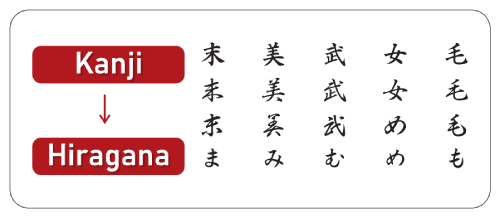
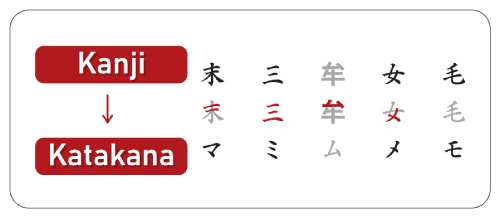
Japanese, spoken by both the local population and immigrant communities in Japan, is composed of three distinct writing systems.
Each of them has its own similarities and differences.
Japanese Writing Systems
Their writing and pronunciation vary. The characters in the Hiragana and Katakana alphabets are sound based, with each symbol representing a syllable. On the other hand, Kanji is meaning based, and each character represents a specific concept.
While Hiragana and Katakana characters are phonetic and represent syllables, Kanji characters carry meaning, with each symbol standing for a distinct idea.
Romaji and the Latin Alphabet
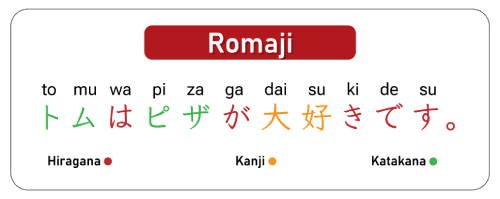
The Romaji alphabet is the Latin alphabet used in Japanese writing. It is mainly used in abbreviations and for transcribing Japanese into the Latin alphabet.
The table below shows the average study time required for each level.
Level
Kanji
Vocabulary
Level Definition
Hours of Study
N5
~100
~800
Beginner Level
150 (Approximate)
N4
~300
~1,500
Elementary Level
300 (Approximate)
N3
~650
~3,750
Intermediate Level
450 (Approximate)
N2
~1000
~6,000
Upper Intermediate Level
600 (Approximate)
N1
~2000
~10,000
Advanced Level
900 (Approximate)
The information provided above has been prepared based on the updated JLPT exam, which was revised in 2010.
Benefits of Online Education
You can join the lessons using your computer, tablet, or smartphone.
As long as you have internet access and the necessary device, you can attend your classes no matter where you are in the world.
You can attend classes from the comfort of your home.
You save a significant amount of time.
During interactive live lessons, you can ask your teacher questions just as if you were in a face to face classroom.
In case of a missed live session or an internet problem, you can make up for it with recorded lesson videos and class notes.
With interactive games, your education becomes more fun and your learning process easier.
Online education offers the same content and materials used in traditional classes, plus unlimited access to resources on the internet.
Online Courses
Our programs are led by experienced instructors who provide guidance throughout the language learning process. All materials and content are carefully designed to meet JLPT (Japanese Language Proficiency Test) standards.
Online Group Lessons
In these small group lessons, students have the opportunity to improve their grammar, vocabulary, and speaking skills in an interactive learning environment.
This personalized type of training enables individuals to achieve their language learning goals quickly and effectively. The course content is tailored to the student’s needs and proficiency level.
Participants can practice speaking and enhance their skills through real life situations. Conversation centered sessions support students in gaining fluency.
As someone who has wanted to learn Japanese for a long time but couldn't commit to long-term in-person classes due to occasionally having to move cities I started looking for online lessons. That’s when I discovered Edusama. During the registration process, I had many questions in my mind, and I want to thank the Edusama team for listening patiently and responding in a clear, respectful, and solution-oriented manner. The lessons are genuinely fun you don’t even realize how fast time flies. Topics are reinforced with examples and games, helping each student reach a solid level of understanding. On top of that, the additional exercises provided ensure you fully grasp the material. And if those aren’t enough, you can always ask your teacher for extra practice. I also find the pricing to be very reasonable. I sincerely thank the entire Edusama team and all the teachers for supporting me at the beginning of this six-month language learning journey.
I was specifically looking for a course that would easily fit into my schedule while working. The fact that it takes place every weekday also brings structure to my life and helps keep the language fresh in my mind through constant exposure. At first, I thought the classroom environment might be overwhelming, but the lessons have been very smooth and productive. I get the chance to hear different perspectives and questions, and we reinforce what we've learned through games we play together. Japanese is a language that’s more advantageous to learn through Turkish, so I’m very satisfied with the teaching methods, materials, assignments, and regular quizzes. After this course, I also plan to continue with Edusama for higher levels and eventually attend one of their partner language schools in Japan.
I had actually wanted to learn Japanese for a few years. At the same time, I was looking for a remote learning option that wouldn’t interfere with my busy work schedule. From my past experiences learning other languages, I realized that unless I dedicated time daily, I couldn’t learn a language effectively and unfortunately, I ended up wasting my valuable time. I’m just finishing my first month in Edusama’s N5 course, but I can already say with confidence that the curriculum and lesson content are designed in a way that encourages daily repetition and helps prevent you from forgetting what you’ve learned. And when you have a great teacher delivering those lessons, learning Japanese becomes absolutely delightful. I’m truly happy to be a student of this institution. To anyone who wants to learn Japanese remotely but has doubts set those worries aside and give the EDUSAMA team a chance. You won’t regret it!
I had been interested in Japanese for a long time, but I struggled to find good learning resources. Then I discovered Edusama. With its team of expert educators and an incredibly professional staff, I realized that Japanese is actually the easiest language I’ve learned so far. Thank you, Edusama.
I discovered Edusama on Instagram. Since it wasn’t a place recommended to me, I had some doubts at first but now I’m really glad I started the lessons. I had previously taken private lessons from a Japanese teacher, but now I realize that learning in a classroom setting with a Turkish Japanese teacher is actually more beneficial for me. I’ve also ordered Edusama’s four book educational set for the N5 level, and I’m eagerly awaiting the books. I highly recommend Edusama to anyone who wants to enjoy learning Japanese. Many thanks to the entire Edusama team!
The language education I had intended to start many times finally turned into action thanks to Edusama. While the process of beginning to learn a language can be challenging on its own, the Edusama team made this journey significantly easier for me. It feels like I just started the lessons yesterday, yet weeks have already passed. Thanks to our interactive classes and our teacher’s dedication and support, the lessons are both beneficial and enjoyable. In addition to learning Japanese, we also exchange a lot of interesting information about Japan itself. Beyond the lessons, the Edusama team is also excellent when it comes to communication. You can ask any questions about the institution and receive prompt answers. Though each of us students may have different goals, we all meet at the same point Edusama. Learning a language has never been this enjoyable. Thank you, Edusama 🙂
When I first encountered Edusama, I never imagined that learning Japanese could be this enjoyable and effective. The programs offered by the institution don’t just focus on grammar they also provide a deep dive into Japanese culture. As a result, learning the language becomes more than just a class; it transforms into a cultural journey. Edusama's teaching staff is highly professional and attentive. Their contribution to my personal development, their individual attention, and their innovative methods that accelerate the learning process have all deepened my interest in Japanese day by day. The educational materials and online platforms are clear and user-friendly for students of all levels. Especially the interactive lessons and opportunities for practice help solidify what I’ve learned. For anyone who wants to learn Japanese, Edusama is a choice you can make with full confidence. For me, it has become more than just an educational institution it has become a gateway to Japan.
I started my journey of learning Japanese from scratch with Edusama, while caring for my two month old baby and I began with fear and hesitation. But through the supportive communication they established with me, they helped me build my confidence. Thanks to our dear teacher’s guidance, in just two and a half months, I’ve learned hiragana, katakana, and over 200 vocabulary words. I’m especially grateful to my teacher, who not only guides us during class but also responds instantly to my questions outside of class. And most importantly, I thank the entire Edusama family for creating such a respectful and dedicated institution.
Emre Güdücü
Incredible teachers and a fun lesson structure that appeals to everyone from 7 to 70 that’s more than enough to sum up my 6 month experience. The thrill of competing together on Kahoot, brainstorming on Baamboozle, eagerly doing the homework assignments, and so much more... Edusama has truly found the fun and effortless way to teach a language. Sending lots of love to my teacher who made me love Japanese and taught it in a way that never felt boring. I’m truly grateful to have learned from someone so full of joy and energy. がんばって みなさん! (Let’s do our best, everyone!)
Incredible teachers and a fun lesson structure that appeals to everyone from 7 to 70 that’s more than enough to sum up my 6 month experience. The thrill of competing together on Kahoot, brainstorming on Baamboozle, eagerly doing the homework assignments, and so much more... Edusama has truly found the fun and effortless way to teach a language. Sending lots of love to my teacher who made me love Japanese and taught it in a way that never felt boring. I’m truly grateful to have learned from someone so full of joy and energy. がんばって みなさん! (Let’s do our best, everyone!)
You can speak Japanese by learning vocabulary, but without understanding and using the particles between words, it's impossible to communicate effectively. In my opinion, if you dedicate just 1.5 hours a day, you can truly learn Japanese. I took the N5 course and was so satisfied that I enrolled in the N4 course as well. In fact, I was so pleased with the experience that I also enrolled my sibling and a friend.
First of all, I would like to sincerely thank the entire Edusama Language Institute and especially my teacher, who made me enjoy even online language lessons. At first, I thought I would struggle with online classes. I lacked self confidence and didn’t believe I could succeed, so I assumed I would attend the course without much benefit. But I’ve never been so wrong. Now, I genuinely look forward to lessons and open my computer with excitement when class time comes. I’ve started to dream not only of speaking Japanese fluently with confidence, but even of going to Japan one day. I’m still at the beginning of the journey, but I’m extremely satisfied with the institution, with my teacher, and with the whole system. I highly recommend it to everyone especially to those who, like me, are passionate about languages, regardless of age.
Even those who want to join the course without any prior knowledge of Japanese can learn the language at an advanced level within six months I’ve personally experienced this myself. The course truly has warm, kind, and sincere teachers. With effort, dedication, and the support of these wonderful instructors, Japanese can be learned with ease. So, to anyone considering joining the course, I wholeheartedly recommend it!
I can honestly say that the Japanese course was a very productive experience for me. The prepared curriculum was very well-suited to our needs. Although there were moments when we struggled, that’s completely normal after all, learning a language doesn’t happen overnight. Throughout the course, we were given excellent support, and even though it was online, it truly felt like an in person learning experience. We not only received language education but also got to know Japanese culture. Thanks to in class activities, we learned the language in a fun and engaging way. All in all, it was a very fruitful 6 month period for me.
The best way to truly understand a culture is by learning its language. I used to feel distant and indifferent toward Japan and Japanese culture. However, after getting to know Japonya Danışmanlık and Edusama, my cold perspective on Japan and its culture completely changed. Now, after going through the education process, I’ve become someone who dreams of going to Japan. I sincerely thank everyone who has contributed to this journey.
I’d like to share a few thoughts about the journey I’ve taken with Edusama to learn a foreign language. First and foremost, I’m truly grateful to my teacher, who has taught me a language I knew nothing about with patience and great care. Beyond being just an educational institution, Edusama has supported me in many areas of my life, which has only deepened my trust in them. To be honest, the fact that they taught us such a foreign language from the ground up and that I’ve gained such strong command of Japanese in such a short time has left me genuinely impressed with the success of the course. I’m so glad my path crossed with Edusama. I’m proud to be one of their students. I hope we always stay in touch. Thank you to the entire Edusama family.
I would like to express my gratitude to the Edusama Online Language Institution. With its team of the most professional instructors, a supportive and attentive staff that always makes you feel secure, a system that treats students with the same care as a one-on-one course, and a teaching method enriched with games and fun approaches this language school is truly one of a kind. I sincerely thank the founder and all the esteemed teachers of the institution for also offering the most reasonable fees and flexible payment options. As a foreigner living in Turkey and currently a Japanese student at Edusama, I strongly recommend Edusama’s online education to anyone who wants to learn this beautiful language like I do. If you're thinking, “Online education isn’t for me, I can’t do it,” this institution will prove you completely wrong.
As someone who has been taking lessons with Edusama for a year, I can wholeheartedly recommend this course. With its warm and friendly teachers and fun lessons, it's truly a wonderful institution. In class, we don’t just learn Japanese we also get to know the culture, the cuisine, and Japan itself. Thanks to the daily Kahoot quizzes and practice exercises, I’m able to constantly refresh my knowledge, and whenever I don’t understand something, I feel completely comfortable asking questions. Thanks to Edusama, I’ve learned to speak a challenging language like Japanese fluently in just one year. It’s an institution you can trust with peace of mind.
Şebnem Tuğluoğlu
I used to wonder, “Can you really learn Japanese through online education?” Instead of just thinking about it, I decided to take action and enrolled in a course. I had no problems at all during the learning process. The teaching method used in the course was very clear and easy to understand. Our teacher was excellent at teaching patient and kind. Now, the only thing I keep saying to myself is: I wish I had started learning earlier.
When I decided to learn this language, I started doing some research online. My initial priority was to find an in-person course, but since it’s a matter of supply and demand, I couldn’t find any face-to-face Japanese lessons. Then I came across Edusama. At first, I didn’t have much confidence in the idea of online classes but it turned out to be nothing like I expected. The curriculum and progression are truly excellent. As an educational institution, the staff are very supportive if you have any issues, don’t hesitate to speak up; they’ll definitely find a solution. After completing the N5 level, I want to continue with N4, and I truly hope I get to have the same teacher again. I want to thank them here despite being young, they are a truly admirable teacher. Note: Edusama now also offers in-person classes! If you live in Izmir, be sure to take advantage of this opportunity.
I've been learning Japanese with Edusama for the past few months, and it has been a wonderful experience for me. Our teacher makes the lessons really fun, and I look forward to every class. The lessons are taught in a way that makes everything easy to understand, and the teacher includes activities and games to keep us engaged. I especially loved how they provide real life examples and cultural insights to help us better understand the language and Japanese culture. Overall, I can honestly say this has been one of the most enjoyable courses I’ve ever taken, and I’ve learned so much. I highly recommend Edusama to anyone who wants to learn Japanese!
I came across Edusama’s online academic language course 8 months ago. I found it while browsing the internet, and thanks to this course, I’m now continuing my N5 training with great enjoyment. If you’re wondering, “But can online education really be effective?” I had the same doubts and fears at the beginning. However, both the staff and the teachers support you as if they were right there beside you. Over these past 8 months, I’ve had a very productive experience learning Japanese. This course is especially a great option for those who want to learn Japanese and eventually go to Japan. They guide you throughout the entire process. Long story short, it’s a course with carefully selected Japanese teachers that truly delivers quality education and you definitely get more than your money’s worth. I highly recommend it to everyone.
I’ve always had an interest in Japanese. I’ve always been a fan of anime and manga. But to be honest, watching anime alone isn’t quite enough to truly learn the language. That’s exactly where Edusama became the perfect solution for me. From the very beginning, they answered all my questions and concerns with honesty, and once the lessons started, the way the teachers engaged with us in detail and motivated us made me feel that I was in the right place, receiving the right education. Thanks to Edusama, Japanese which I had always wanted to learn but had left as a dream has now become a language I can actively speak. To anyone who’s feeling hesitant, I want to say this: I was just like you, asking myself “Should I really do this?” And now, I’m proudly saying, “I’m so glad I did!” Many thanks again to everyone who contributed to this journey.
When I decided to start learning Japanese, I was very anxious. While researching where I could get the most effective education, I came across Edusama’s online language program. I was a bit hesitant at first because it was online, but once I started attending the lessons, our teacher’s warmth and attentiveness eased all my worries. Thanks to the course, my interest in both the Japanese language and Japan itself has grown. I've now decided to apply to a language school in Japan through Edusama as well. I sincerely thank the Edusama team for their support and highly recommend them to everyone!
I'm so happy to have discovered Edusama, and I’m truly grateful. It has contributed greatly to my language learning journey. I want to thank my wonderful teacher I'm genuinely having so much fun in class and I can feel myself making progress. When I first started learning Japanese, I was very nervous. But after each lesson, knowing that I’ve gained new knowledge about both the Japanese language and culture makes me feel really good. I'm getting the highest possible value from an online course!
After years of wanting to learn Japanese, I finally found myself here. Although Japanese especially the writing system seemed complicated at first, I’ve always had fun learning in the lessons. Since the classes are online, I doubted whether I could truly succeed, but my teacher has completely proven me wrong, and I’m so grateful for that. I'm currently attending Edusama’s N5 course and already plan to start N4 as soon as it's finished. ありがとうございます! (Thank you very much!)
Due to my long-standing interest in Japan and Japanese culture, I decided to start learning Japanese. Like many others, I initially looked for an in-person course and was quite skeptical about any form of online education. But the day I came across Edusama’s website, I had a feeling that it would change my mind and I was right. When I called to get more information, I immediately understood that this was a truly well established and confident institution. I decided to give both myself and Edusama a chance, and I can honestly say it was one of the best decisions I’ve ever made. When I met my sensei, who is cheerful, patient, and genuinely passionate about teaching, I was over the moon with happiness and that’s no exaggeration. I'm still at the beginning of my journey, but my N5 experience is going wonderfully thanks to my teacher and classmates. I sincerely hope to continue with Edusama for N4 and even in Japan someday. And lastly, がんばって みなさん! (Let’s do our best, everyone!)
Because I was interested in Japanese language and culture, I had been trying to learn Japanese on my own as a hobby. I shared this with my family and told them I wanted to study it professionally. With their support, I started researching online and came across Edusama. My family also looked into Edusama and found that it’s a reputable and professional language institution, so we decided to enroll. We were quite skeptical at first because it was online, but once I started the lessons, we saw how high quality the education was. My teacher and the Edusama family are very supportive and dedicated. I’m truly grateful to the Edusama team. I’m so glad we found each other!
I'm so glad I discovered Edusama. At first, I thought I wouldn't be able to make time due to my busy schedule but that wasn't the case at all. I found myself looking forward to class every day. The reason was the interactive and fun teaching methods, which made learning incredibly enjoyable. I can honestly say they made me love Japanese even more. I definitely want to continue my Japanese learning journey with Edusama. I also believe it will greatly benefit me professionally.
Ecenaz İlaslan
Learning Japanese had always been one of my goals, but I struggled a lot trying to achieve it on my own. When I came across Edusama online, I was initially concerned about the idea of online education but once I started the lessons, I realized I was wrong. Thanks to our wonderful teacher, who incorporates various games into the lessons and engages us in conversations about Japan, I can say this journey has been both enjoyable and productive. I sincerely thank Edusama and my teacher for being so supportive from day one and for always responding to my questions promptly.
My love for anime and manga is what led me to Japanese. While researching where I could get the best education, I came across Edusama. At first, I had some doubts about the online learning format, but thanks to the clear explanations they provided and the demo lesson I attended, all my concerns disappeared. With their warm and friendly teachers and fun classes, Edusama is truly an excellent institution. As a current Edusama student, I highly recommend Edusama's Online Language Education Program to anyone who wants to learn Japanese effectively.
The passion I’ve had for Japanese and Japan for a long time grew even stronger after my short trip there. As soon as I returned to Turkey, I began searching for a place where I could study Japanese and eventually continue my education in Japan. Edusama was one of the options I came across and from the very first day of my lessons, it has been a place that allowed me to learn without feeling overwhelmed or pressured. The way the teachers conduct lessons as if we were face-to-face, and the sincerity of the advisors, have made me even happier with my choice. I sincerely thank the entire Edusama team for treating me like part of a family.
I’ve been deeply interested in Japanese and Japanese culture for a very long time, and I thoroughly researched the most suitable Japanese course for me. That’s how I found myself at Edusama. When I first started the course, I had doubts about whether I could really learn the language but after joining, those doubts quickly turned into joy and excitement. Thanks to our cheerful and kind hearted teacher and the fun, game-based lessons, I now look forward to every class with excitement. A heartfelt thank you to the Edusama family. I’m so glad you exist. I highly recommend Edusama to everyone!
While I was stressing over the fact that there was no Japanese course available in my city, I came across Edusama. The instructors and advisors at the course have been incredibly helpful. I’m currently continuing my N5 training and I definitely plan to choose Edusama again for N4. As an English teacher myself, I can confidently say that the materials used are of very high quality. In addition, the assignments, quizzes, and vocabulary notes provided at the end of each unit help us improve significantly. By dedicating just 1.5 hours a day, you can reach a very good level. After completing N4, thanks to Edusama’s partnerships with language schools in Japan, I’m planning to continue with N3 training in Japan. If you’re thinking of learning Japanese through online education, I highly recommend Edusama.
Learning Japanese had been a dream of mine for many years. I’m truly grateful to the Edusama language institute and my teacher for helping me make that dream come true. Edusama helped me rapidly improve my language skills and take significant steps in mastering grammar. The teaching staff and their effective instructional methods had a major impact on my language learning journey. The games we played during class especially made the learning process much more enjoyable. In short, I’m very satisfied with Edusama’s professional approach and the high-quality education they provide.
Learning Japanese had been a dream of mine for many years. I’m truly grateful to the Edusama language institute and my teacher for helping me make that dream come true. Edusama helped me rapidly improve my language skills and take significant steps in mastering grammar. The teaching staff and their effective instructional methods had a major impact on my language learning journey. The games we played during class especially made the learning process much more enjoyable. In short, I’m very satisfied with Edusama’s professional approach and the high-quality education they provide.
From the very first moment I got in touch with Edusama, we started building an amazing future plan together. This journey began with the N5 course and continued with N4. Now, I’m heading to a language school in Japan. What I expected to be a complicated process turned out to be smooth and easy. Thanks to the frequent lesson hours, the high quality of the instructors, and how interactive the classes are, there’s really nothing left for you to worry about.
Since I’m planning to move to Japan, I needed to learn Japanese. So, I started looking for a course, training program, or app. During this search, I wanted to find an education program that I could validate both in Turkey and in Japan, and I also wanted to be able to continue my studies seamlessly once I arrived there. That’s how I discovered Edusama. In addition to meeting those criteria, the fact that the program is online, the class size allows for active participation from everyone, the tuition is affordable, and the certificate I receive is recognized in Japan all of these factors lifted a huge weight off my shoulders. I’m especially grateful to the institution’s administrators, the advisors who were always supportive throughout the process, and our instructor. Thank you all very much!
I came across Edusama while searching for a course to learn Japanese a language I’ve wanted to study for a long time. What initially caught my attention was that it’s the only Japanese course certified by the Ministry of Education. From the registration process to the lessons, every Edusama staff member was solution oriented and friendly. Another big plus for me was that the instructors are not only knowledgeable in Japanese but also well-versed in Japanese culture. It’s been an interactive and enjoyable learning journey!
As someone who has wanted to learn Japanese for a long time but couldn't commit to long-term in-person classes due to occasionally having to move cities I started looking for online lessons. That’s when I discovered Edusama. During the registration process, I had many questions in my mind, and I want to thank the Edusama team for listening patiently and responding in a clear, respectful, and solution-oriented manner. The lessons are genuinely fun you don’t even realize how fast time flies. Topics are reinforced with examples and games, helping each student reach a solid level of understanding. On top of that, the additional exercises provided ensure you fully grasp the material. And if those aren’t enough, you can always ask your teacher for extra practice. I also find the pricing to be very reasonable. I sincerely thank the entire Edusama team and all the teachers for supporting me at the beginning of this six-month language learning journey.













 Alper Taha Çakmak@elysss_00