



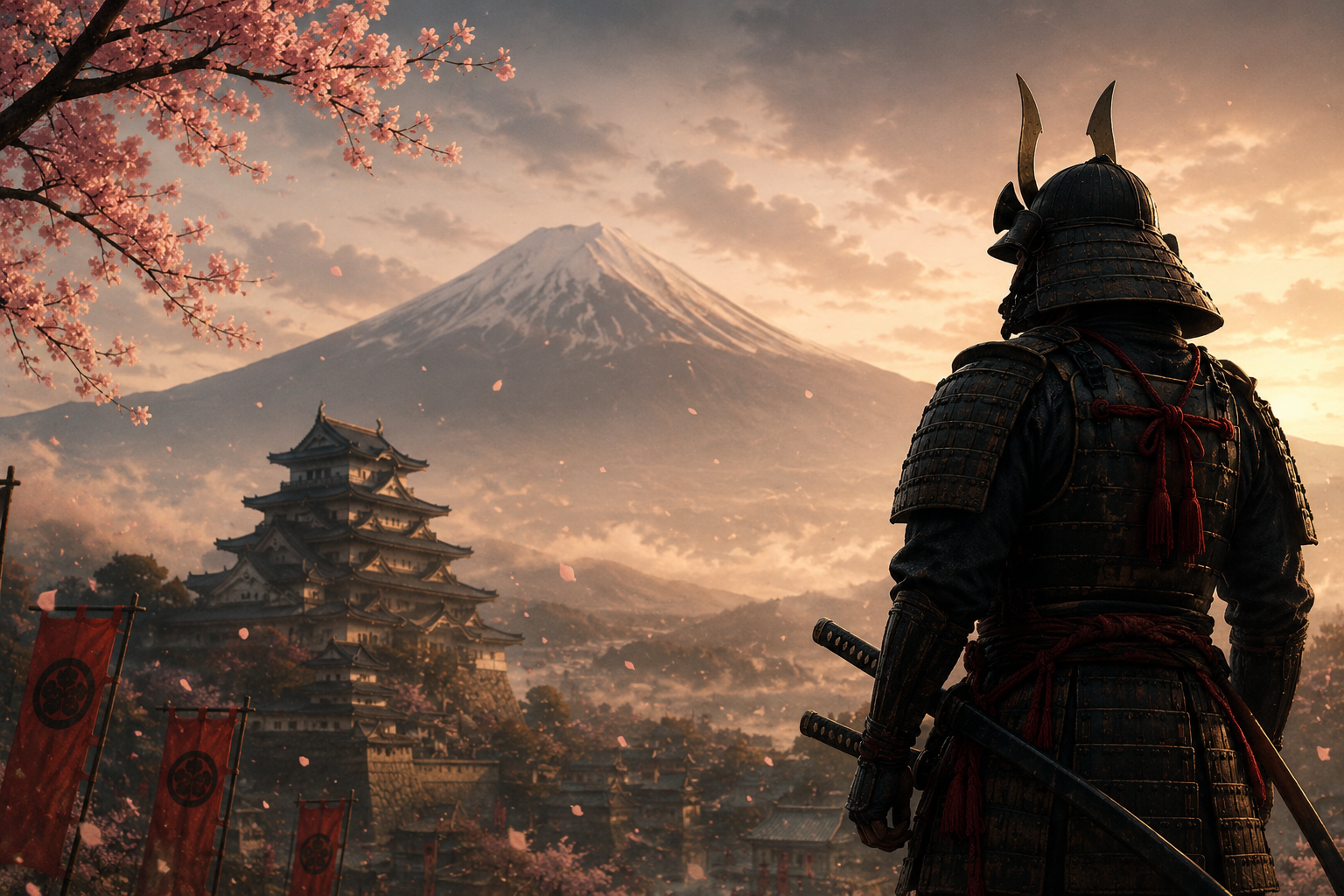
Were Samurai Only Warriors?
When Japan is mentioned, one of the first figures that comes to many people’s minds is the samurai. With their sharp swords, armor, code of honor, and presence on the battlefield, samurai became one of the most striking social classes in Japanese history. However, defining samurai merely as “warriors” would provide an incomplete picture of their role in Japanese society.
Throughout history, samurai were not simply soldiers who wielded swords. They were also administrators, educated elites, representatives of moral values, and an important social class that helped shape Japanese culture. For this reason, understanding the samurai is essential to understanding Japan’s history, social structure, and cultural values.
What Does the Word “Samurai” Mean?
The word samurai comes from a Japanese root associated with the meaning “to serve.” This meaning also explains the samurai’s fundamental role within society. They were not independent warriors acting entirely on their own; they generally served a lord, known as a daimyo.
The duty of samurai was to protect the lord they served, defend his lands, and take part in battles when necessary. Over time, however, these responsibilities were no longer limited to military matters. As Japan’s political order changed, samurai also became influential in administration, law, tax collection, and bureaucracy.
How Did Samurai Emerge?
The origins of the samurai class date back to periods when central authority in Japan weakened and local powers gained importance. Large landowners began to need armed warriors to protect their territories. Over time, these warriors became a more organized, highly trained, and privileged social class.
From the 12th century onward, military rule became increasingly powerful in Japan. While the emperor continued to exist as a symbolic figure, real political authority increasingly came to rest with the shoguns and the warrior class loyal to them. As a result, samurai assumed a decisive role not only on battlefields but also in Japan’s political order.
Did Samurai Only Use Swords?
In popular culture, the first weapon associated with samurai is usually the katana. The katana is one of the most important symbols connected with samurai identity. Historically, however, the combat skills of samurai were not limited to swordsmanship.
In the early periods, archery and horseback riding were extremely important for samurai. On the battlefield, they also used bows, spears, naginata, and, later, firearms. Over time, the katana became both a practical weapon and a powerful symbol of a samurai’s social status.
For this reason, it is not accurate to see samurai only as “masters of the sword.” They were disciplined individuals who received versatile military training and learned different combat techniques depending on the period in which they lived.
Bushidō: The Samurai Code of Honor
One of the concepts most often associated with samurai is Bushidō. Often translated as “the way of the warrior,” Bushidō refers to the moral and behavioral values associated with samurai.
Values such as loyalty, courage, honor, self discipline, respect, and responsibility are central to this philosophy. For a samurai, success in battle alone was not considered sufficient. A samurai was also expected to be loyal to their lord, keep their word, exercise self control, and remain aware of their place in society.
Of course, Bushidō was not followed as a single, fixed, and unchanging set of rules throughout history. It was interpreted differently in different periods. Especially during the Edo period, when warfare became less frequent, Bushidō increasingly developed into a philosophy associated with morality, education, loyalty, and social order.
The Changing Role of Samurai During the Edo Period
The Edo period is known in Japanese history as an era of long lasting peace. As major wars became less common, the role of samurai also changed. Instead of being active warriors on the battlefield, they increasingly became a class integrated into government and social administration.
During this period, samurai worked in government offices, served in local administrations, kept records, managed tax systems, and became a group responsible for maintaining social order. In other words, samurai identity was connected not only to warfare, but also to education, social status, and administrative responsibilities.
This transformation is one of the most interesting aspects of samurai history. Over time, they evolved from sword carrying warriors into educated and disciplined members of the governing class.
Were Samurai Educated?
Samurai were not interested only in martial arts. Especially those from higher ranking samurai families were expected to be educated in fields such as literature, calligraphy, poetry, history, Confucian thought, and strategy.
In this respect, samurai were also regarded as a cultural elite within Japanese society. The ideal samurai was expected to be strong on the battlefield while also being intellectually capable. Therefore, in samurai culture, the sword and the pen, strength and discipline, warfare and elegance could coexist.
The Japanese aesthetic values of simplicity, balance, and moderation are also connected to samurai culture in various ways. Their armor, swords, family crests, and ceremonial behavior demonstrate that samurai possessed not only a military identity but also a cultural one.
Were There Female Samurai?
Although samurai culture is often described through male warriors, women from samurai families also assumed important roles throughout history. Some women received combat training and used weapons to protect their families and castles. These female warriors were known as onna bugeisha.
Women in samurai families were not limited solely to domestic responsibilities. They could also be responsible for preserving family honor, educating children, managing the household during times of crisis, and defending it when necessary. This is an important detail that shows samurai culture was not made up exclusively of male warriors.
The Place of Samurai in Society
For a long time, samurai were regarded as one of the most privileged classes in Japanese society. They possessed privileges such as the right to carry weapons, use family names, hold certain positions, and remain close to the governing authorities.
However, these privileges also brought significant responsibilities. A samurai was expected to set an example in society, remain loyal to their lord, and protect their honor. For this reason, being a samurai was seen not merely as an occupation, but as a way of life.
The Meiji Period and the End of the Samurai
In the 19th century, Japan entered a rapid process of modernization. With the Meiji Restoration, the feudal system was abolished and a modern state structure began to emerge. This transformation also meant the end of the samurai class’s traditional privileges.
The country now needed a modern army, a centralized government, and a new social order. The samurai’s privileges, such as carrying swords and holding special social status, were gradually abolished. As a result, samurai lost their official position on the historical stage.
However, the influence of samurai did not disappear completely. Their values of discipline, loyalty, sense of duty, and honor continued to live on in Japanese culture in different forms.
The Influence of Samurai on Modern Japanese Culture
Although samurai no longer exist as a historical class, their influence remains strong in Japanese culture today. Samurai figures frequently appear in films, anime, manga, video games, and literature.
However, in modern portrayals, samurai are sometimes romanticized or shown in exaggerated ways. In reality, samurai were not simply heroic warriors; they were important representatives of political power, social order, cultural discipline, and the class structure of Japanese history.
For this reason, to understand samurai, it is necessary to see them not only as sword wielding warriors, but as a multifaceted class that played an important role in Japan’s historical transformation.
Conclusion: Samurai Were More Than Warriors
Samurai are among the most impressive figures in Japanese history. Yes, they were warriors, but they were not only warriors. They were also administrators, educated elites, carriers of cultural values, and an essential part of Japan’s social order.
Their story provides a powerful gateway to understanding Japan’s history from the feudal era to the modern state. Samurai swords may now be displayed in museums, but the values they represented discipline, loyalty, and honor continue to live on in the memory of Japanese culture.