



The Medicine of the Future: Robotic Rehabilitation and Advanced Healthcare Technologies in Japan
Japan, one of the first countries that comes to mind when technology is mentioned, is not developing innovative solutions only in electronics, automobiles, and entertainment. Its aging population, declining workforce, and growing demand for healthcare services are also driving the country to develop new solutions in medical technology.
Japan is making use of artificial intelligence, robotic systems, and wearable technologies to reduce the burden on healthcare professionals, improve patients’ quality of life, and make treatment processes more efficient.
But can robots help a person walk again? Can artificial intelligence detect diseases at an earlier stage? What might the hospitals of the future look like?
How Is an Aging Population Shaping Healthcare Technology?
Japan has one of the highest proportions of elderly people in the world. This demographic structure is creating an increasing demand for hospitals, care centers, and healthcare professionals.
To respond to this need, the country is working to integrate artificial intelligence and automation systems into healthcare services.
AI Assisted Diagnostic Systems
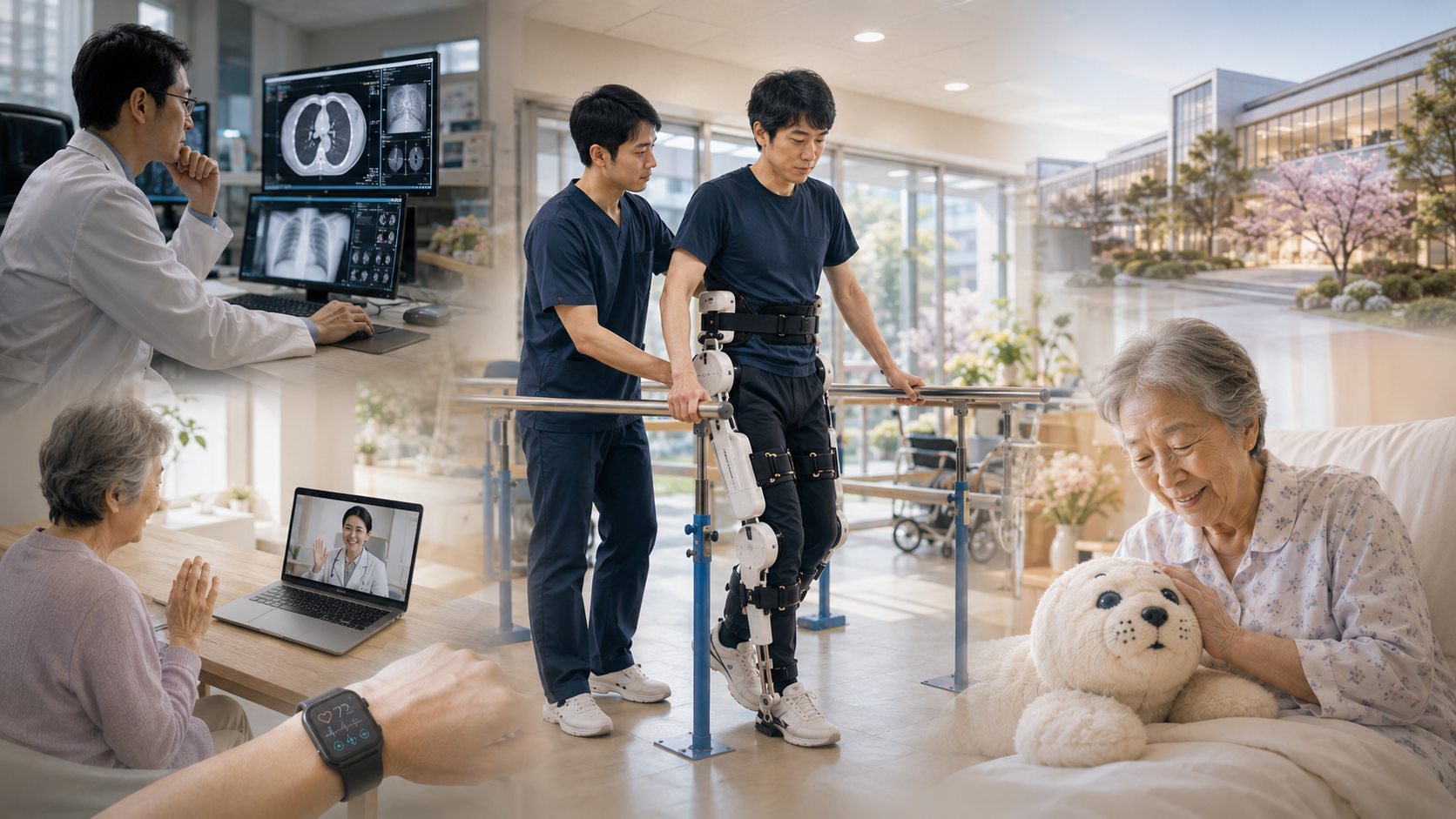
Artificial intelligence supported systems can assist doctors in the evaluation process by analyzing radiology scans, CT images, and other medical images.
The purpose of these systems is not to replace doctors, but to help them review large volumes of images more quickly and identify details that might otherwise be overlooked.
Smart Monitoring and Early Warning Systems
Sensors used in nursing homes and healthcare centers can monitor the movements, sleep patterns, and daily activities of elderly individuals.
Some systems can analyze changes in a person’s movement patterns and alert healthcare staff to a possible risk of falling or an unusual condition. This makes it possible to respond to potential problems at an earlier stage.
Walking Again with Robotic Exoskeletons
One of Japan’s most remarkable developments in robotic rehabilitation is the use of wearable exoskeleton systems.
One of the best known examples in this field is HAL, the Hybrid Assistive Limb system, designed by the Japanese technology company Cyberdyne.
How Does HAL Work?
When a person intends to move, the brain sends bioelectrical signals to the muscles. In cases of paralysis, spinal cord injury, or certain muscular disorders, these signals may be very weak and may not be sufficient to produce movement.
Sensors placed on the patient’s skin detect these signals. The robotic exoskeleton interprets the user’s intention to move and supports the movement of the arms or legs.
These systems aim to create a rehabilitation process based on the individual’s own intention to move. Through repeated movements, they may support the patient in using their muscles and help strengthen or redevelop communication between the nervous system and the muscles.
The effects of robotic rehabilitation vary depending on the individual’s health condition, treatment program, and professional assessment. For this reason, exoskeleton systems are viewed not as replacements for traditional physical therapy, but as technologies designed to support it.
Smart Hospitals and Robotic Surgery
Robotic systems are being used not only in rehabilitation, but also in operating rooms and hospital management.
Robotic Surgical Systems
Robotic surgical systems help surgeons perform certain operations through smaller and more precise movements.
The surgeon controls robotic arms through a console. By transmitting the surgeon’s hand movements to surgical instruments with greater precision, the system can provide valuable support, especially during procedures performed in narrow or delicate areas.
Japan is also developing its own surgical robot technologies and continues to conduct research in this field.
Telemedicine and Remote Intervention
High speed internet connections, 5G technology, and advances in robotic systems are expanding the scope of remote healthcare services.
Through telemedicine, doctors can evaluate patients in different cities using video consultations and digital healthcare platforms. Research into remote intervention in robotic surgery also holds significant potential, particularly for regions with limited access to specialist doctors.
However, before remote surgery can become widespread, many issues must be addressed carefully, including connection security, latency, technical infrastructure, patient safety, and legal regulations.
Social Robots That Provide Emotional Support
In Japan, robots are not used only for physical treatment or surgical procedures. Social robots are also being used to support the emotional needs of elderly individuals, people living with dementia, and children who need to remain in hospitals for extended periods.
PARO: The Therapeutic Robot Seal
PARO is a therapeutic robot designed to resemble a baby seal. It can respond to touch, sound, and the people around it.
Used in care centers, PARO aims to help people with dementia feel calmer, communicate more easily, and experience less loneliness.
The robot is intended to offer an interaction similar to animal assisted therapy without requiring the responsibility of caring for a real animal.
Communication and Guidance Robots in Hospitals
Humanoid robots such as Pepper can be used in certain healthcare institutions to welcome patients, provide directions, remind them about exercises, and perform simple communication tasks.
These types of robots may reduce the routine workload of healthcare professionals, allowing staff to devote more time to direct patient care.
Will Robots Replace Healthcare Professionals?
Japan’s fundamental approach to healthcare technology is not based on robots completely replacing doctors or care staff.
Robots can take on repetitive tasks, duties requiring physical strength, or activities involving intensive data analysis. Healthcare professionals, meanwhile, can focus more on areas that require empathy, decision making, communication, and personalized care.
In other words, technology is becoming a tool that supports the human touch rather than eliminating it.
The Future of Medicine Is Taking Shape in Japan
Japan’s aging population has become a major factor pushing the country to develop innovative solutions in healthcare.
Robotic exoskeletons support the rehabilitation of patients with limited mobility, while AI systems assist doctors in diagnostic processes. Social robots provide emotional support, and remote healthcare technologies help medical services reach wider regions.
None of these technologies is a perfect solution on its own. It is essential that their effectiveness be evaluated through scientific research, that patient safety be protected, and that the technologies be used under the supervision of qualified healthcare professionals.
Nevertheless, Japan’s work in the healthcare field demonstrates that the medicine of the future will be built on cooperation between people and technology.