
Religious Education in Japan: A Cultural and Ethical Journey Rather Than a Matter of Faith

Religious Education in Japan: A Cultural and Ethical Journey Rather Than a Matter of Faith


Although Japan is one of the most technologically advanced countries in the modern world, it continues to preserve religious traditions that date back thousands of years within everyday life. However, when it comes to religious education in the Japanese education system, the focus is not on teaching the doctrines of a specific religion. Instead, the emphasis lies on transmitting ethical values, historical heritage, and cultural diversity. Here is Japan’s unique approach to religious education.


  1. Secularism in Public Schools and the “Social Studies” Approach


The Japanese Constitution prohibits the state from providing religious instruction. For this reason, religion in public schools is not taught as a doctrinal subject but rather as an academic discipline.


  • Historical and Social Awareness
    Religions are discussed in social studies courses as factors that have influenced the course of history. For example, the arrival of Buddhism in Japan or the prohibition of Christianity during the Edo period is studied primarily in terms of its political and social consequences rather than its theological aspects.
  • Moral Education (Dotoku)
    Even though public schools do not provide formal religious classes, moral education is mandatory. These lessons focus on values such as courtesy, honesty, respect for nature, and group harmony (Wa). Interestingly, many of these values are rooted in Shinto and Buddhist philosophies, yet they are taught without explicit religious references.


  1. The Role of Religious Institutions in Education


The practical and ritual aspects of religion, which are not taught in schools, are instead passed down through families and religious institutions.


  • Temples and Rituals
    From an early age, Japanese children visit Shinto shrines (jinja) and Buddhist temples (o-tera) with their families. Visits during festivals, coming of age ceremonies, or examination periods function as a living form of religious education.


  • Private Schools and Missionary Institutions
    Japan also has private schools affiliated with Christian and Buddhist communities. These institutions are free to incorporate their belief systems into their curricula and often emphasize these values in character education.


  1. Social Learning Through Festivals (Matsuri)


One of the most vibrant and effective channels of religious learning in Japan is the festival culture known as matsuri.


  • Cultural Transmission
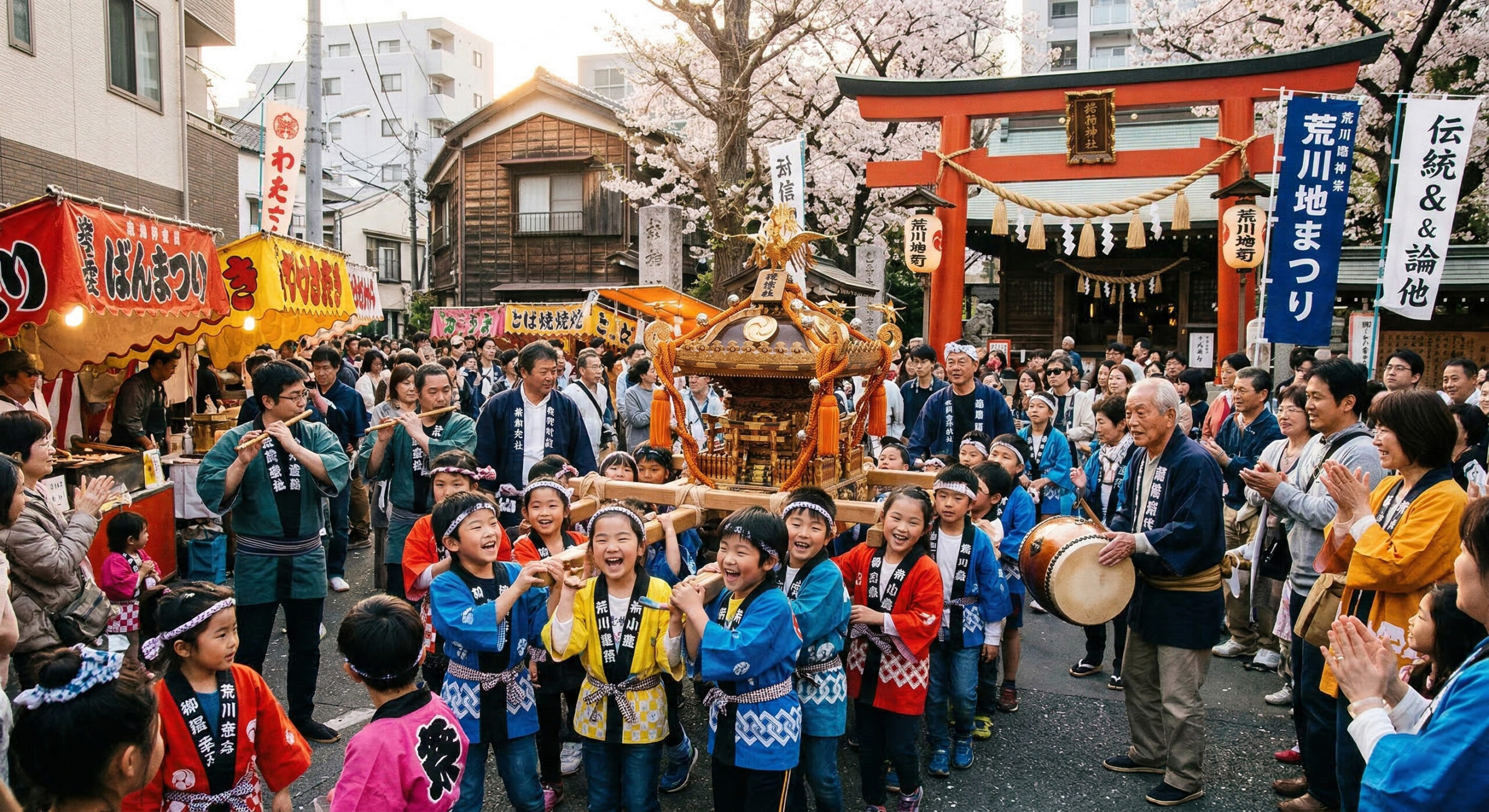
    During neighborhood festivals, children learn to pull shrine floats, play traditional music, and perform ritual dances. In this process, religious stories and social structures are passed on to new generations in an engaging and inclusive way.
  • Religious Fluidity
    It is common for a Japanese person to be born into Shinto rituals, have a Western style Christian wedding, and be buried in a Buddhist ceremony. This fluid coexistence of religious traditions forms the foundation of a culture of tolerance.


  1. Modern Trends and Interfaith Awareness


In an increasingly globalized world, Japan is not only preserving its own traditions but also developing a deeper understanding of world religions.


  • Diversity and Tolerance
    Especially at the university level, academic studies on Islam, Judaism, and different Christian denominations have increased. This contributes to a more open and respectful perspective toward the global community.
  • Cultural Diplomacy
    Interfaith dialogue programs are encouraged within educational institutions as part of Japan’s broader commitment to peaceful international relations.