



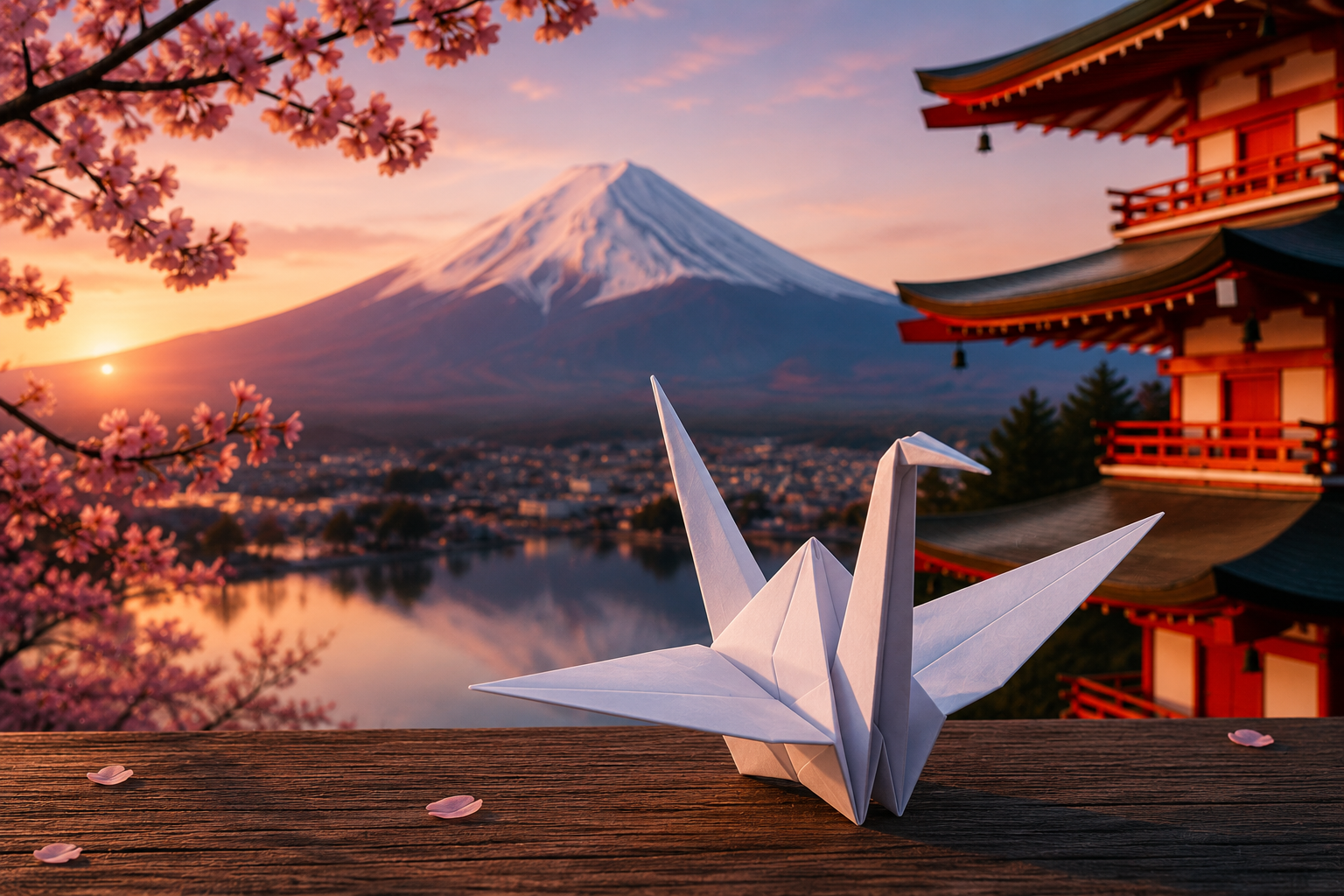
How to Make an Origami Crane | 折り鶴 – Orizuru
One of the first figures that comes to mind when thinking of origami is the crane. Known in Japanese as 折り鶴 (Orizuru), the origami crane is not only an elegant figure made from paper, but also an important symbol associated with longevity, good wishes, hope, and peace in Japanese culture. Made from a single square sheet of paper, Orizuru is one of the most classic models for beginners to learn.
What Does Orizuru Mean?
In Japanese:
折り (ori) → to fold
鶴 (tsuru / zuru) → crane
Together, these words form 折り鶴 – Orizuru, meaning “folded crane.” In Japanese culture, cranes are associated with long life and good fortune. For this reason, origami cranes are often used for celebrations, special occasions, and as expressions of good wishes.
What Do You Need to Make an Origami Crane?
You do not need many materials to make an Orizuru.
All you need is:
If you do not have origami paper, you can also cut any thin sheet of paper into a square. For your first attempt, using a sheet measuring around 15 x 15 cm can make the folding process easier.
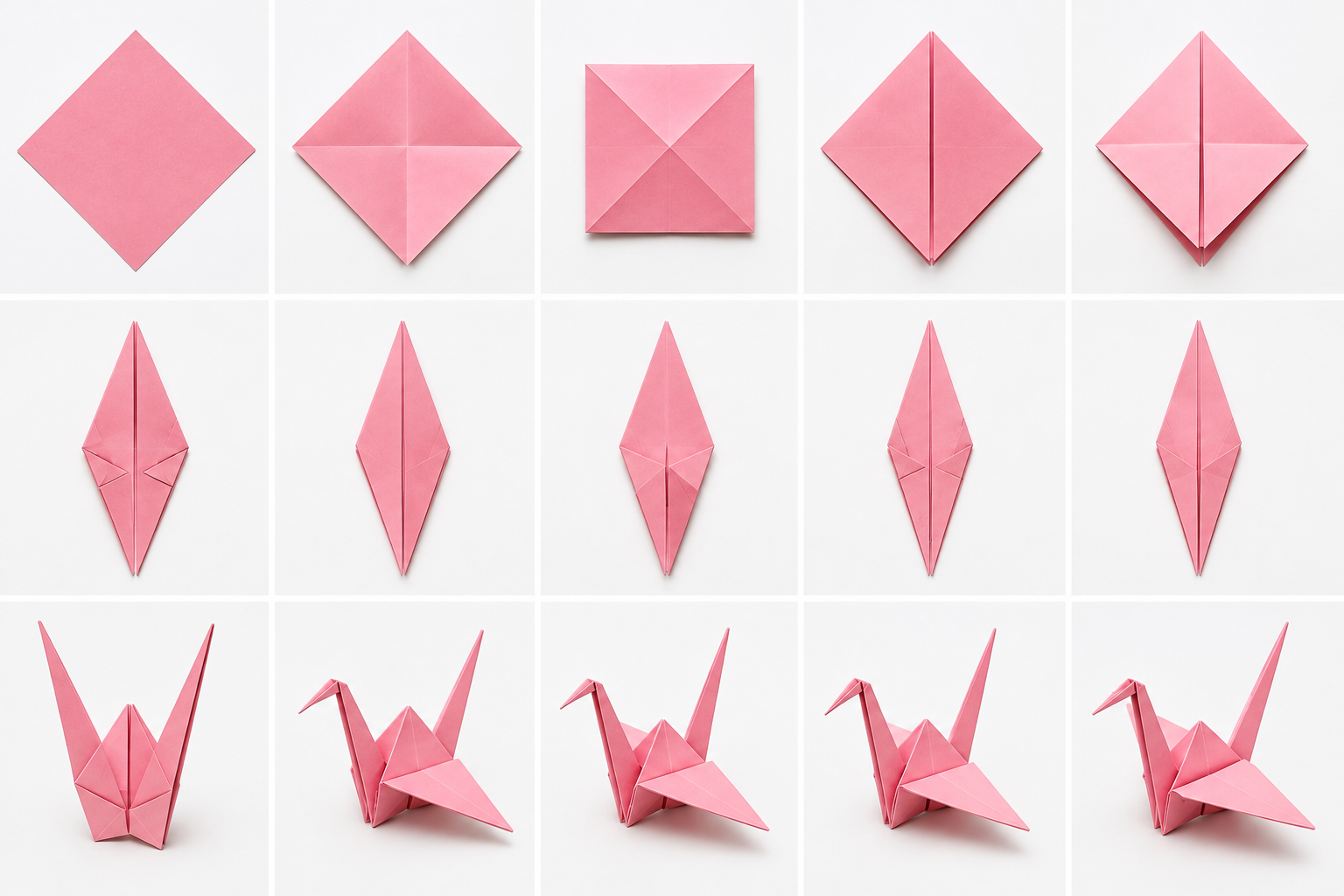
How to Make an Origami Crane
Place the square sheet of paper in front of you. Bring one corner to the opposite corner and fold it diagonally. Make a clear crease, then unfold the paper. Repeat the same process with the other two corners. You should now have two diagonal crease lines across the paper.
Fold the paper in half horizontally and then vertically. This will create several crease lines intersecting at the center of the paper. These creases will make it easier to collapse the paper correctly in the following steps.
Using the creases you have created, fold the paper inward. As you bring the corners together, the paper will collapse into a smaller, multi-layered square. This basic origami shape is also commonly used in many other models.
Position the square with the open end facing downward. Fold the right and left edges toward the center line. Fold the triangular section at the top downward to create another crease. Then unfold these folds.
Lift the bottom corner of the paper upward. Using the creases you created earlier, allow the right and left edges to fold inward. You should now have a long diamond shape. Turn the paper over and repeat the same process on the other side.
Fold the lower right and left edges of the diamond toward the center line. Turn the paper over and repeat on the other side. You will now begin to see two long points that will eventually form the crane’s neck and tail.
Fold one of the long lower points upward. Instead of simply folding it over from the outside, gently open the layers of the paper and fold the point inward. Repeat the same process with the other long point.
One of these sections will become the crane’s neck, while the other will form its tail.
Take the upper end of the section you selected as the neck and fold a small part inward at an angle. This small fold will form the crane’s head and beak.
Carefully open the two wide sections at the top toward the left and right. These will form the crane’s wings. Gently shape the body to give your origami crane its final form.
And your Orizuru is ready!
Senbazuru: The Tradition of One Thousand Cranes
One of the best-known Japanese traditions associated with Orizuru is 千羽鶴 – Senbazuru.
Sen (千) means “one thousand,”
ba (羽) is a counter used for birds,
and zuru (鶴) means “crane.”
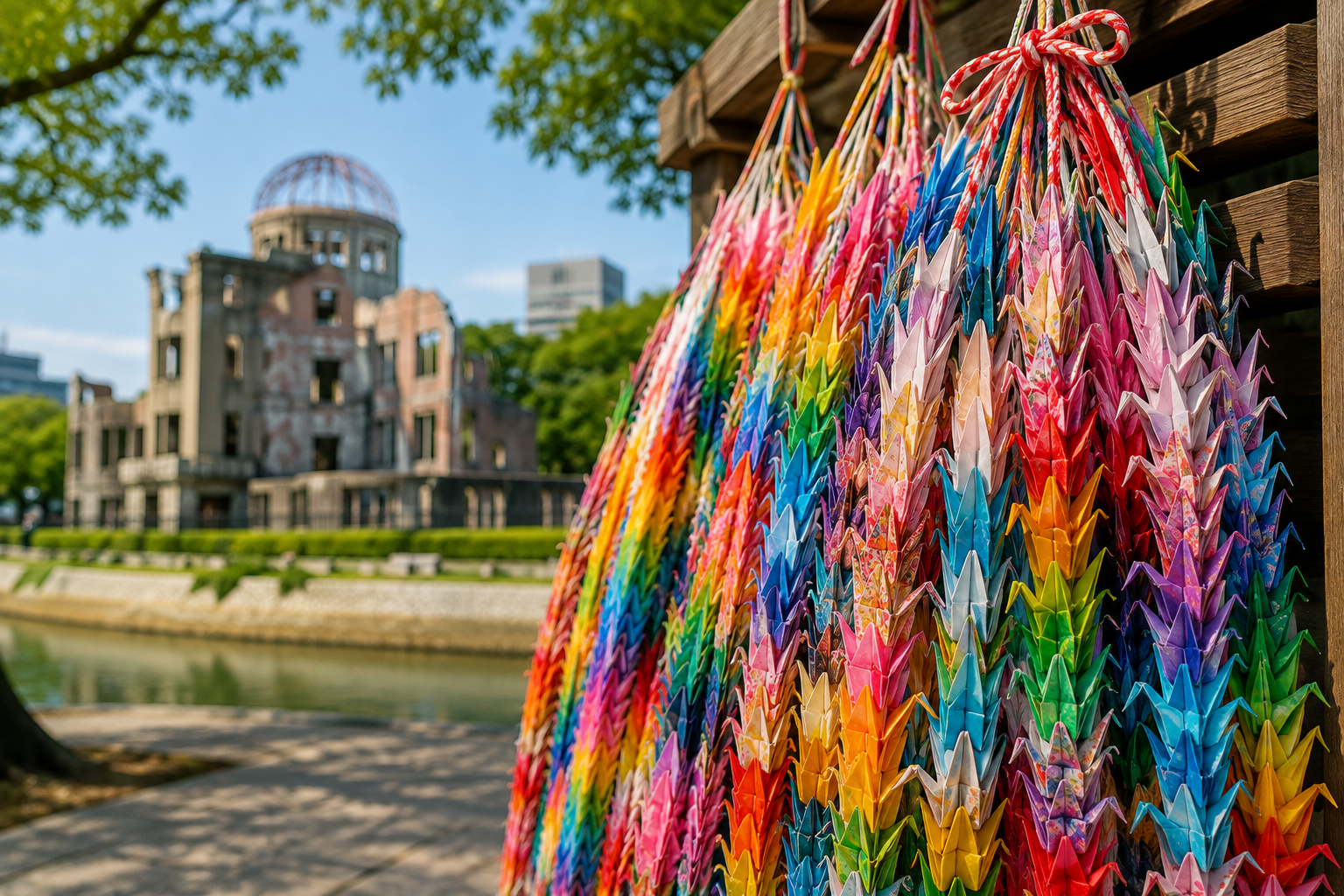
Senbazuru is the name given to an arrangement made by bringing together 1,000 origami cranes.
The cranes are usually connected with strings to form long strands and may be presented as symbols of good wishes, recovery, peace, or support.
Sadako Sasaki and the Origami Cranes
The story of Sadako Sasaki played an important role in making the origami crane an internationally recognized symbol of peace. Sadako Sasaki was one of the children affected by the long-term consequences of the atomic bombing of Hiroshima.
After becoming ill, Sadako began folding origami cranes, and her story eventually spread to countries around the world. Today, the Children’s Peace Monument in Hiroshima Peace Memorial Park is visited in memory of Sadako and children affected by war. Colorful origami cranes sent from around the world have also become symbols of wishes for peace at the site.
Why Is Orizuru So Special?
All you need to make an origami crane is a small square sheet of paper.
Yet after just a series of folds, the resulting figure carries much broader meanings in Japanese culture. Orizuru is one of the most recognizable origami figures representing hope, peace, longevity, and good wishes.
For this reason, if you are trying origami for the first time, the first model in our series, 折り鶴 – Orizuru, can be a wonderful introduction to the Japanese art of paper folding.