



Tatami Culture in Japanese Homes
One of the most distinctive features of traditional Japanese homes is the woven flooring known as tatami. A part of Japanese living culture for centuries, tatami is more than just a flooring material; it is also closely connected to home design, everyday habits, and traditional aesthetics.
What Is Tatami?
Tatami traditionally consists of an inner core made from compressed rice straw covered with a woven rush surface. Although the materials used in modern production may vary, tatami continues to retain its distinctive texture and appearance.
Rectangular tatami mats are generally placed side by side to cover the entire floor of a room.
Tatami Rooms: Washitsu
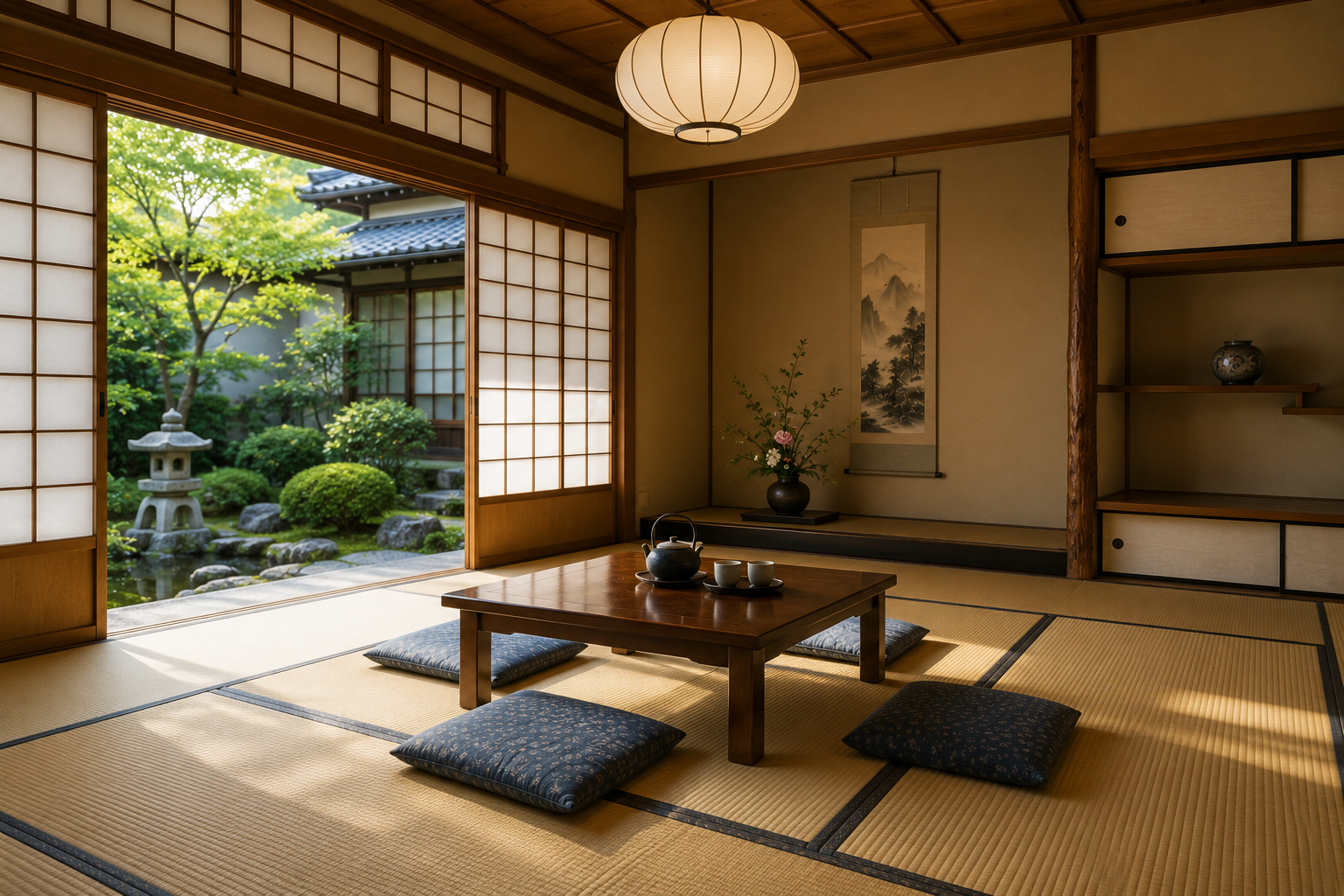
Traditional Japanese rooms with tatami flooring are called washitsu. These rooms typically feature sliding doors, minimalist decoration, and low furniture.
People can sit, drink tea, eat, or sleep on a futon laid over the tatami. As a result, the same room can serve several different purposes throughout the day.
Rooms Can Be Measured by the Number of Tatami Mats
In Japan, particularly in traditional homes, room sizes may be expressed by the number of tatami mats rather than in square meters.
For example, a room may be described as a “six tatami room.” However, standard tatami dimensions can vary slightly depending on the region of Japan.
Shoes Are Not Worn on Tatami
Removing shoes when entering a Japanese home is already an important custom. In rooms with tatami flooring, particular attention is paid to this rule.
Because the surface of tatami is delicate, stepping on it with shoes is considered inappropriate for hygiene reasons and can also damage the woven surface. Tatami is generally walked on either in socks or barefoot.
Traditional Aesthetics Combined with Simplicity
One of the most distinctive characteristics of tatami rooms is their simplicity. The natural color of the flooring, wooden details, and limited amount of furniture create a calm and balanced atmosphere.
For this reason, tatami has also become associated with the concepts of naturalness, simplicity, and functionality found in the traditional Japanese way of life.
Is Tatami Still Used Today?
Although wooden floors and other types of flooring have become more common in modern Japanese homes, tatami has not disappeared entirely.
Some modern homes may still include at least one washitsu. Tatami is also commonly found in traditional ryokan inns, tea rooms, temples, and various cultural spaces.
Tatami is more than just a material used to cover the floors of Japanese homes. From everyday lifestyles and room arrangements to traditions and aesthetics, it reflects many aspects of Japanese culture.
Although its role has changed with modern lifestyles, tatami remains one of the most characteristic and recognizable features of traditional Japanese homes.