



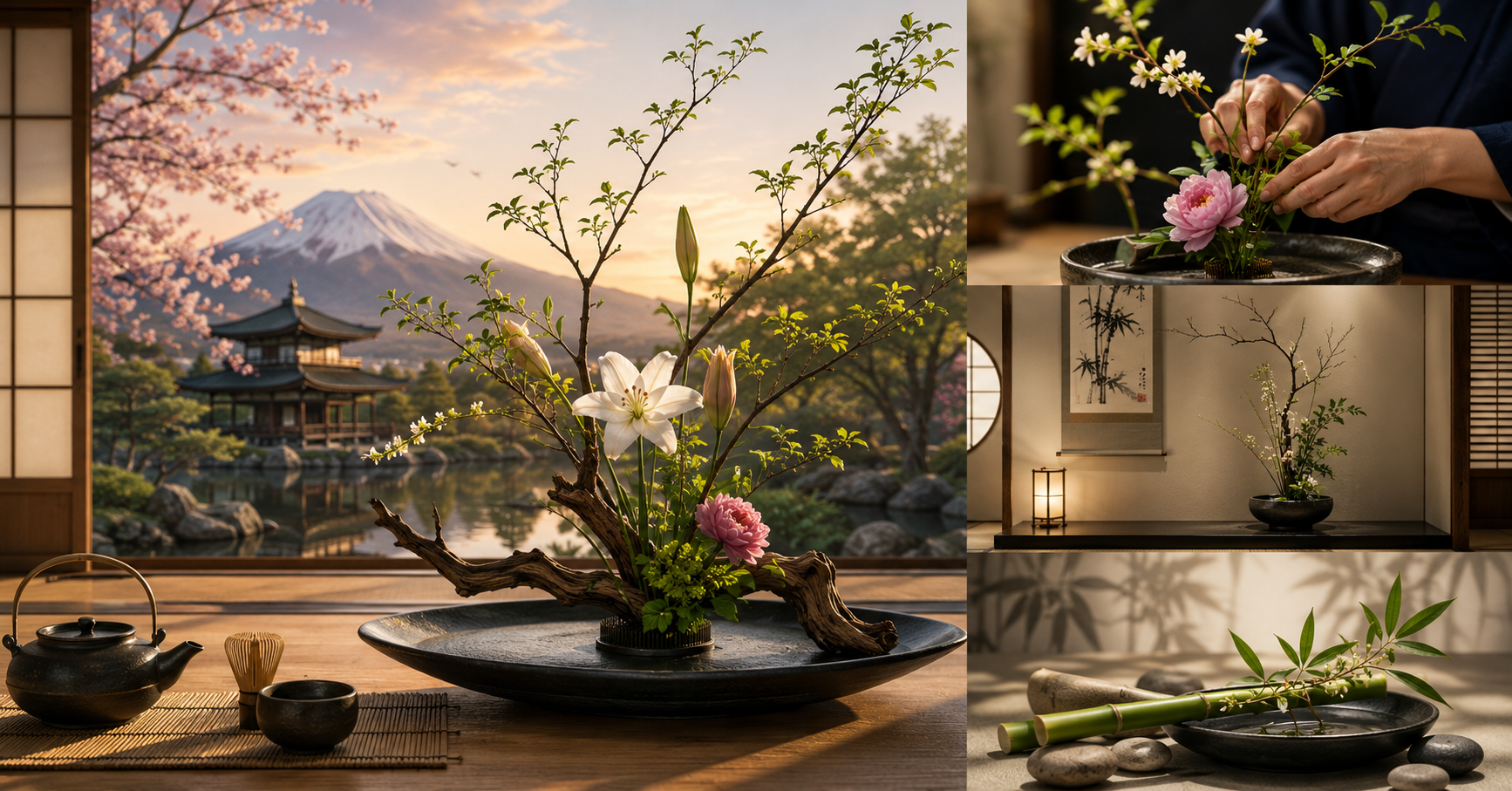
Kado: The Elegant Expression of Art and Philosophy in Japanese Flower Arrangement
Kado, one of the most elegant reflections of Japan’s deep rooted and rich cultural heritage, elevates the craft of flower arrangement beyond an aesthetic pursuit and transforms it into a profound philosophy of life. Meaning “The Way of Flowers” in Japanese, Kado regards the arrangement of plants, branches, and leaves not merely as a visual activity, but also as a spiritual discipline and a meditative experience.
The history, philosophical foundations, techniques, and global influence of Kado, an art that brings the temporary beauty of nature together with the human spirit, open the door to this serene world.
Kado is one of the oldest and most respected disciplines within Japanese flower arrangement traditions. The birth and evolution of this art can be divided into two main periods:
The most important element that distinguishes Kado from ordinary flower arrangement is the rich philosophical depth behind it. While placing materials, the artist observes three fundamental principles:
Harmony with Nature and Transience: Mono no Aware
Kado aims to reflect the perfect balance of nature as well as the temporary nature of existence. The flowers, dried branches, and fresh leaves used in an arrangement are selected in harmony with their natural forms. This arrangement symbolizes both the complex structure of nature and the captivating simplicity within that complexity.
The World of Symbolic Meaning
There is no place for coincidence in Kado. Every plant used, the angle at which a branch is positioned, and the choice of color carry a specific symbolic meaning. Traditionally, designs are built around three main lines representing the cosmic balance between Heaven (Shin), Humanity (Soe), and Earth (Hiki). This symbolism tells a spiritual story to the person viewing the arrangement.
The Power of Space and Balance: Ma
The Japanese aesthetic concept of “Ma,” meaning empty space, lies at the center of Kado. The intentionally left empty spaces in a design symbolize serenity, breathing room, and peace, while the filled areas represent the energy of nature and the movement of life. The purpose is to establish a perfect balance between fullness and emptiness.
While preserving centuries old traditions, Kado has a flexible structure that can also adapt to the modern world.
With its aesthetic touch and spiritual serenity, Kado occupies a broad place in both social and individual life:
Today, Kado has crossed national borders and become a universal art form that attracts considerable interest around the world. Western floral designers and artists visit established schools in Japan and receive training in order to understand the essence of this discipline.
The global spread of Kado introduces the elegance of Japanese culture to the world while also creating opportunities for new and original movements to emerge through its combination with the aesthetic perspectives of different cultures. In the future, this art will continue to inspire humanity by bringing together its centuries old philosophy and the lines of modern design.