



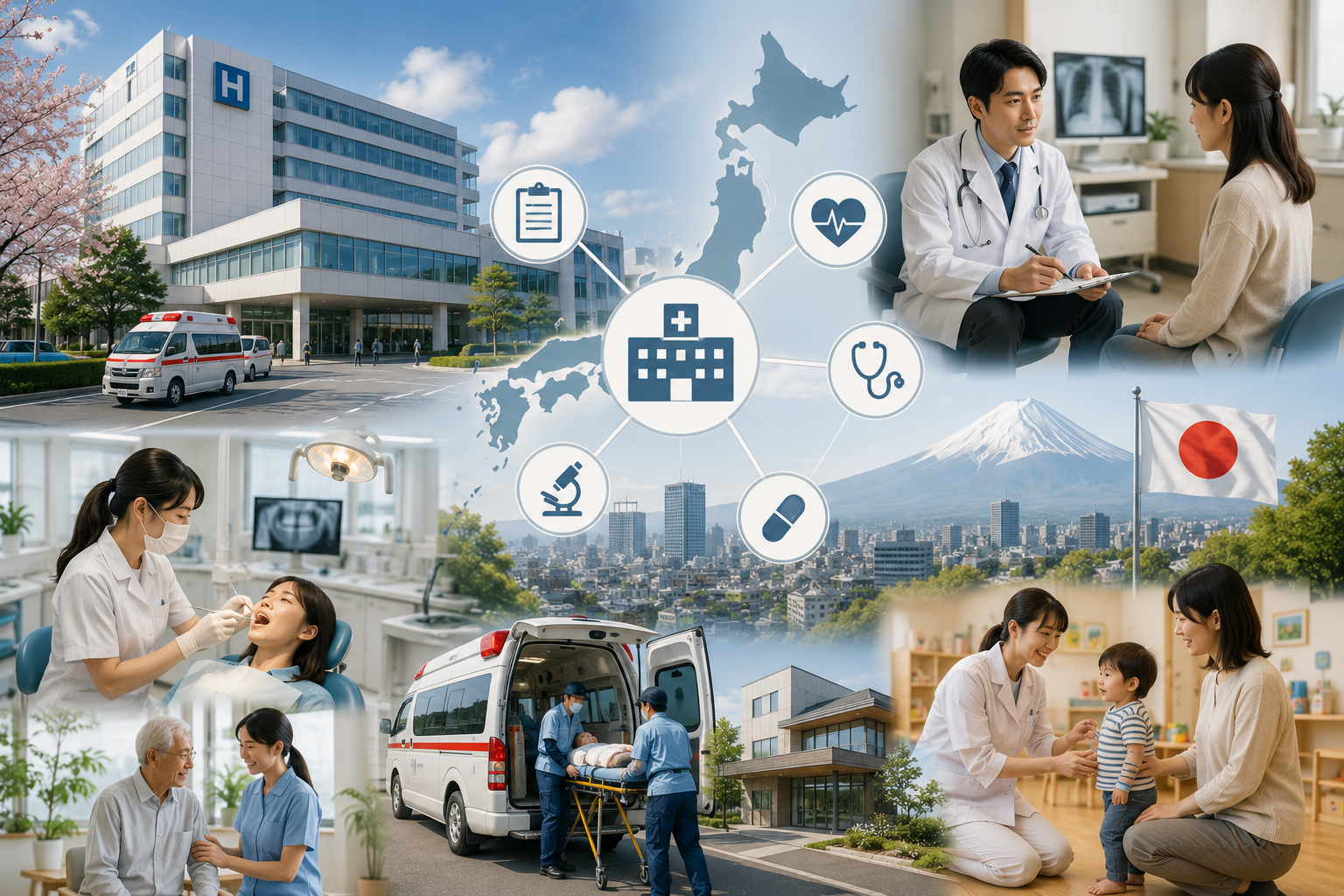
Japan is a highly developed country in terms of healthcare services, offering quality medical care to both citizens and residents through a wide range of healthcare institutions. From general hospitals to private clinics, healthcare facilities in Japan provide services for many different needs. Here are the main types of healthcare institutions you should know about in Japan.
General hospitals in Japan offer a broad range of medical services and are often used for emergencies, surgical procedures, and long term treatments. These hospitals have doctors and medical staff specialized in various fields. General hospitals in major cities usually provide advanced medical equipment and a wide range of treatment options.
Clinics are usually smaller healthcare facilities managed by one or a few medical specialists. In Japan, clinics are commonly used for outpatient care, general health checkups, and everyday health concerns. Many clinics also provide specialized medical services in specific fields.
Specialized hospitals in Japan focus on specific areas of healthcare. For example, they may provide services in fields such as cardiology, oncology, orthopedics, or pediatrics. These hospitals are equipped with doctors and medical equipment specialized in their particular field.
Due to Japan’s aging population, elderly care facilities play an important role in the healthcare system. These facilities support older adults with medical care, daily living assistance, and rehabilitation services. Nursing care, physical therapy, and other elderly care services are also provided.
Family doctors play an important role in Japan’s healthcare system. They monitor patients’ general health conditions and provide the first assessment for health problems. Family doctors also refer patients to specialists when necessary and support long term health management.
Pharmacies in Japan provide both prescription and over the counter medicines, as well as health consultation services. They not only meet patients’ medication needs, but also offer support with health products, vitamins, and general health advice.
Emergency centers provide medical services for urgent health problems and accidents. In major cities in Japan, there are emergency centers that operate 24 hours a day and play a critical role in situations requiring rapid medical intervention.
Japan offers a wide range of healthcare institutions and provides various options suited to different health needs. General hospitals, clinics, specialized hospitals, and other healthcare facilities strengthen the efficiency and scope of Japan’s healthcare system. To make the best use of healthcare services, it is important to understand the structure of medical institutions in Japan and the services they provide.