



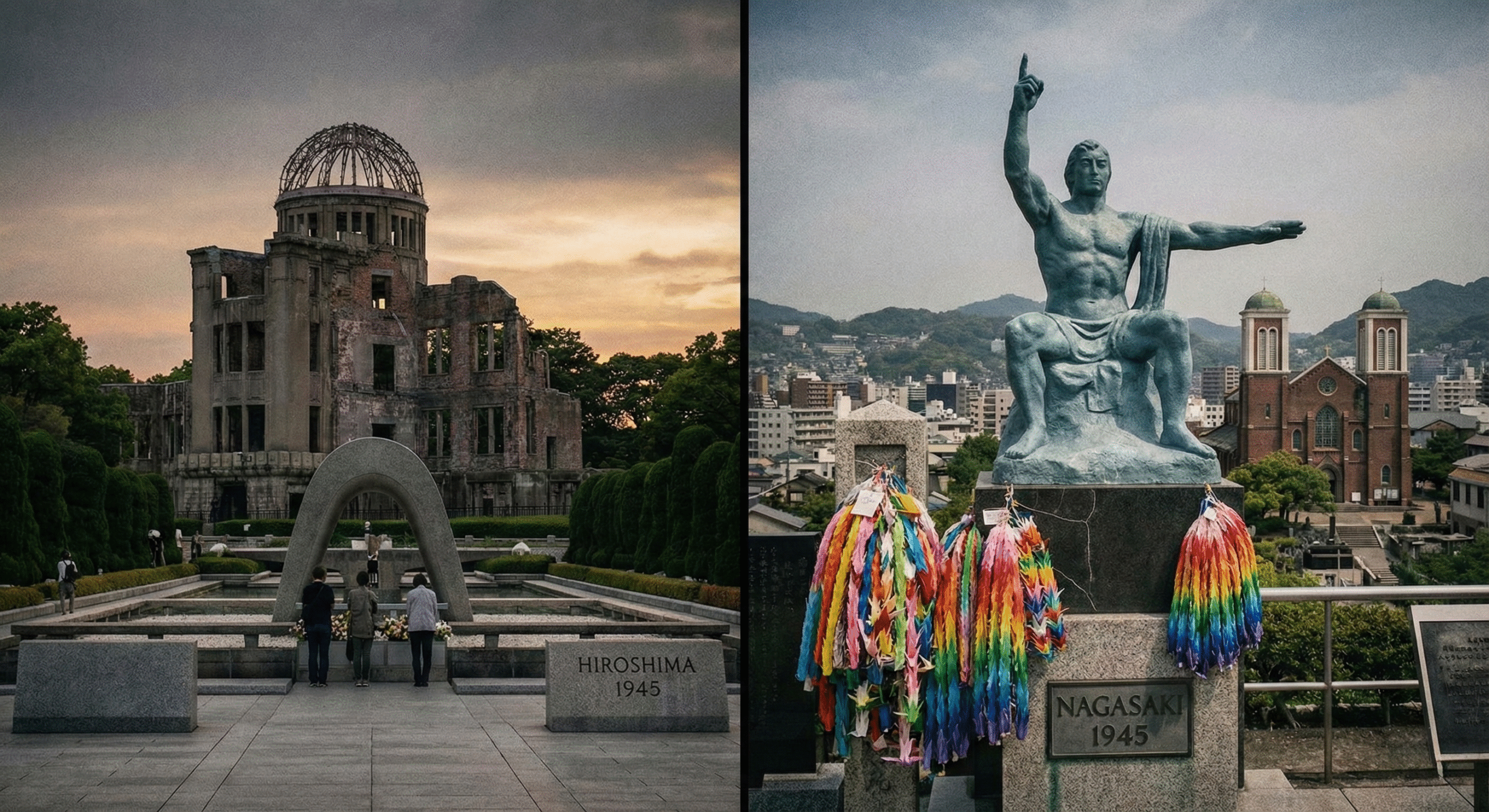
Hiroshima and Nagasaki: The Darkest Pages of History and the Traces of Nuclear Catastrophe
World War II is etched into memory as the most devastating conflict in human history. However, what occurred in the final act of the war not only brought an era to an end, but also inflicted irreparable wounds on the global conscience. The atomic bombs dropped on Hiroshima and Nagasaki are regarded as some of the most tragic turning points in modern history.
Below, the chronology of this catastrophe and its profound effects on humanity are examined:
On August 6, 1945, the United States dropped the uranium type atomic bomb codenamed “Little Boy” over the skies of Hiroshima. This first nuclear weapon ever used against a civilian population erased the city from the map within seconds.
While the shock of Hiroshima had not yet subsided, just three days later, on August 9, 1945, Nagasaki was targeted. This time, the plutonium type bomb codenamed “Fat Man” was used. Although Nagasaki’s geographical features (being surrounded by mountains) limited the area of destruction, its impact was extremely deadly.
The use of atomic bombs led to Japan’s unconditional surrender, officially bringing World War II to an end. However, the cost of this military outcome was extremely heavy for humanity.
Hiroshima and Nagasaki are not merely statistics found in history books; they are the most concrete evidence of the brutal face of war inflicted upon civilian populations. What occurred in these cities stands as a painful legacy reminding us that there can be no winners in a nuclear war. Today, remembering these dark pages of history and learning from them is a necessity in order to understand the value of peace and diplomacy.