



Student Accommodation in Japan: Comfort, Safety, and a Unique Cultural Experience
Japan, one of the world’s most prestigious educational destinations, welcomes thousands of international students every year. One of the most critical stages of beginning an academic journey in a foreign country is undoubtedly choosing the right accommodation. University dormitories and alternative housing options in Japan not only provide students with a safe and comfortable place to live, but also immerse them in the disciplined, respectful, and well organized lifestyle of Japanese society.
In this guide, we will examine Japan’s student accommodation ecosystem, the facilities available, cost advantages, and the sociocultural opportunities offered by dormitory life in detail.
For higher education students in Japan, three main accommodation models stand out, shaped by factors such as budget, location, and the desired level of independence:
Student accommodation centers in Japan are designed with an architectural approach that prioritizes functionality, simplicity, and minimalist order.
Functional Room Furnishings
Dormitory rooms are generally optimized to allow students to continue both their academic and personal lives comfortably. A standard room package usually includes a bed, study desk, ergonomic chair, wardrobe, and high speed internet connection. In many modern residences, appliances such as a mini refrigerator and microwave are also included in the room concept.
Shared Living Spaces and Social Interaction
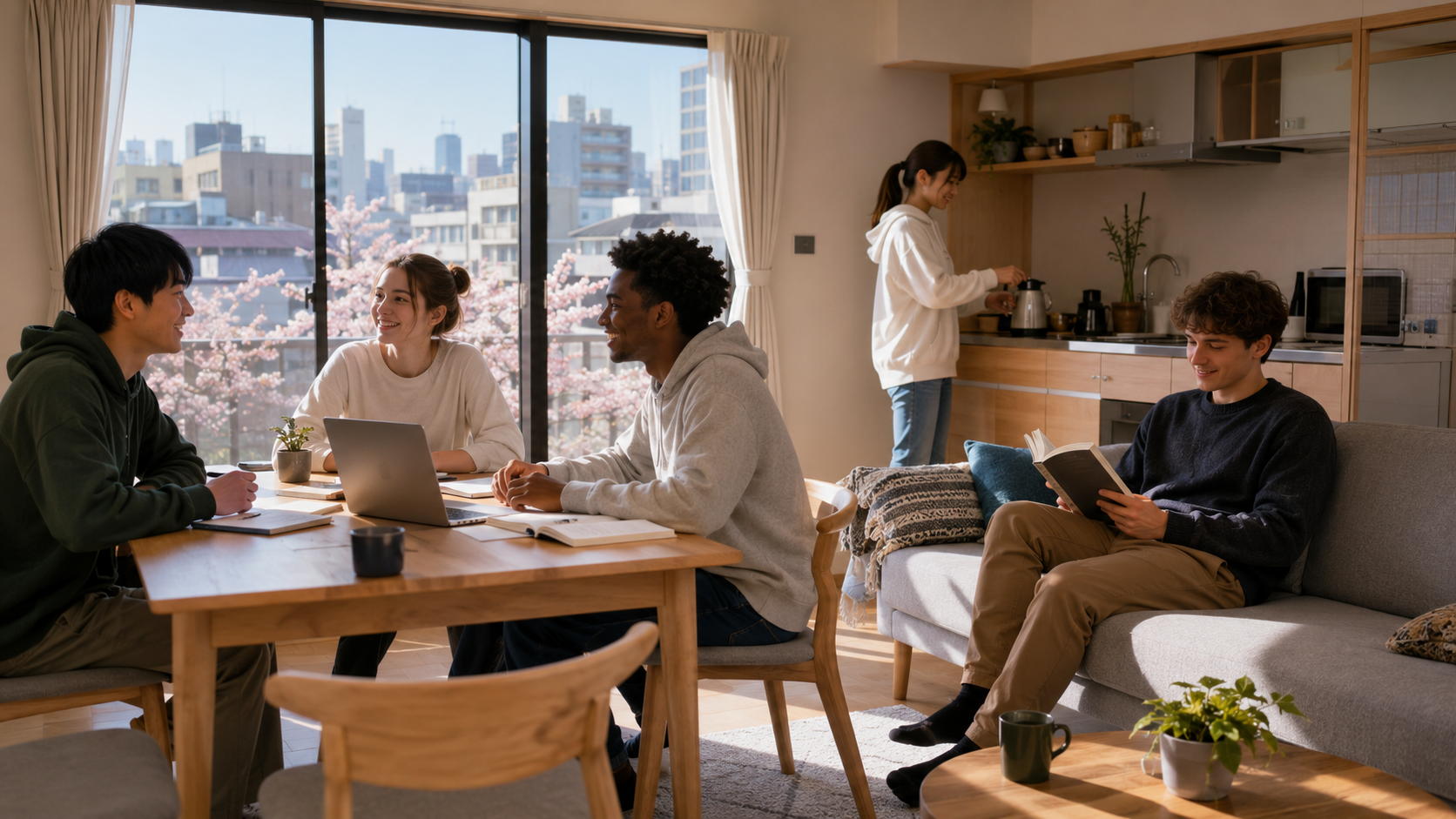
Shared spaces form the heart of dormitory architecture. Well equipped kitchens, spacious lounges, quiet study rooms, and laundry facilities enable students to meet their daily needs while also creating opportunities to build strong relationships with peers from different cultural backgrounds.
A Culture of Discipline and Order
Although cleaning and maintenance services in Japanese dormitories are generally handled by professional staff, the orderliness of shared spaces is often the responsibility of the residents. This division of responsibilities, implemented at regular intervals, helps students develop personal responsibility, time management skills, and awareness of communal living.
Living in a dormitory in Japan is a form of personal development that goes far beyond academic education. Dormitory administrations operate professional support systems to help international students adapt more easily to life in the country.
Although Japan is a country with high living standards, the variety of student accommodation options available makes budget management more accessible for international students.
| Accommodation Type | Cost Level | Main Advantage |
| Campus Dormitories | Most Affordable | Proximity to campus and lower housing fees |
| Private Student Residences | Medium to High | Greater comfort and modern infrastructure |
| Share Houses | Balanced | A more independent lifestyle integrated with local culture |
In addition, Japan’s Ministry of Education, Culture, Sports, Science and Technology, known as MEXT, along with various private foundations, offers periodic scholarships and rental support programs that can subsidize accommodation expenses for successful international students.
Japan is widely recognized as one of the safest countries in the world, with one of the lowest crime rates globally. This sense of safety is directly reflected in the security policies of student residences.
Facilities commonly feature card access entry systems, 24 hour camera surveillance, professional security personnel, and strict entry and exit procedures. Furthermore, buildings are constructed in accordance with Japan’s rigorous architectural regulations and often incorporate advanced earthquake resistant and seismic isolation technologies.
These clean, orderly, and regularly monitored living environments provide students with a peaceful atmosphere in which to study and live, while also giving families confidence and reassurance throughout the process.
Living in a university dormitory in Japan is not simply about meeting a housing need. It is an opportunity to open the door to personal, academic, and cultural transformation in this fascinating and technologically advanced country of the East. The high safety standards, institutional comfort, and rich social opportunities available make dormitory life a truly unique and unforgettable experience for international students.