


One of Japan’s Coldest Cities: The Mysterious Cold of Hokkaido
In this article
Japan is a country where the four seasons can be experienced distinctly, with cherry blossoms in spring, hot and humid summers, colorful autumn scenery, and snow covered winters. However, as you travel north toward Hokkaido, winter reveals a much harsher side.
Located in central Hokkaido, Asahikawa is known as one of the coldest cities in Japan. In fact, the city is also famous for recording one of the lowest temperatures ever measured in the country. Heavy snowfall, freezing weather, winter festivals, and the surrounding natural beauty make Asahikawa one of Japan’s most remarkable winter destinations.
Where Is Asahikawa?
Asahikawa is located in the central part of Hokkaido, Japan’s northernmost major island. Because it lies inland, far from the coast, continental climatic effects are more pronounced in the city. As a result, temperatures can fall to extremely low levels during winter. The mountainous areas surrounding Asahikawa also contribute to the region’s characteristic winter scenery.
Is Asahikawa Really the Coldest City in Japan?
One of the main reasons Asahikawa is often referred to as Japan’s coldest city is its historic temperature record. On January 25, 1902, a temperature of -41°C was recorded in the city. This is one of the lowest temperatures ever recorded in Japan through official meteorological observations and has made Asahikawa one of the first places that comes to mind when people think of extreme cold in Japan.
However, it is important to remember that very low temperatures can also occur in other parts of Japan, especially in inland Hokkaido. Therefore, rather than defining Asahikawa simply as “Japan’s coldest city,” it is more accurate to describe it as one of Japan’s coldest major cities and a city known for its historic cold temperature record.
What Is Winter Like in Asahikawa?
Winter in Asahikawa is long, cold, and very snowy. From December onward, the city gradually turns white, and snow cover can remain on the ground for a long period. Especially in January and February, temperatures dropping well below freezing are common. As a result, everyday life in Asahikawa is also shaped around winter conditions.
Heavy Snowfall
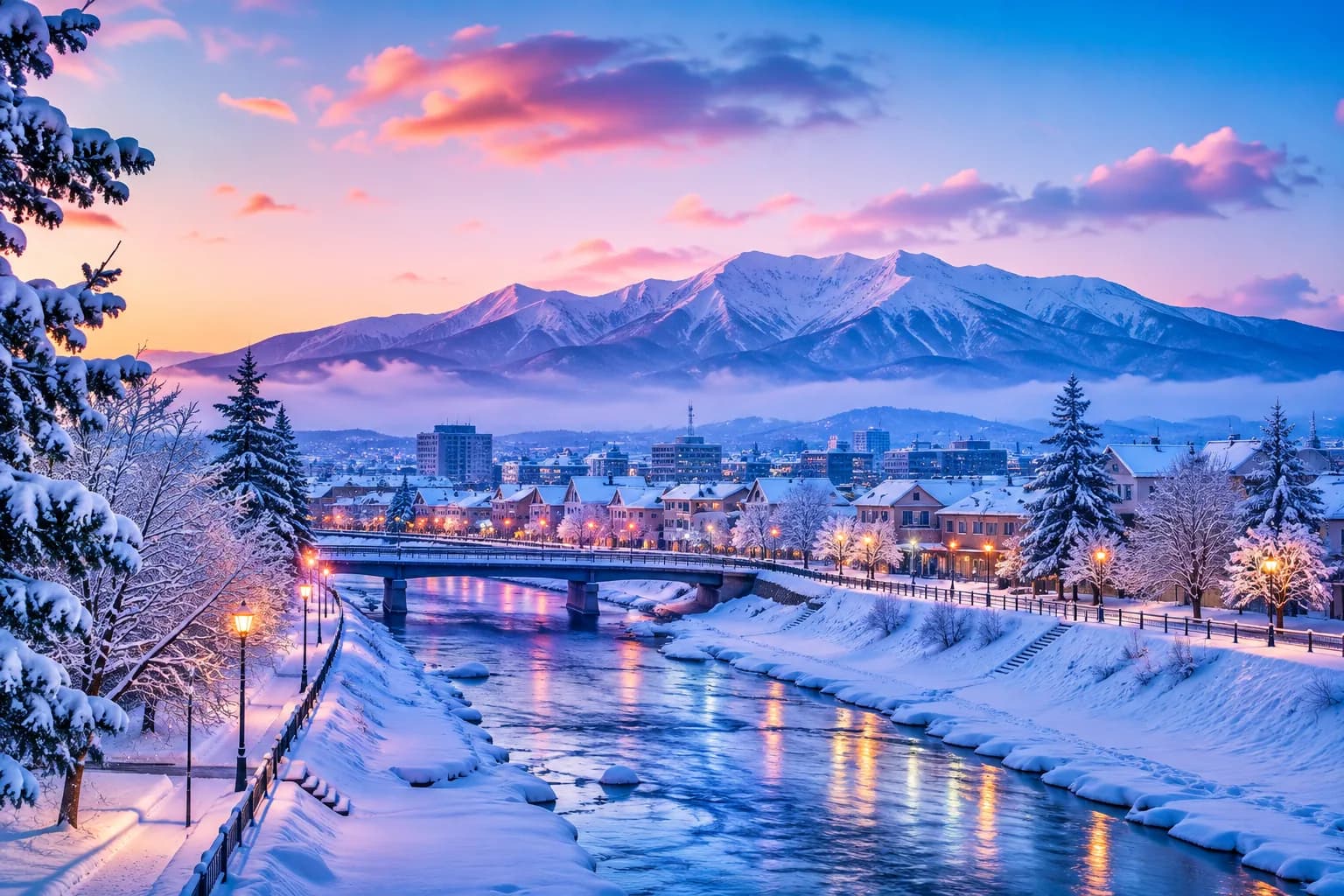
One of Asahikawa’s most striking characteristics is its snowy scenery. During the winter months, streets, parks, house roofs, and the surrounding mountains can become covered in thick layers of snow. Regular snow removal is an essential part of urban life. Snowfall not only affects everyday routines but also forms an important part of Asahikawa’s identity as a tourist destination.
Asahikawa Winter Festival
One of the city’s most important events that turns its cold climate into an advantage is the Asahikawa Winter Festival. Held every winter, the festival features enormous snow sculptures and works made of ice. With nighttime illuminations, the snow and ice creations become even more impressive. The festival is one of Asahikawa’s major attractions for visitors who want to experience Hokkaido’s winter culture up close.
Asahiyama Zoo
One of Asahikawa’s most famous tourist attractions is Asahiyama Zoo.
The zoo is particularly known for its exhibition methods that make it easier to observe the animals’ natural behavior. During winter, one of its most popular sights involves the penguins. The penguin walks held across snow covered areas have become one of Asahiyama Zoo’s signature winter events. For this reason, the zoo is an important stop for many tourists visiting Asahikawa during the winter.
A Suitable Region for Winter Sports
The mountainous areas around Asahikawa also offer suitable conditions for winter sports such as skiing and snowboarding. Hokkaido as a whole is famous around the world for its powder snow. Thanks to the low temperatures, the snow tends to be light and dry, making it especially popular among skiers. Ski resorts around Asahikawa also make the city a good starting point for winter sports.
From Freezing Cold to Warm Onsen
One of the most enjoyable experiences of a Hokkaido winter may be stepping into a hot onsen after spending time in the freezing cold outside. There are also areas with natural hot springs around Asahikawa. Especially at open air onsen in mountainous regions, relaxing in hot spring water while the surroundings are covered in snow is one of Japan’s most characteristic winter experiences. For this reason, in Hokkaido, snow and onsen culture are often seen as two experiences that complement one another.
How Do People in Asahikawa Adapt to the Cold?
The long and harsh winters have also shaped urban life in Asahikawa. Powerful heating systems are used in homes, while it is extremely important for buildings to be designed to withstand cold weather conditions.
Across the city:
- Regular snow removal is carried out.
- Measures are taken against icy roads.
- Snow around the entrances of homes and businesses is frequently cleared.
- Winter boots, thick coats, and thermal clothing become part of everyday life.
- Vehicles use tires and equipment suitable for winter conditions.
For people living in Hokkaido, snow is not simply a tourist attraction but a natural part of daily life that continues for months.
What Is It Like to Visit Asahikawa in Winter?
Visitors traveling to Asahikawa in winter encounter scenery very different from the classic images of Japan. Instead of Tokyo’s neon lights or Kyoto’s temples, the city is characterized by:
Snow covered streets, frozen landscapes, pure white mountains, winter festivals, and the freezing Hokkaido climate.
For this reason, Asahikawa is a particularly interesting destination for those who want to discover Japan’s lesser known natural and seasonal sides.
Hokkaido’s Icy Side: Asahikawa
Asahikawa’s cold is not simply a meteorological characteristic. From the city’s architecture and daily life to its festivals and tourism, many aspects have been shaped by this climate.
Thanks to its historic low temperatures, heavy snowfall, the Asahikawa Winter Festival, Asahiyama Zoo, and the surrounding winter sports areas, the city is one of the places where Japan’s winter season can be experienced most intensely. For those who want to discover Japan not only through cherry blossoms and warm spring days but also through snow white and freezing winter landscapes, Asahikawa offers a very different side of Japan.