



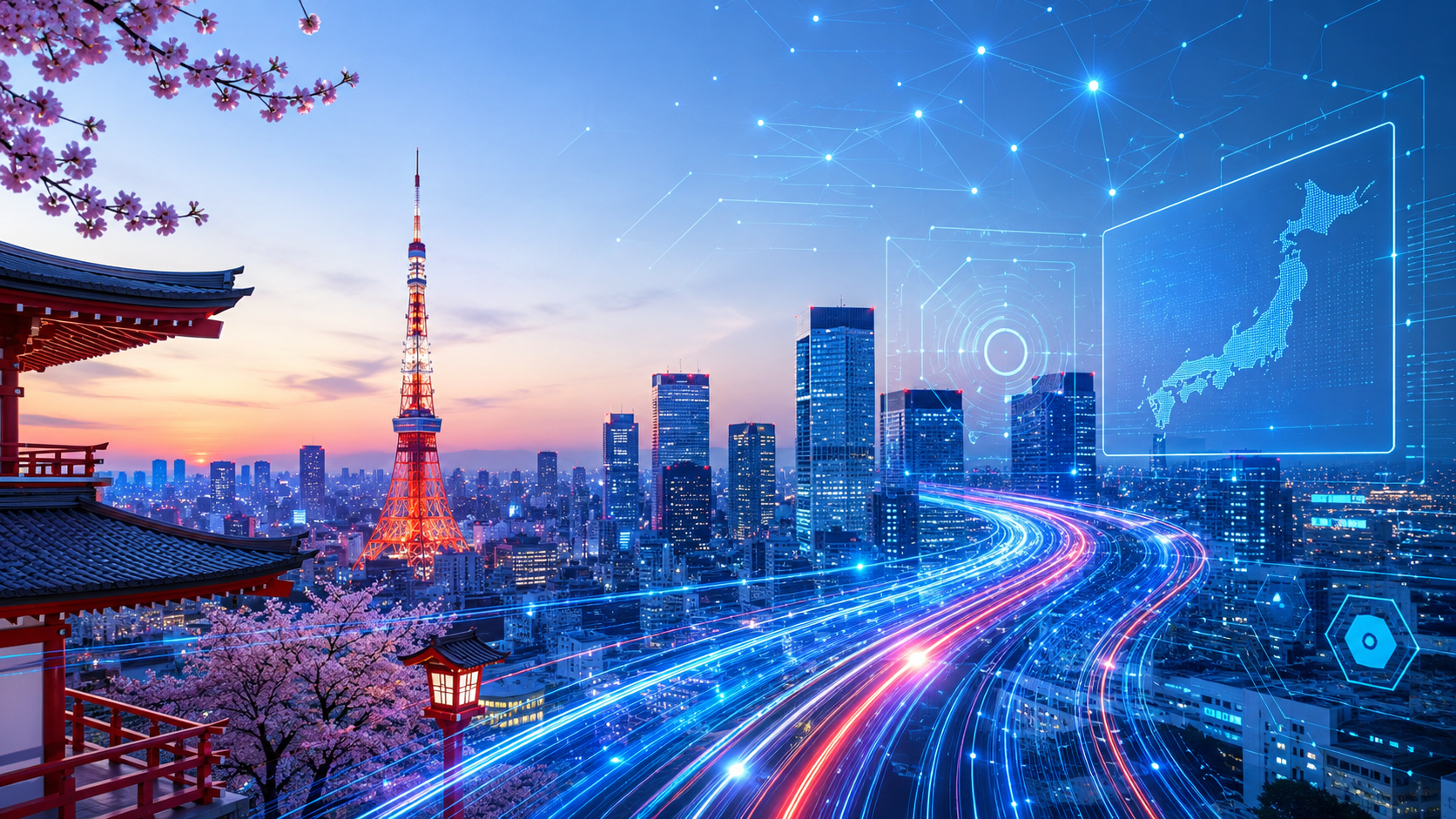
Japan’s Internet World: Speed, Technology, and Digital Life
When Japan is mentioned, technology, order, innovation, and advanced urban life often come to mind. A significant part of this image is the country’s robust internet infrastructure. From daily life to education, and from the business world to the entertainment sector, the internet is at the heart of life in Japan.
Thanks to high speed connections, widespread mobile internet usage, advanced digital services, and strong cybersecurity policies, Japan is considered one of the leading countries of the digital age. But what are the factors that make Japan’s internet world so remarkable?
Why is Japan’s Internet Infrastructure So Advanced?
Japan has been one of the countries making significant investments in internet infrastructure for many years. Access to high speed internet connections is very common, especially in major cities. Cities like Tokyo, Osaka, Kyoto, and Yokohama offer powerful internet solutions for both home users and businesses.
Fiber optic internet is one of the most widely used connection types in Japan. This technology allows users to transfer data at high speeds, participate in online classes, watch videos, play games, and connect to business meetings without interruption.
Many internet service providers offer packages with speeds of 1 Gbps and above for homes and workplaces. This is an important example showing how fast and efficient digital life proceeds in Japan.
Mobile Internet and 5G Usage
Mobile internet usage is also highly developed in Japan. Smartphones are an indispensable part of daily life. People frequently use mobile internet to check transportation schedules, make payments, message, use maps, shop, and spend time on social media.
4G infrastructure has been widely used in the country for a long time. In addition, 5G technology is reaching more users, particularly in big cities and dense areas. Thanks to fast mobile connections, students, employees, and tourists can easily access many digital services.
Mobile internet usage is vital at train stations, shopping malls, airports, and tourist areas. For visitors to Japan, SIM cards, portable Wi-Fi devices, and e-SIM options are among the most preferred solutions.
Digital Services and Online Life
Japan’s internet world consists of more than just fast connections; digital services are also highly advanced. E-commerce sites, online payment systems, digital media platforms, gaming services, and messaging apps are key components of daily life.
In Japan, people can perform many transactions from shopping and banking to food delivery and ticket reservations over the internet. Particularly in large cities, digital solutions are frequently used by people with busy work schedules as they save time.
The online gaming sector is also very strong in Japan. The country is home to many world renowned gaming companies. Anime, manga, and gaming culture reach wide audiences via the internet, making the country’s digital culture visible worldwide.
Smart Cities and IoT Technologies
Japan is one of the notable countries in the field of smart cities and the Internet of Things (IoT). These technologies aim to make urban life more organized, safe, and efficient.
Smart transportation systems, energy management, security solutions, and urban data analysis are among the digital technologies used in Japan. Especially in densely populated cities, these systems help daily life function more systematically.
For example, the regular tracking of train times, the active use of security systems in crowded areas, and the digital management of city services demonstrate Japan’s technology based understanding of urban planning.
Internet Security and Personal Data Protection
Japan adopts a cautious approach toward internet security and the protection of personal data. In a country where digital services are so widespread, cybersecurity is of great importance.
Government agencies and the private sector implement various security measures against cyberattacks. Security standards are critical for banking, e-commerce, public services, and platforms that process personal data.
Additionally, there are legal regulations in Japan regarding the protection of personal data. These regulations aim to ensure that user information is stored securely and not used without authorization. Therefore, institutions providing internet services are expected to pay close attention to user privacy.
Social Media and Japan’s Digital Culture
Social media usage is very common in Japan. Users actively use platforms such as Twitter/X, Instagram, YouTube, and LINE. In particular, LINE has become an essential part of daily communication in Japan.
LINE is used not only as a messaging app but also for following news, making payments, receiving official announcements, and brand communication. In this respect, it is one of the practical examples of digital life in Japan.
Japan’s digital culture is also shaped by anime, manga, video games, and virtual communities. This content reaches millions of people not only in Japan but globally. Thanks to the internet, Japanese popular culture has become more visible on a global scale.
Internet Use for Those Going to Japan
For people going to Japan for education, travel, or work, internet access is vital. Reliable connections are needed to use maps, check train times, utilize translation apps, and stay in touch.
For short term visits, portable Wi-Fi devices or tourist specific SIM cards can be preferred. Students staying long term can obtain a line from mobile operators in Japan or apply for home internet.
Especially for students receiving language education in Japan, the internet provides a significant advantage for following lessons, receiving school announcements, accessing online resources, and facilitating daily life.
Japan’s Digital World: A Part of Daily Life
Japan’s internet world reflects a culture of organized digital life alongside speed and technology. Fiberoptic infrastructure, advanced mobile internet, digital services, social media usage, and a strong sense of security support Japan’s powerful position in technology.
In the country, the internet is not just a communication tool; it is a fundamental system that facilitates many areas of life, from education to transportation and from shopping to entertainment. Therefore, for students, travelers, and employees planning to go to Japan, getting to know the digital infrastructure makes it easier to adapt to daily life.
In short, Japan offers an advanced, fast, and impressive experience for both local users and international visitors regarding the internet and digital life.