



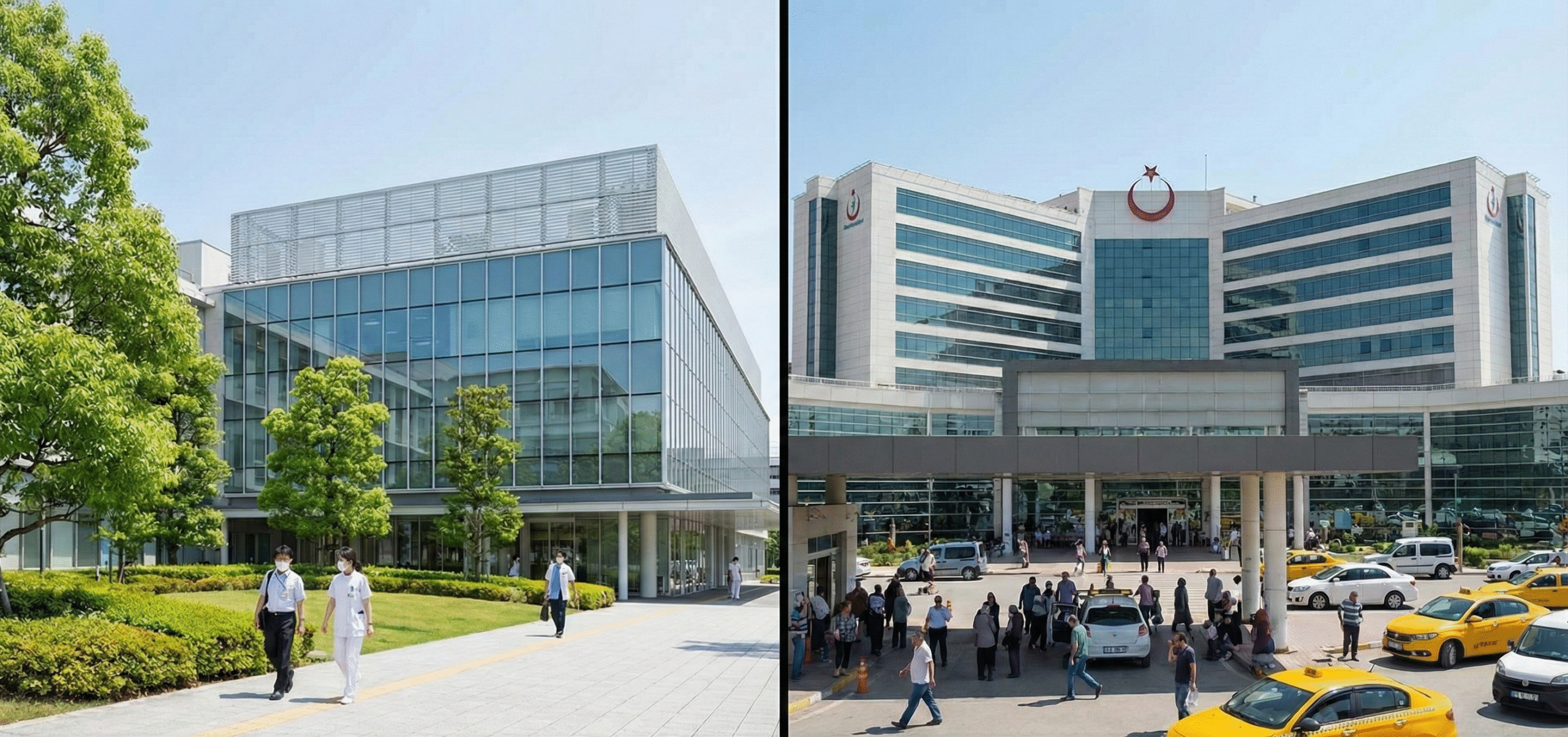
Japan’s Health Policy and a Comparative Analysis with Türkiye
Japan is regarded as one of the world’s “gold standards” in health policy, as reflected in indicators such as high life expectancy and low infant mortality rates. The system is built on an accessible and sustainable structure guided by the principle of “healthcare for everyone, everywhere, at all times.”
Introduced in 1961, the Universal Health Insurance (Kaihoken) system forms the backbone of Japan’s health policy. Participation is mandatory and operates as follows:
Healthcare services are not free, but costs are kept at reasonable levels. The general population pays 30% of medical expenses out of pocket, while the remaining 70% is covered by insurance. The co payment rate is 20% for preschool children and adults aged 70–74, and 10% for those aged 75 and above.
The system prioritizes disease prevention over treatment. Regular annual health checkups (Ningen Dock) and cancer screening programs are widespread and actively encouraged.
As a “süper aging society,” Japan faces rising long term care costs and physician shortages in rural areas, which pose significant challenges to the system’s sustainability.
Despite differing geographic and demographic structures, both Japan and Türkiye pursue similar goals under the concept of the “social state.” Türkiye’s Health Transformation Program launched in 2003 and the General Health Insurance (GSS) reform have brought its system closer to Japan’s level of inclusiveness.
Overview of Türkiye’s Healthcare System:
Healthcare services in Türkiye are delivered through a mixed structure of public, university, and private providers. Citizens covered by GSS can access public hospitals free of charge or at very low cost, while services in private hospitals are available with additional co payments.
Similarities:
Key Differences:
| Feature | Japan | Türkiye |
|---|---|---|
| Payment Model | Patients pay a standard 30% co payment at all medical institutions (public or private). | Public hospitals are generally free; variable additional fees apply in private hospitals. |
| Demographics | Focused on an aging population; chronic disease management and elderly care are central. | Predominantly young population (though rapidly aging); strong demand for maternal child health and emergency services. |
Hospital Access
Japan operates a “Free Access” system, allowing patients to visit any specialist without a referral requirement. In Türkiye, although the family physician system has been strengthened, there remains a high rate of direct hospital admissions.
Japan and Türkiye both present successful models in ensuring the right to access healthcare. While Japan strives to maintain financial sustainability despite its aging population, Türkiye focuses on meeting the dynamic needs of its young population and standardizing service quality. The main distinction between the two countries lies in demographic driven needs and patient cost sharing (financing) models.