
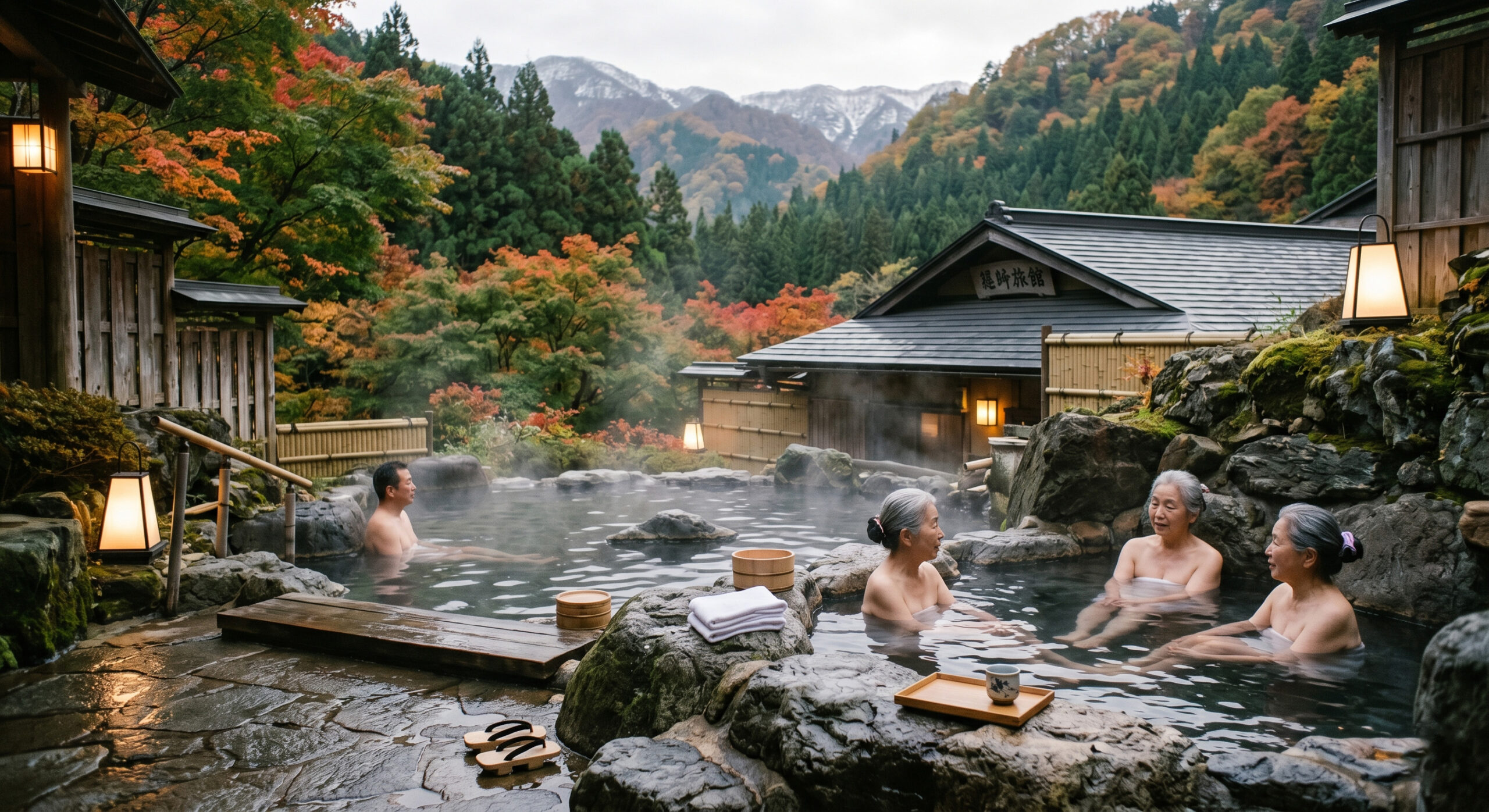
Japan’s Healing Heritage: Onsen Culture and Rituals
Japan is a unique cultural mosaic that skillfully blends traditional values with modern life. One of the most tranquil elements of this mosaic is onsen (hot spring) culture, which is not merely a form of bathing but a ritual of both physical and spiritual purification. Formed thanks to Japan’s volcanic structure, these natural hot springs have been indispensable places of relaxation for locals and travelers for centuries.
What is an Onsen?
Onsen, a term of Japanese origin, literally means “hot spring.” For a facility to be legally classified as an onsen, the water must naturally reach at least 25°C and contain specific minerals.
- Natural Sources: These waters, which emerge from underground in volcanically active regions, are typically between 37°C and 42°C.
- Rich Mineral Content: Rich in sodium, calcium, magnesium, and sulfur, these waters offer different therapeutic properties depending on their chemical composition.
Onsen Etiquette and Basic Rules
The onsen experience is built upon strict traditions based on the principle of “respect in a shared space.” The following rules are essential to properly observe this ritual:
- Cleanliness First: It is mandatory to thoroughly wash the body before entering the bath. This cleansing, performed while seated in shower areas, aims to maintain the hygiene of the shared water.
- Dress Code: Entering onsen waters with any clothing, swimsuits, or shorts is not allowed. This practice preserves the purity of the water and creates an environment where “everyone is equal,” free from social status.
- Use of Towels: Small towels brought along must never be placed in the water; they are usually placed on the head.
Types of Onsen and Experience Areas
Facility structures vary across Japan depending on geography:
- Ryokan Onsen: Located in traditional Japanese inns (ryokan), offering the most prestigious experience combined with accommodation and gourmet dinners.
- Rotenburo (Open Air Baths): Outdoor baths set in nature, often with mountain or sea views. Enjoying hot water in snowy weather is considered the peak of this experience.
- Sento (Urban Bathhouses): Modern facilities located in city centers, mainly used by locals for daily hygiene and socialization.
Effects on Health and Well being
The therapeutic effects of onsen waters are studied under the concept of “balneotherapy” in Japanese medicine:
- Muscle and Joint Relief: Hot water accelerates blood circulation and helps relieve chronic pain.
- Skin Renewal: Mineral balance helps remove dead skin cells and provides natural softness.
- Stress Management: The meditative effect of water helps reduce mental fatigue and stress caused by modern life.
Onsen Culture Today
Today, onsen have become one of Japan’s “soft power” elements. These facilities, which hold strategic importance in tourism, continue to preserve traditional rules while increasing informational efforts for foreign visitors. The Japanese government subjects these establishments to strict regulations to ensure that this cultural heritage is passed on to future generations without losing its essence.