



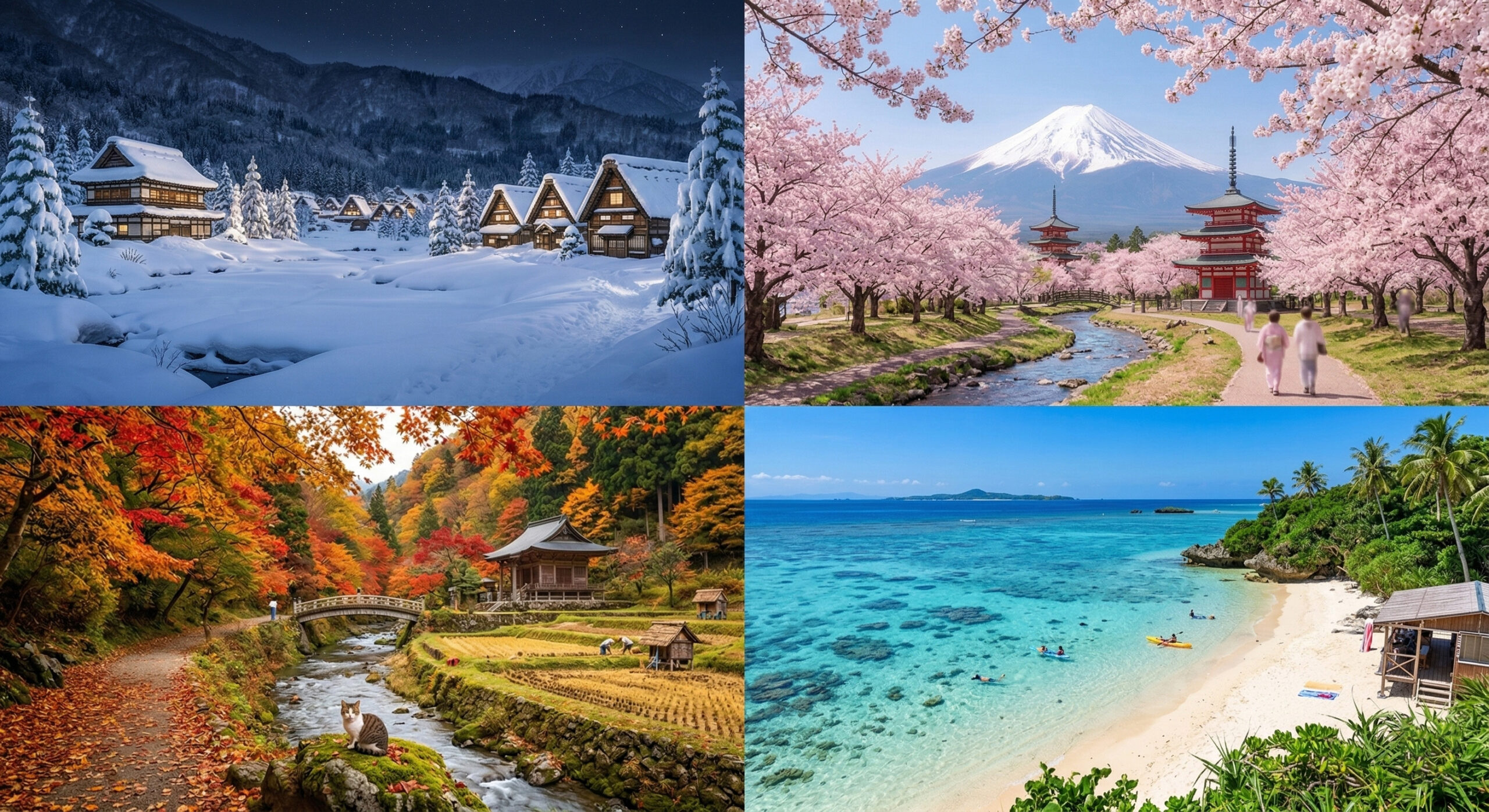
Japan’s Climate Map: The Artistic Dance of Four Seasons
Japan is not simply an island nation; it is a vast climate mosaic stretching from snowy mountains in the north to turquoise waters in the south. Located along the Pacific Ocean, its unique weather conditions shaped by geography deeply influence every aspect of Japanese life from festivals and cuisine to architecture and daily routines. Here is a comprehensive look at Japan’s seasonal richness and regional climate characteristics.
Japan’s geographical spread creates a broad corridor between tropical and temperate zones. This means that while one part of the country may be enjoying skiing in snowy mountains, another region may be relaxing under the sun in summer clothing.
In Japan, seasons are not merely calendar labels; each carries its own spirit and way of celebration.
Winter (December – February): A White Fairy Tale
In the north, especially in Hokkaido, winter means meters of snow and world famous snow festivals.
Spring (March – May): The Symbol of Renewal
Spring is perhaps the most iconic season in Japan.
Summer (June – August): Humidity, Festivals and Lights
Summer months are characterized by high humidity and heat. July and August can feel particularly intense, but the warmth also brings Japan’s most vibrant season.
Autumn (September – November): The Most Beautiful Shade of Red
With its cool and dry air, autumn is ideal for nature lovers.
Japan can be divided into three main climate regions.
Located on the Pacific Ring of Fire, Japan occasionally faces powerful natural events. Typhoons, especially during late summer and early autumn, bring heavy rainfall and strong winds. However, thanks to advanced technology and a highly prepared society, Japan is considered one of the most disaster ready countries in the world.
In Japan, climate is not merely a weather forecast it is a philosophy of life. From snow covered mountains to tropical beaches, this diversity offers a different experience with every visit. The colorful richness of the seasons adds depth to both the landscape and the spirit of Japan, making it one of the most unique destinations in the world.