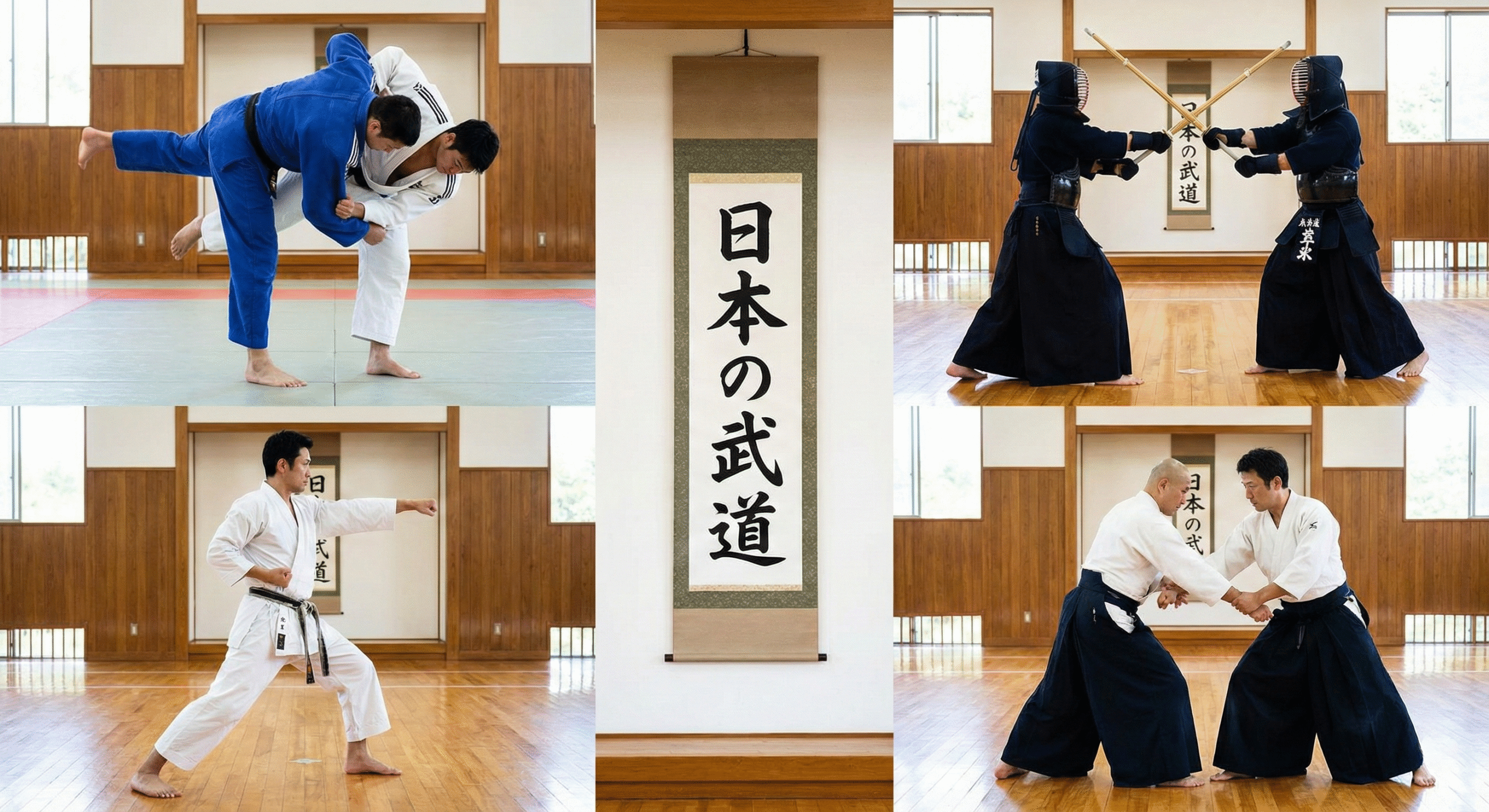
Japanese Martial Arts: A Journey into the Depths of Judo, Kendo, Karate-Do, and Aikido
Japan’s rich martial arts heritage is not merely a display of physical strength; discipline, respect, and philosophical depth lie at the core of these teachings. Judo, Kendo, Karate-Do, and Aikido, all united under the concept of “Budo” (the Way of the Martial Arts), are regarded as four fundamental pillars of Japanese culture.
Let us take a closer look at these disciplines, each with its own unique techniques, philosophy, and historical roots.
- Judo: The Power of the “Gentle Way”
Developed in the 19th century by Jigoro Kano, Judo literally means “the Gentle Way.” Its core principle is not to resist brute force, but to neutralize an opponent by using their own strength against them.
- Technical Structure: Judo is primarily based on throwing techniques (nage-waza), grappling and holding techniques on the ground (katame-waza), and choking techniques. Rather than striking, the core objective is to unbalance the opponent and bring them to the ground.
- Philosophy: It is founded on the principles of Seiryoku Zenyo (maximum efficient use of energy) and Jita Kyoei (mutual welfare and benefit). The goal is not only physical development, but also the cultivation of character.
- Training and Status: Suitable for both children and adults, Judo has been an Olympic sport since 1964 and enjoys universal respect worldwide due to this status.
- Kendo: The Way of the Sword and a Mirror of the Spirit
Meaning “the Way of the Sword,” Kendo is the modern discipline derived from the samurai swordsmanship techniques of kenjutsu. It is practiced using traditional armor (bogu) and a bamboo sword (shinai).
- Technical Structure: Kendo involves swift and decisive strikes to specific target areas of the opponent: the head (men), wrist (kote), torso (do), and throat (tsuki). The concept of Ki-Ken-Tai-Ichi the unity of spirit, sword, and body is essential for a valid strike.
- Philosophy: The purpose of Kendo is to discipline human character through sword training. It begins with courtesy and ends with courtesy.
- Training: In addition to physical endurance, Kendo develops mental focus (zanshin). It is an effective path for confronting one’s fears and strengthening willpower.
- Karate-Do: The Art of the “Empty Hand”
Originating on the island of Okinawa, Karate-Do meaning “the Way of the Empty Hand” is one of the most well known unarmed martial arts. It teaches both defense and offense by using the body itself as a weapon.
- Technical Structure: Karate consists of punches, kicks, knee and elbow strikes, as well as blocking techniques. Form practice known as kata is critical for perfecting techniques.
- Philosophy: “Karate begins and ends with courtesy.” As stated by Gichin Funakoshi, “There is no first attack in Karate.” The aim is to cleanse the mind of negative thoughts and to achieve a refined character.
- Training: It fosters self discipline, focus, and reflex development. Karate is a discipline where physical power is harmonized with mental control.
- Aikido: The Way of Harmony with Energy
Developed by Morihei Ueshiba (O-Sensei), Aikido can be described as “the Way of Harmony with Universal Energy.” Rather than clashing with opponents, it aims to resolve conflict by redirecting their energy.
- Technical Structure: Aikido focuses not on strikes, but on neutralizing attacks through joint locks, throws, and circular movements that redirect the opponent’s force.
- Philosophy: Often known as the “Art of Peace,” Aikido emphasizes avoiding competition and ego, controlling an aggressor without causing harm, and upholding universal harmony.
- Training: Rather than raw strength, it requires balance, timing, and flexibility. Achieving mental calmness and inner peace is the ultimate goal of Aikido training.
Japanese martial arts represent far more than physical combat on the mat. Judo, Kendo, Karate-Do, and Aikido teach practitioners perseverance in the face of challenges, respect for opponents, and continuous self improvement (Kaizen). These disciplines serve as unique guides for those seeking both physical well being and mental maturity.