



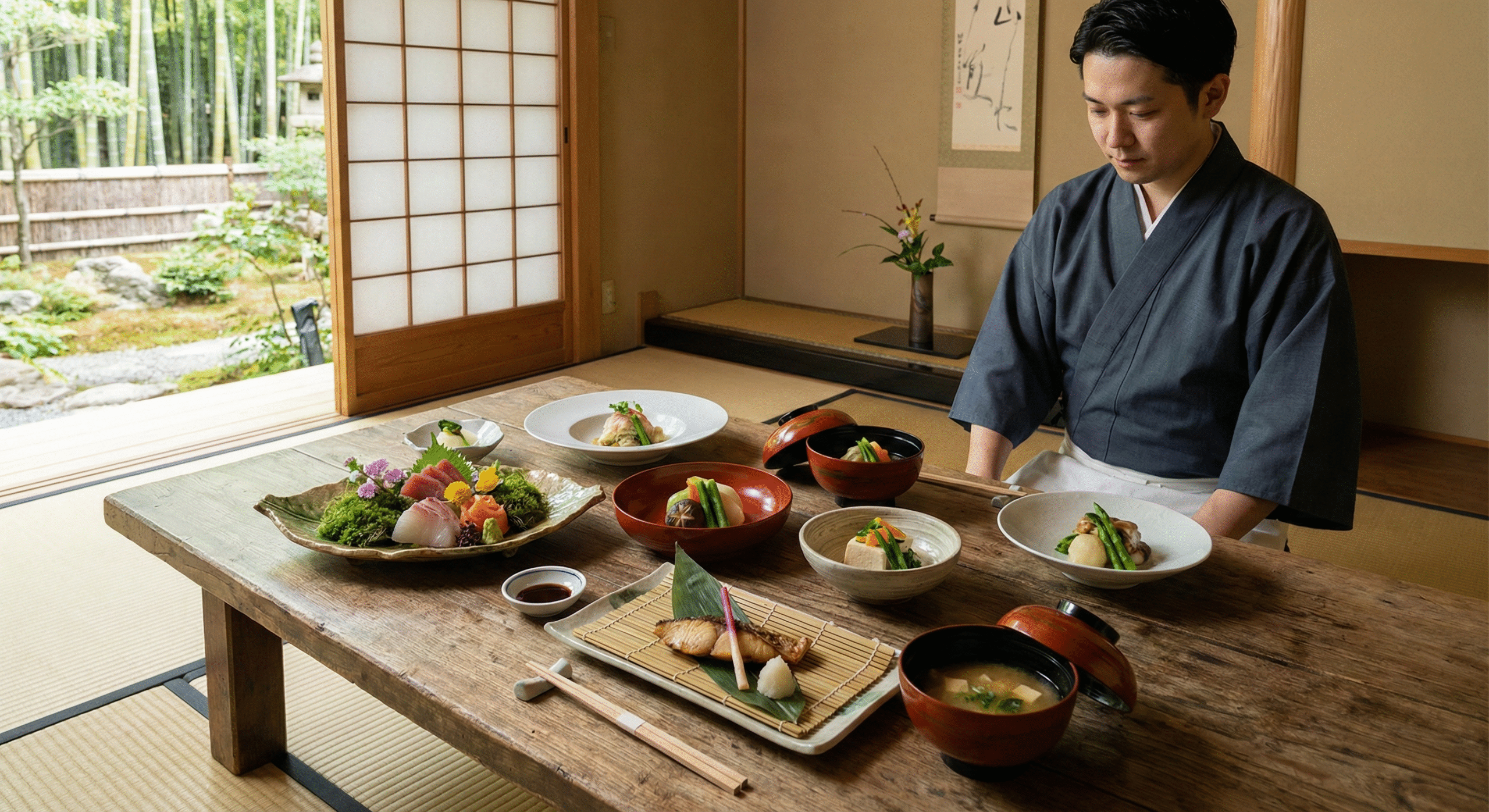
Japanese Food Culture: The Delicious Harmony of Tradition and Modernity
One of the most respected cuisines in world gastronomy, Japanese cuisine is known for the complexity hidden behind its simplicity, its aesthetic presentation, and its deep respect for nature. Appealing not only to the palate but also to the eye and the spirit, this culinary culture places seasonality, freshness, and balance at its core.
Here are the fundamental pillars of Japanese cuisine and its standout culinary highlights:
The heart of Japanese cuisine lies in the concept of shun, which refers to enjoying ingredients at the peak of their flavor.
It is often said that the Japanese “eat with their eyes.” Washoku (traditional Japanese cuisine), protected by UNESCO, places great importance on visual balance. From plate selection to color harmony, dishes are presented with the care of a work of art. The goal is not to mask natural flavors with heavy sauces, but to bring out umami the fifth taste.
Sushi, where fresh seafood meets vinegared rice, is the global ambassador of Japanese cuisine.
While sushi is refined, ramen is warm, familiar, and deeply satisfying. Although it has Chinese origins, ramen evolved in Japan and became a national comfort food.
With origins rooted in the tea ceremony, kaiseki represents the height of Japanese hospitality (omotenashi). It consists of multiple small dishes prepared with seasonal ingredients and served in a carefully defined order. This is not merely a dinner, but an artistic performance through which the chef showcases skill and sensibility.
After work, the heart of Japanese social life beats in izakaya. Often compared to Spain’s tapas culture, these casual venues serve shared plates alongside drinks.
Traditional Japanese sweets, known as wagashi, are generally less sweet than Western desserts.
Japanese food culture is a living heritage that blends the wisdom of the past with modern tastes. From the comforting warmth of a bowl of ramen to the elegance of a kaiseki table, every bite reflects Japan’s meticulous, respectful, and aesthetic spirit. Exploring this cuisine is not merely about satisfying hunger, but about experiencing a culture with all your senses.