Japanese Education System: The Perfect Balance of Discipline, Ethics, and Future Innovation
One of the greatest secrets behind Japan’s journey to becoming a global economic power lies within its classrooms. In Japanese culture, education is not merely an academic process; it is a sacred foundation where character is shaped, social harmony (Wa) is taught, and innovation is blended with discipline.
Here are the core dynamics of the Japanese education system, widely regarded as one of the most successful models in the world.
- Structural Architecture: The 6-3-3-4 Model
Japan adopts a structured educational system established after World War II, whose efficiency has proven itself over decades.
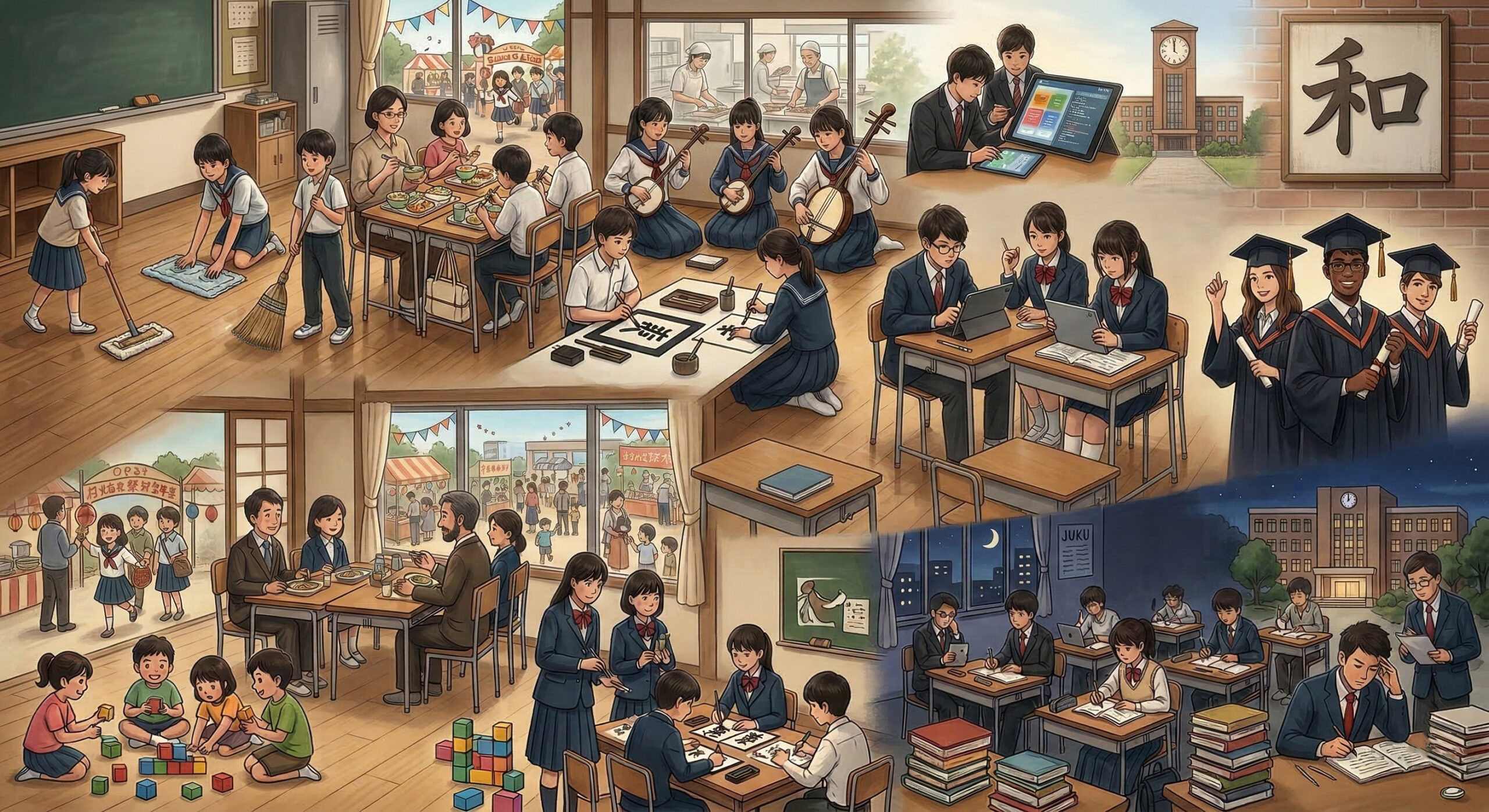
- Elementary School (Shougakkou – 6 Years): In the early years, rather than focusing heavily on grades, emphasis is placed on manners, respect for others, and basic life skills.
- Junior High School (Chugakkou – 3 Years): During this stage, when the curriculum becomes more intensive, “Bukatsu” (club activities) play a major role in strengthening students’ social bonds.
- High School (Koukou – 3 Years): Although not compulsory, the enrollment rate reaches about 98 percent. It is a critical stage where students begin shaping their professional careers or university goals.
- Higher Education (Daigaku – 4 Years): For students who overcome the intense entrance exam competition often called “exam hell,” this period focuses on specialization and preparation for professional life.
- Beyond Academic Knowledge: Character and Responsibility
What makes the Japanese education system unique is its goal of raising students as responsible citizens.
- Souji (Cleaning Culture): Japanese schools do not employ janitors. Students clean their own classrooms, corridors, and shared spaces. This ritual instills humility and environmental responsibility.
- Dotoku (Moral Education): As an official part of the curriculum, these lessons discuss values such as honesty, love for nature, and social ethics.
- Technology and STEM on the Road to Society 5.0
While remaining deeply connected to traditional values, Japan is also a pioneer of digital transformation in education.
- GIGA School Project: Through this visionary initiative by the government, every student receives a digital device and schools are equipped with high speed internet.
- Future Coders: Programming logic and robotics are integrated into the curriculum from elementary school through gamified learning.
- Competition and Support: Exam Culture and “Juku”
One of the most defining and sometimes controversial aspects of the system is its highly competitive environment.
- Juku (Cram Schools): These after school private institutions are a common part of life in Japan. Students aiming for prestigious high schools or universities often spend their evenings in these preparatory centers.
- Entrance Examinations: Graduating from a prestigious institution in Japan is widely seen as the key to lifelong career opportunities.
- From Individual Success to Group Harmony (Wa)
Japanese educational philosophy emphasizes group harmony over individual glory.
Shared School Life: Eating lunch in the classroom with teachers and organizing school festivals throughout the year strengthen the spirit of teamwork.
Sense of Belonging: History and culture classes do more than provide information; they cultivate a strong national identity and a deep sense of belonging to society.
The Symphony of Tradition and the Future
The Japanese education system represents a unique balance: children in technology equipped classrooms who still hold traditional cleaning brooms. Despite the intense examination marathon, this model successfully combines academic excellence with moral maturity, continuing its mission of raising not only knowledgeable individuals but also citizens who contribute meaningfully to society.