



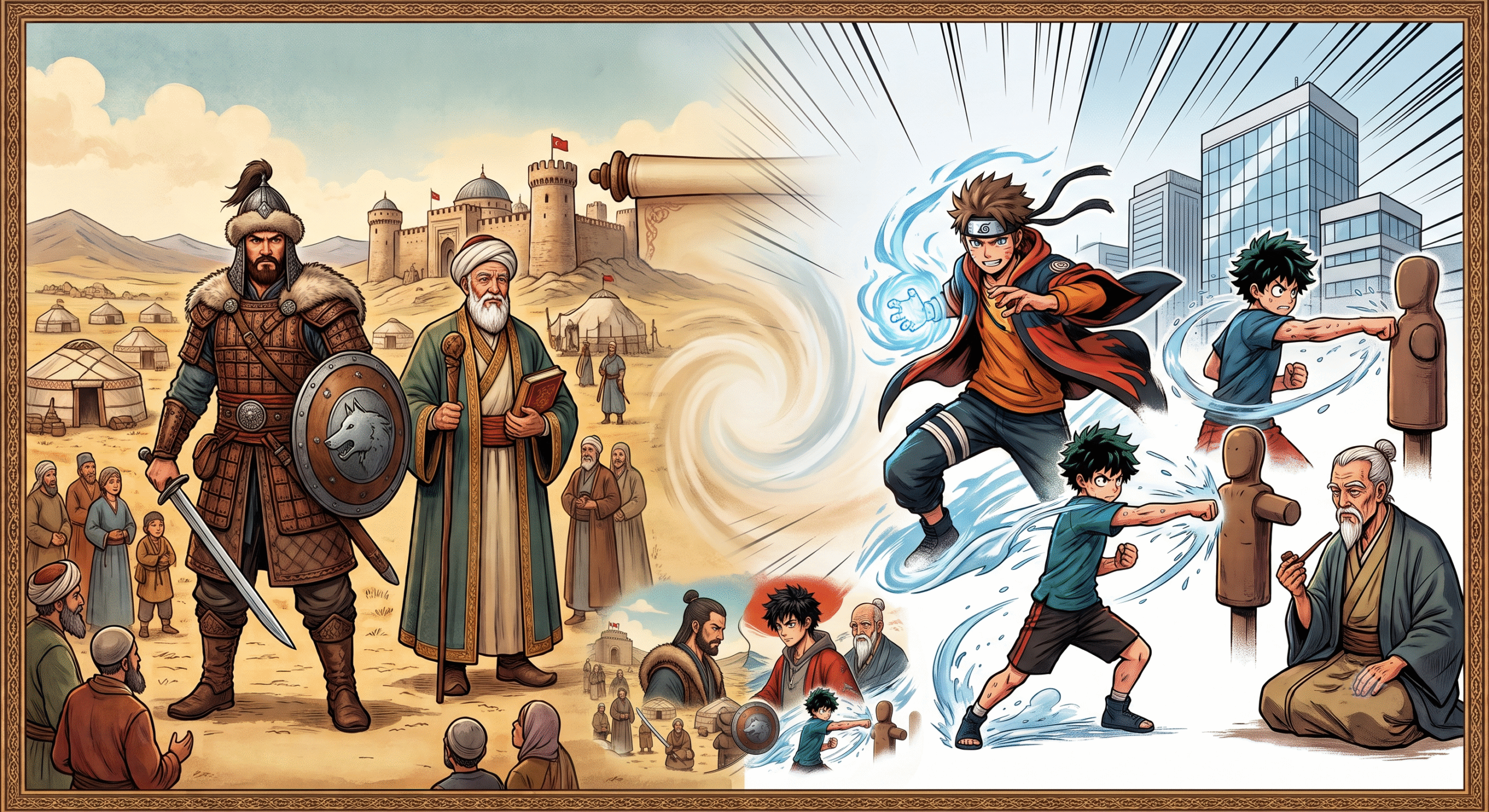
Hero Archetypes in Turkish and Japanese Popular Culture: Shared Stories of Two Cultures
What makes a story timeless and unforgettable is not merely the thrill of the plot. The lasting impact of a narrative is determined by the reader’s or viewer’s ability to find a piece of themselves within the story and the depth of the bond they form with the characters. At this very point, the concept of the “hero archetype,” a reflection of the collective unconscious, comes into play.
While societies in different geographies develop their own unique cultural codes, the heroes they construct possess surprisingly similar universal qualities. In this wide spectrum ranging from Turkish epics to modern Japanese anime and manga, the characters created actually symbolize the common experiences, fears, and ideals of humanity.
In this study, by examining the hero archetypes manifested in Turkish and Japanese popular culture, we will address the striking similarities and methodological differences between these two deep rooted cultures.
What is a Hero Archetype?
An archetype refers to character models expressing humanity’s common thought patterns that appear repeatedly across different periods, geographies, and cultures. The main archetypal models frequently encountered in world literature and mythology are as follows:
The Chosen One: A figure born with a great mission or a predetermined destiny.
The Wise Teacher / Master: A guide who leads the hero, transferring experience and wisdom.
The Rebel Warrior: A character who refuses to bow to injustice and challenges the status quo.
The Sacrificial Protector: A figure capable of sacrificing themselves for the welfare of society or loved ones.
The Justice Warrior: A hero fighting for the establishment of righteousness and balance.
When these basic patterns are carefully examined, it becomes clear that building bridges between traditional Turkish epics and modern Japanese narratives is much easier than one might think.
The Concept of the Hero in Turkish Culture
In traditional Turkish narratives, heroism appears as a social necessity and responsibility rather than an individual effort of existence. The hero figure in Turkish epics and folk tales is an idealized character who is brave, strong, and just, protecting their society against all external threats and never faltering in the face of hardship. The focus here is not personal ambition, but collective benefit and the survival of the community.
The Concept of the Hero in Japanese Culture
In Japanese storytelling, especially in modern anime and manga, heroes are usually constructed as evolving individuals defined by their flaws. They might be weak at the beginning, make mistakes, feel fear, or experience deep internal conflicts. However, the essence of the narrative rests on the process of personal transformation and development through the hardships these characters endure.
Common Intersections of Turkish and Japanese Heroes
Despite being born in different geographies, the heroes of both cultures unite in universal values:
| Value | Turkish Epics | Japanese Anime/Manga |
| Sense of Justice | Bamsı Beyrek takes up the sword against injustice and tyranny. | Naruto and Tanjiro fight to end injustice and evil in the world. |
| Loyalty | Loyalty to the tribe, state, family, and tradition is essential. | Bonds of friendship, team spirit, and companionship are paramount. |
| Sacrifice | Heroes sacrifice their lives and wellbeing for the public’s safety without blinking. | Characters do not hesitate to endanger themselves to protect their loved ones. |
Methodological Differences: Where the Two Cultures Diverge
Community Centric vs. Individual Development
In Turkish epics, the hero directly represents the collective will and power of the society, state, or tribe to which they belong. For instance, in Oghuz Khagan narratives, the vision is to establish a state, keep the nation together, and ensure world order. In contrast, the focus in Japanese narratives is the individual’s internal world, the personal maturation process, and the search for one’s own identity. While Naruto’s struggle ultimately serves society, it begins fundamentally with the motivation for self acceptance and proving his personal existence.
Perfect Hero vs. Flawed Hero
Traditional Turkish epic heroes are usually idealized figures possessing extraordinary traits from the moment they are born, appearing almost perfect. Anime heroes, however, are characters who make mistakes, suffer failures, fall into doubt, and must face their human fears. This imperfection is the most important element that allows the modern viewer to empathize and bond with the character.
Universality Behind Global Success
The primary reason anime and manga have reached billions of people worldwide and turned into a global phenomenon today is their ability to present these deep rooted archetypes and universal human values in a modern language.
Viewers see themselves in Naruto’s loneliness, share Luffy’s passion for freedom, or witness Tanjiro’s determination to protect his family. In doing so, they are not watching a foreign culture, but the common heritage of humanity. Similarly, the themes of courage, friendship, justice, and sacrifice in Turkish epics carry a universal potential that, when processed with the right artistic forms, can transcend borders and find resonance all over the world.