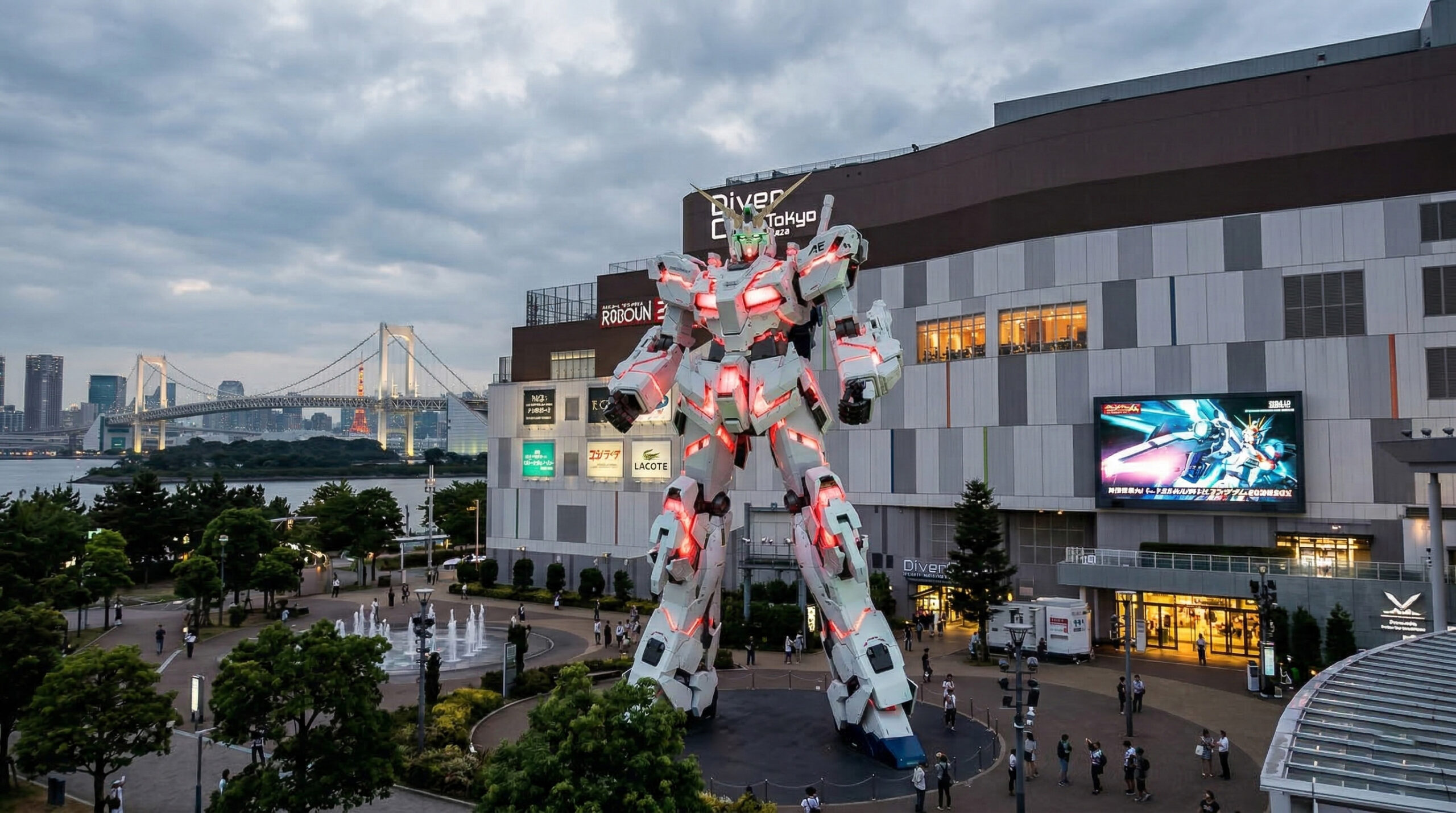
Gundam: A Revolution in Science Fiction and an 18 Meter Cultural Icon
One of the most magnificent symbols of Japanese pop culture, Gundam has adorned not only television screens but also engineering dreams and modern art galleries since 1979. Created by Yoshiyuki Tomino, this 18 meter “Mobile Suit” stands at the center of a profound saga that portrays the tragedy of war and the cold face of technology through towering giant robots.
- The Birth of a Legend: Pioneer of the “Real Robot” Genre
What fundamentally distinguishes Gundam from other mecha (giant robot) anime is the way its robots are portrayed not as “invincible heroes,” but as mass-produced “military weapons.”
- Yoshiyuki Tomino’s Vision: First aired in 1979, Mobile Suit Gundam offered audiences more than just a battle story; it presented political conflicts, colonization, and the human tragedy experienced on both sides of war.
- Universal Century: The Gundam universe takes place in a future where humanity has migrated to space colonies. This fictional setting possesses a historical depth detailed enough to rival classic science fiction literature.
- Engineering and Design: The Anatomy of the RX-78-2
The RX-78-2, the first model that comes to mind when Gundam is mentioned, is a masterpiece of design with its simplicity and functionality.
- Physical Dimensions: Standing approximately 18 meters tall, this giant unit is both durable and agile thanks to the fictional “Luna Titanium” alloy used in its armor.
- Color Palette: Its white, blue, and red colors may initially symbolize a traditional hero, yet the ventilation panels, joint mechanisms, and thrusters embedded in its body emphasize that it is a realistic machine.
- Arsenal: High energy weapons such as the “Beam Saber” and “Beam Rifle” represent the technological consistency and internal logic of the series.
- Sociological and Economic Impact: The Gunpla Phenomenon
Gundam’s influence has not been limited to the screen; it has created a vast economy and a distinct subculture.
- Gunpla (Gundam Plastic Model): The model kits produced by Bandai allow millions of fans worldwide to build their own robots. The precision and engineering curiosity fostered by this hobby have become the starting point for many robotics engineers in Japan today.
- Life Size Statues: The 18 meter moving Gundam statues rising in cities such as Tokyo and Yokohama stand as proof of how thin the line between fiction and reality has become.
- Technological Inspiration and Vision of the Future
Gundam is less a fictional universe and more a prototype of a possible technological leap in the future.
- Exoskeletons and Robotics: Modern military exoskeletons and rescue robots carry strong traces of the “human machine interface” concept presented in Gundam.
- Space Colonies: The “O’Neill Cylinders” depicted in the series massive habitats in space have become serious reference points in today’s discussions on space mining and colonization projects.
More Than a Machine
Gundam is far more than an 18 meter mass of metal; it is a reflection of humanity’s technological ambition, its search for peace, and its boundless imagination. For more than 40 years, this enduring legend has continued to set a standard in the world of anime while inspiring the engineers of the future.