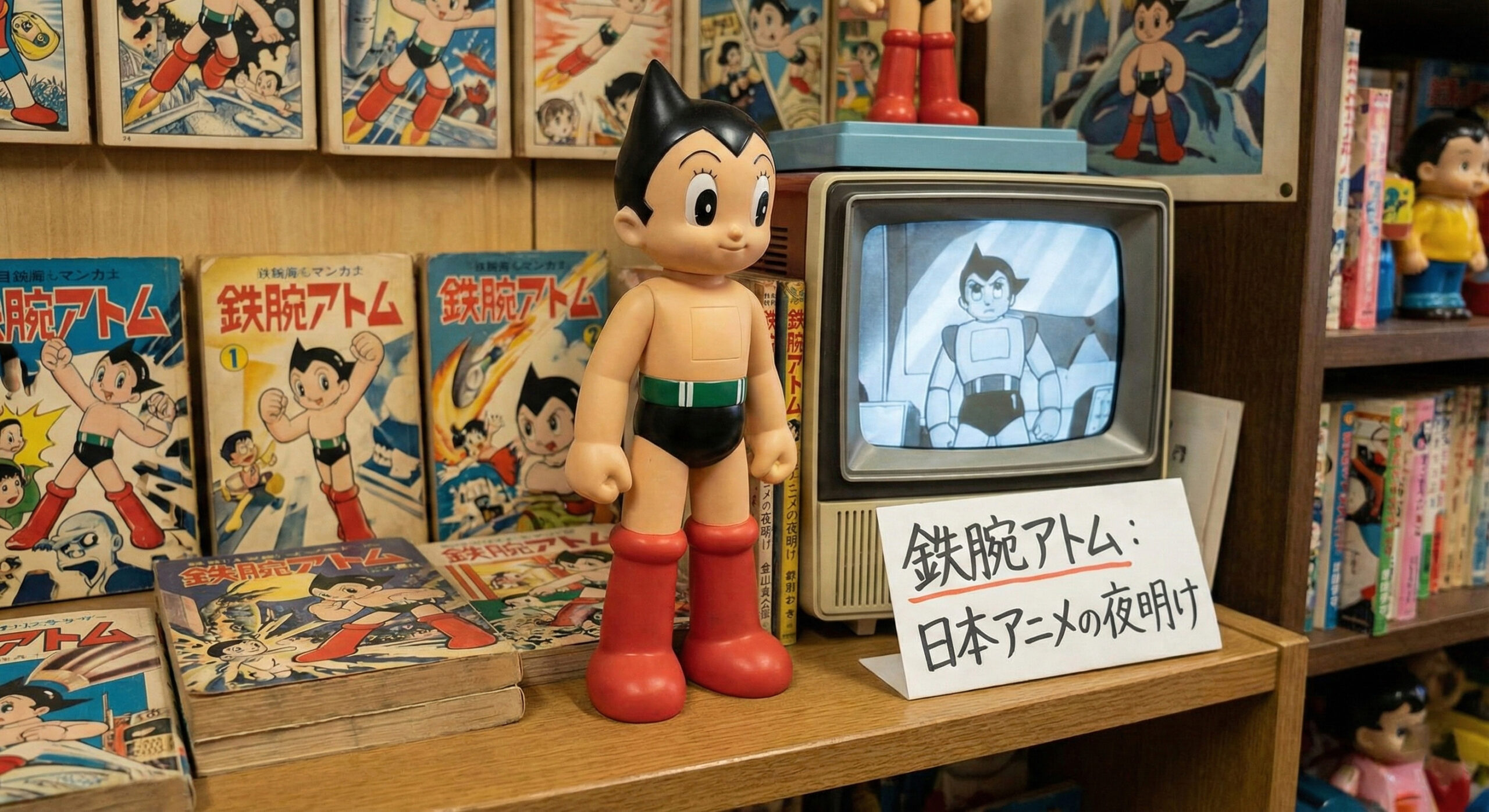
Astro Boy: The Dawn of the Japanese Anime Industry and the First Robot Hero
Astro Boy (originally titled Tetsuwan Atom) is the most recognizable face of Japan’s popular culture exports and one of the most indisputable icons in anime history.
Born in the early 1950s during Japan’s post war reconstruction period, this character evolved into a universal phenomenon representing technology, humanism, and peace.
Below is a detailed examination of Atom’s creation process, story, and global legacy:
- Creation and Historical Background
The genius behind Astro Boy is the legendary artist Osamu Tezuka, who is known in Japan as the “God of Manga.”
- Birth (1952): The character first appeared in 1952 as a manga series in Shonen magazine. With a drawing style influenced by Disney aesthetics (large eyes, rounded forms), Osamu Tezuka laid the foundations of today’s manga and anime visual language.
- Television Revolution (1963): Astro Boy was broadcast in 1963 as Japan’s first 30 minute television anime series. This move is considered the birth of the Japanese animation industry (anime). The production techniques Tezuka applied at the time remain industry standards today.
- Story and Character Depth
Astro Boy is, at its core, a modern “Pinocchio” story; however, it is built upon a far more technological and dramatic foundation.
- Tragic Beginning: The story begins when Dr. Tenma, the head of the Ministry of Science, creates a powerful robot to replace his son Tobio, who died in a traffic accident. However, when Tenma realizes that the robot (Astro) will never grow up, he rejects him and sells him to a circus.
- Birth of the Hero: Later rescued by the compassionate Professor Ochanomizu, Astro begins using his extraordinary powers (100,000 horsepower, flight, finger lasers) to protect both humanity and robots.
- Character Traits: Despite being a machine, Astro Boy possesses a “kokoro” (heart/soul). His superior emotional intelligence and strong sense of justice make him more “human” than humans themselves.
- Cultural Impact and Success
Astro Boy is the first and most powerful representative of Japan’s “soft power.”
- Industrial Turning Point: The 1963 series broke rating records in Japan and became one of the first Japanese animations to be exported to the United States.
- Technology and Ethics: The series brought issues such as artificial intelligence ethics, robot rights, and human–machine coexistence into discussion at a time when these concepts were not yet popular (in the 1950s). The more sympathetic attitude of Japanese society toward robots, compared to Western societies, is largely rooted in the influence of Astro Boy.
- Modern Legacy and Adaptations
For more than half a century, Astro Boy has managed to maintain its popularity.
- Remakes: It has returned to the screen multiple times, including in 1980 (color), 2003 (modernized), and 2009 (a Hollywood produced CGI film).
- Pluto: Renowned mangaka Naoki Urasawa reinterpreted one chapter of Astro Boy as a dark crime story under the title Pluto, and this work also made a major impact worldwide.
Astro Boy is far more than a children’s entertainment. It represents hope for the peaceful use of nuclear energy (its name is “Atom”), the ethical boundaries of technology, and the struggle for the rights of the marginalized (embodied by robots). This immortal work by Osamu Tezuka is a timeless masterpiece that still has much to say to our world standing on the threshold of the age of artificial intelligence.