


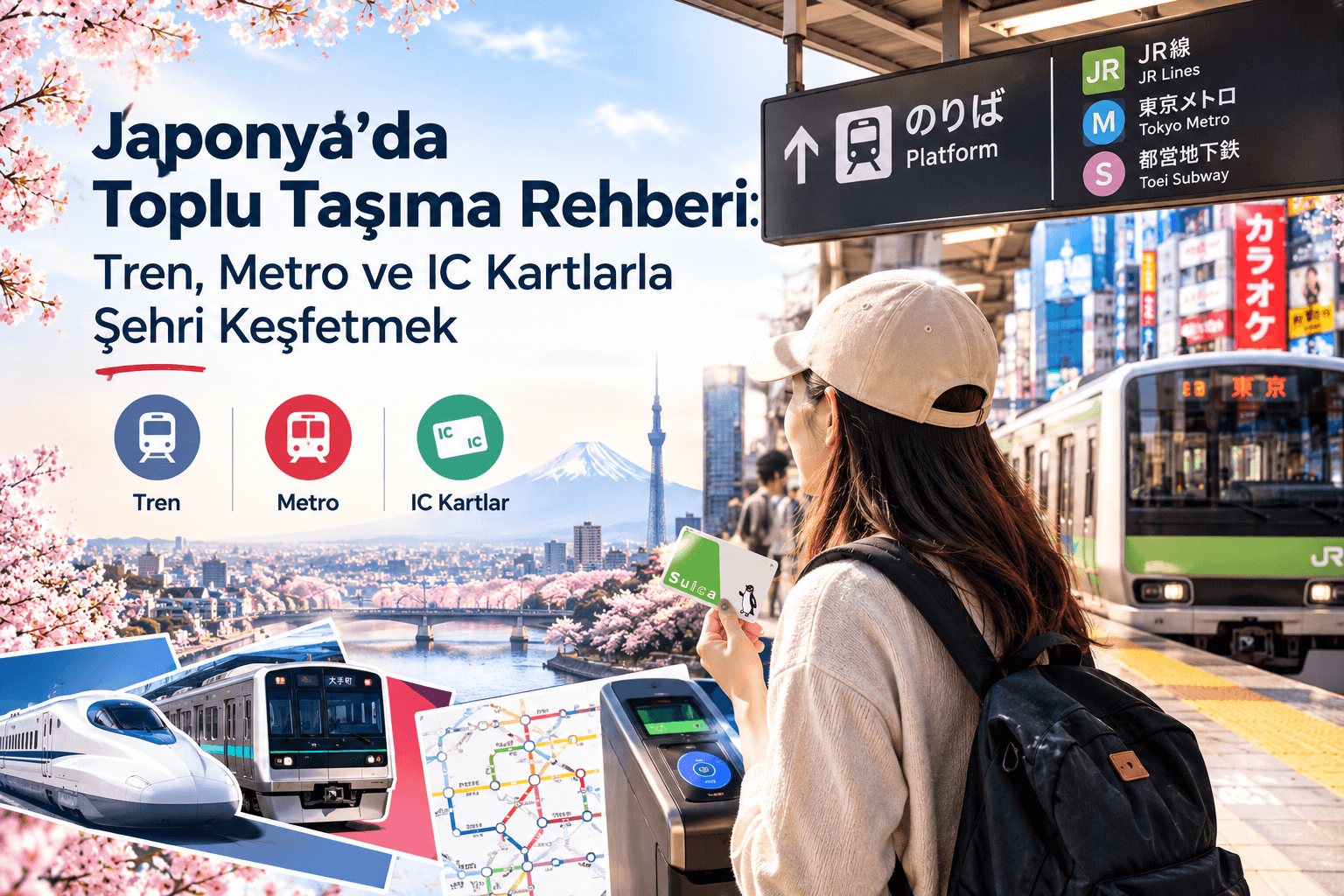
A Guide to Public Transportation in Japan: Exploring the City by Train, Subway and IC Card
In this article
One of the things that surprises students arriving in Japan for the first time the most is how punctual and busy public transportation is. More than 40 million trips are made in Tokyo every day, and the average train delay is under one minute. In this post, we've gathered the essentials you need to know before starting language school.
What Transportation Options Are There in Japan?
Here are the main options you can use within cities and between them:
- JR lines: Japan Railways' urban and intercity trains.
- Subway: Underground lines run by companies such as Tokyo Metro and Toei.
- Private railways: Commuter trains run by companies such as Odakyu, Keio and Tokyu.
- Shinkansen: High-speed trains that reach 320 kilometers per hour.
- Bus: Common in neighborhoods not served by train lines and in smaller cities.
What Is an IC Card and How Do You Use It?
IC cards such as Suica, PASMO and ICOCA are rechargeable cards that let you pass through the ticket gates without buying a ticket. You can also use the same card to shop at convenience stores and vending machines. Follow these steps to use the card:
- Get a card from the ticket machine at the station or from the wallet app on your phone.
- Load money onto your card with cash or a credit card.
- Tap the card on the reader when entering and exiting the ticket gate.
- The fare is automatically deducted based on the distance you travel.
Did you know?
Tokyo's Shinjuku Station, with around 3.5 million passengers a day, has entered the Guinness World Records as the busiest train station in the world.
Discounted Commuter Passes for Students
Language school students can get a student commuter pass called "tsuugaku teiki" for the route between school and home. All you need to do is show the student certificate you get from your school at the station's ticket office. For those who travel the same route every day, the pass saves up to 50 percent compared with regular tickets.
Sample monthly transportation costs
| Type of transportation | Average monthly cost | Note |
|---|---|---|
| Student commuter pass | 5,000 – 8,000 yen | Between school and home |
| Unrestricted use with an IC card | 10,000 – 15,000 yen | Including weekend trips |
| Bicycle | 0 yen | Excluding registration fee |
Rules to Follow on Public Transportation
There are some unwritten rules on public transportation in Japan:
- Don't talk on the phone on the train, and put your phone on silent.
- On escalators, stand on the left in Tokyo and on the right in Osaka.
- Leave priority seats for elderly people, pregnant women and people with disabilities.
- During rush hour, wear your backpack on your front.
Conclusion
Although Japan's public transportation system may look complicated at first glance, you'll get used to it within a few days. Once you have your IC card and know your route, exploring the city becomes very easy. For any questions about your language school application and your life in Japan, you can reach out to Edusama's consultants.