



Is English Spoken in Japan?
For those planning to travel, study, or live in Japan for a long time, language is one of the most curious topics. Japan is a country that stands out with its unique culture, traditions, and daily life order. However, for many people who do not know Japanese, the first question that comes to mind is: Is English spoken in Japan?
English is not an official language of Japan. The primary language for daily life, official procedures, the education system, and public services is Japanese. For this reason, the use of English in Japan can vary depending on the region visited, the environment, and the people being communicated with.
Is the Use of English Common in Japan?
English is not as widely spoken in daily life in Japan as it is often thought. Most of the local population uses Japanese for daily communication. The number of people who know English in supermarkets, small restaurants, neighborhood businesses, or rural areas can be limited.
Despite this, it is not correct to say that English is not used at all in Japan. It is possible to encounter people who know English in large cities, tourist areas, airports, hotels, and some international institutions. However, this does not mean that one can easily communicate in English everywhere.
Is English Spoken in Tourist Areas?
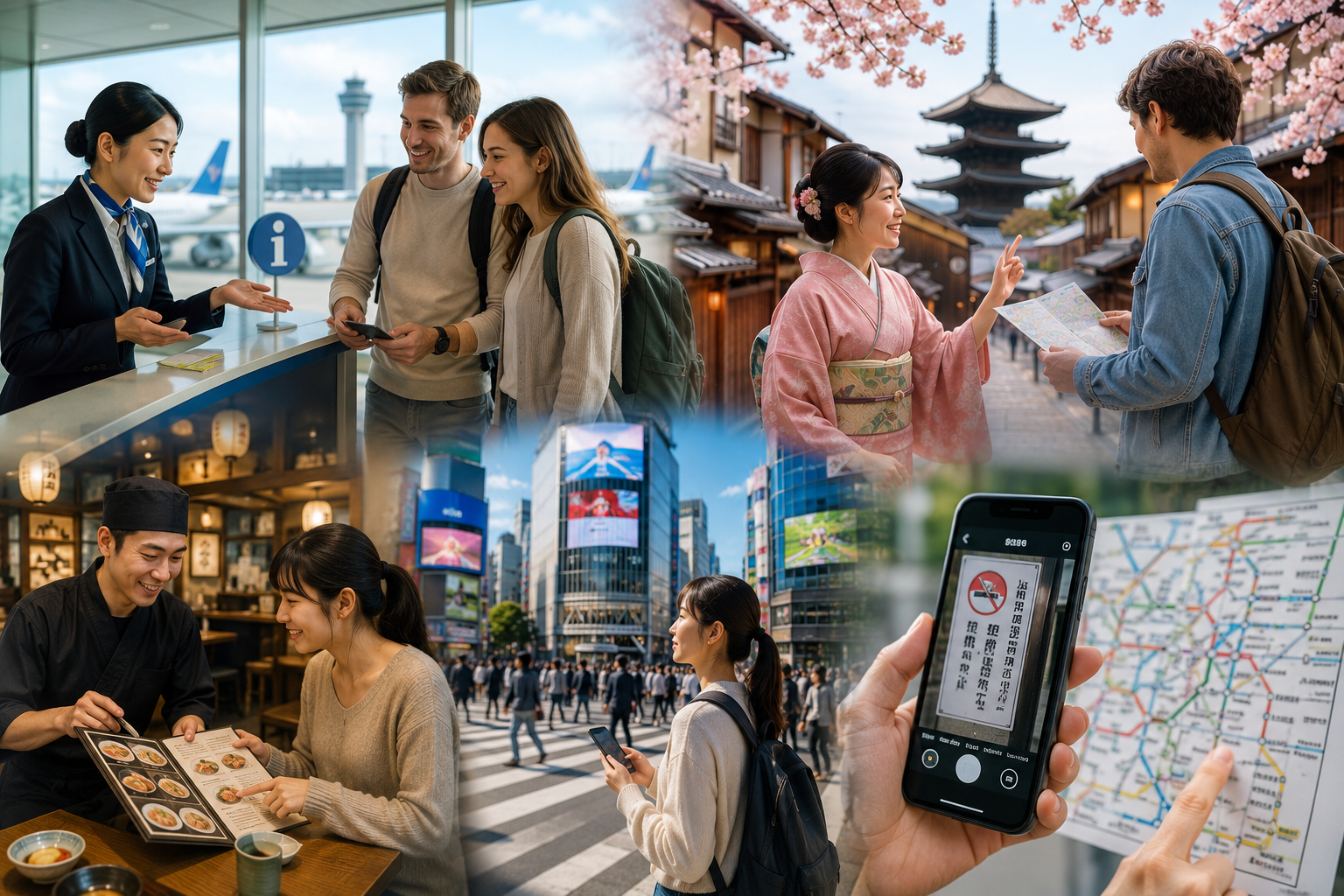
English usage is more common in large cities like Tokyo, Osaka, Kyoto, Yokohama, and Fukuoka. Especially in areas frequently visited by tourists, English explanations can be found on signs, transportation systems, and information points.
There is a higher probability of encountering English speaking staff in airports, large train stations, chain hotels, museums, tourist restaurants, and shopping malls. Additionally, English brochures, maps, and guidance materials can be found at tourist information centers.
However, English might not be sufficient in small businesses or in one on one communication with local people. Therefore, knowing basic Japanese phrases provides a great advantage during a trip to Japan.
Use of English in Public Services
Public services in Japan are mostly provided in Japanese. Japanese language proficiency is quite important for municipal procedures, healthcare services, official documents, banking transactions, and processes related to government institutions.
In large cities, some institutions may provide English support for foreigners. Especially in regions like Tokyo, where the international population is denser, information points providing services in English can be found. However, this support is not at the same level in every city or every institution.
For students or employees who will live in Japan for a long time, basic Japanese knowledge is of great importance for following official procedures more easily.
Is English Spoken in Business Life?
The main language used in business life in Japan is mostly Japanese. Meetings, correspondence, and daily communication in local companies are generally conducted in Japanese. Therefore, Japanese knowledge is a significant advantage for those who want to work in Japan.
Nevertheless, English may be used in international companies, technology firms, institutions working with foreign clients, or global teams. However, this situation varies according to the company, position, and sector. The fact that English is used in a workplace may not mean that all employees speak English fluently.
English in Universities and Education
Many universities in Japan offer undergraduate, graduate, and research programs taught in English. English is used more actively, especially in programs prepared for international students.
The rate of English proficiency in academic circles may be higher compared to daily life. Some departments at universities, research laboratories, and international student offices can provide English support.
Additionally, English language schools and private language courses are available in Japan. Native English speaking teachers or expert instructors in the field of English education can serve in these institutions.
How is the English Knowledge of the Japanese People?
Students in Japan receive English education throughout their school lives. However, since this education is often exam oriented, not everyone’s speaking practice may be strong. Therefore, while many people can read English or understand simple expressions, they may act shy about speaking.
The rate of English proficiency may be higher among the younger generation and people living in large cities. Conversely, English knowledge may be more limited in rural areas, small cities, or among the elderly population.
Some people in Japan may avoid speaking even if they know English because they are afraid of making mistakes. Therefore, it is useful to use patient, clear, and simple sentences when communicating.
Is it Necessary to Know Basic Japanese When Going to Japan?
It is not mandatory to know advanced Japanese for those who will travel to Japan for a short time. However, learning basic expressions makes daily life much easier.
Simple Japanese sentences such as greeting, thanking, asking for directions, ordering, asking for prices, and asking for help provide great convenience during the trip. Additionally, local people in Japan are generally more helpful toward foreigners who try to speak Japanese.
Learning Japanese is an important requirement, especially for those planning to study or live in Japan for a long time. Japanese knowledge provides a great advantage for leading a more comfortable daily life, making friends, following official procedures, and adapting to the culture more easily.
Are Translation Apps Useful?
In cases where it is difficult to communicate in English in Japan, translation apps can be quite useful. Translation apps used on smartphones can help especially in restaurants, transportation, shopping, and short conversations.
Also, thanks to apps that translate with the camera, it becomes easier to understand Japanese signs, menus, and announcements.
Will English be Sufficient in Japan? However, it should not be forgotten that translation apps will not always give perfect results. Therefore, it may be safer to get professional support for important official transactions.
English usage in Japan varies according to the region and the situation. It may be possible to communicate in English in large cities, tourist areas, airports, hotels, and some international institutions. However, Japanese dominates in a large part of daily life.
On short term trips, basic English and translation apps are often sufficient. But Japanese knowledge provides a great advantage for those who want to live, study, or work in Japan for a long time.
Learning basic Japanese phrases before going to Japan, preparing translation apps, and being flexible about communication will make your trip much more comfortable. Thus, you can both overcome the language barrier more easily and experience Japanese culture more closely.