
Shodo: The Elegant Art of Japanese Brush Calligraphy
Shodo, one of the most important art forms within Japan’s rich cultural heritage, is an elegant and meaningful expression of Japanese brush calligraphy. The word Shodo means “the way of writing” or “the art of writing” in Japanese, and it refers to the art of creating characters and artistic forms with a brush. Shodo offers both an aesthetic and a spiritual experience, reflecting the depth of Japanese culture. Below is a detailed overview of Shodo.
- What Is Shodo?
Shodo is a traditional Japanese art form known as brush calligraphy. It involves writing characters and symbols using a Japanese calligraphy brush and ink. The purpose of Shodo is not simply to write accurately, but also to create an aesthetically expressive and spiritually meaningful work.
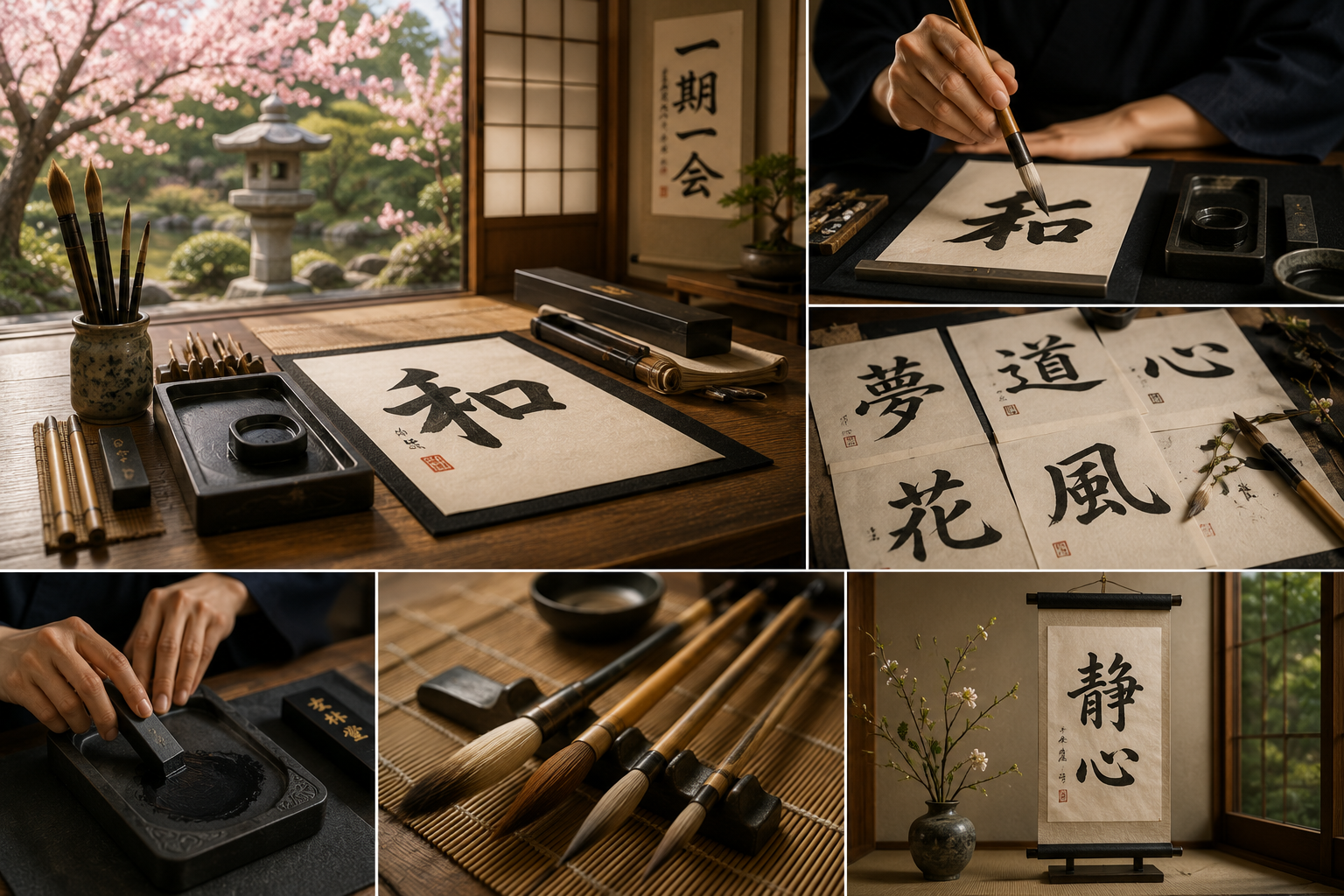
- Techniques and Tools: The fundamental tools used in Shodo include a brush (fude), an inkstone (suzuri), and ink (sumi). The brush is traditionally made with natural animal hair, allowing the strokes to appear fluid, expressive, and elegant. The inkstone and ink determine the color, texture, and intensity of the writing.
- Writing Systems: Shodo may incorporate all three Japanese writing systems: kanji (Chinese characters), hiragana, and katakana. Each writing system requires different aesthetic sensibilities and technical approaches.
- The History and Origins of Shodo
The origins of Shodo can be traced back to Chinese calligraphy. This art form came to Japan through the influence of Chinese culture. The development of Shodo progressed alongside artistic and cultural changes within Japan.
- Early Period: In its early stages, Shodo was strongly influenced by Chinese calligraphy. Japanese artists studied Chinese styles and gradually developed their own distinctive approaches, eventually shaping the art of Shodo.
- Development: During the Edo period (1603–1868), Shodo developed further and became increasingly popular. Artists of this era preserved traditional techniques while also adopting innovative approaches and creating new stylistic expressions.
- Techniques and Characteristics of Shodo
The techniques of Shodo are closely connected to brush control and the application of ink. Some of its fundamental characteristics include the following:
- Brushwork: In Shodo, the brush is the most important tool for determining the flow and aesthetic quality of the writing. Brush movements influence the shape of the characters and the overall appearance of the work. The movements created with the brush give the writing its dynamic, graceful, and expressive quality.
- Ink and Paper: Ink determines the color and depth of the writing. In Shodo, ink is traditionally prepared by grinding a solid ink stick on an inkstone with water. The paper also affects how the ink is absorbed and how the final work appears. Special papers designed specifically for calligraphy are commonly used.
- Composition and Aesthetics: The aesthetics of Shodo depend on the balanced placement of characters and the harmony of the overall composition. The form and position of every individual character are considered as part of a unified artistic whole.
- The Role of Shodo in the Modern World
Today, Shodo holds an important place in both traditional and contemporary art. This art form is preserved as an essential part of Japanese culture while also gaining recognition internationally.
- Art and Education: Shodo is taught in art schools and universities throughout Japan. It is also introduced to art enthusiasts through workshops, exhibitions, and cultural events. Modern Shodo artists preserve traditional methods while developing innovative and contemporary interpretations.
- Cultural Influence: As a part of Japanese culture, Shodo is used during special occasions, festivals, ceremonies, and formal events in Japan. Its aesthetic values are also regarded as a reflection of Japanese art, philosophy, and cultural identity.
Conclusion
Shodo is an elegant and meaningful example of Japanese brush calligraphy. This traditional art form reflects Japanese aesthetics through characters and artistic patterns created with brush and ink. Its history, techniques, and modern role highlight its cultural and artistic importance.
For anyone interested in Japanese culture, exploring the refined and profound world of Shodo offers an opportunity to gain a deeper understanding of Japanese aesthetics and artistic traditions.