



How Did Japan’s Economy Become One of the Largest in the World?
Japan is now one of the world’s leading countries in the automotive, technology, robotics, and electronics industries. However, reaching this level of economic strength was the result of a long and challenging process.
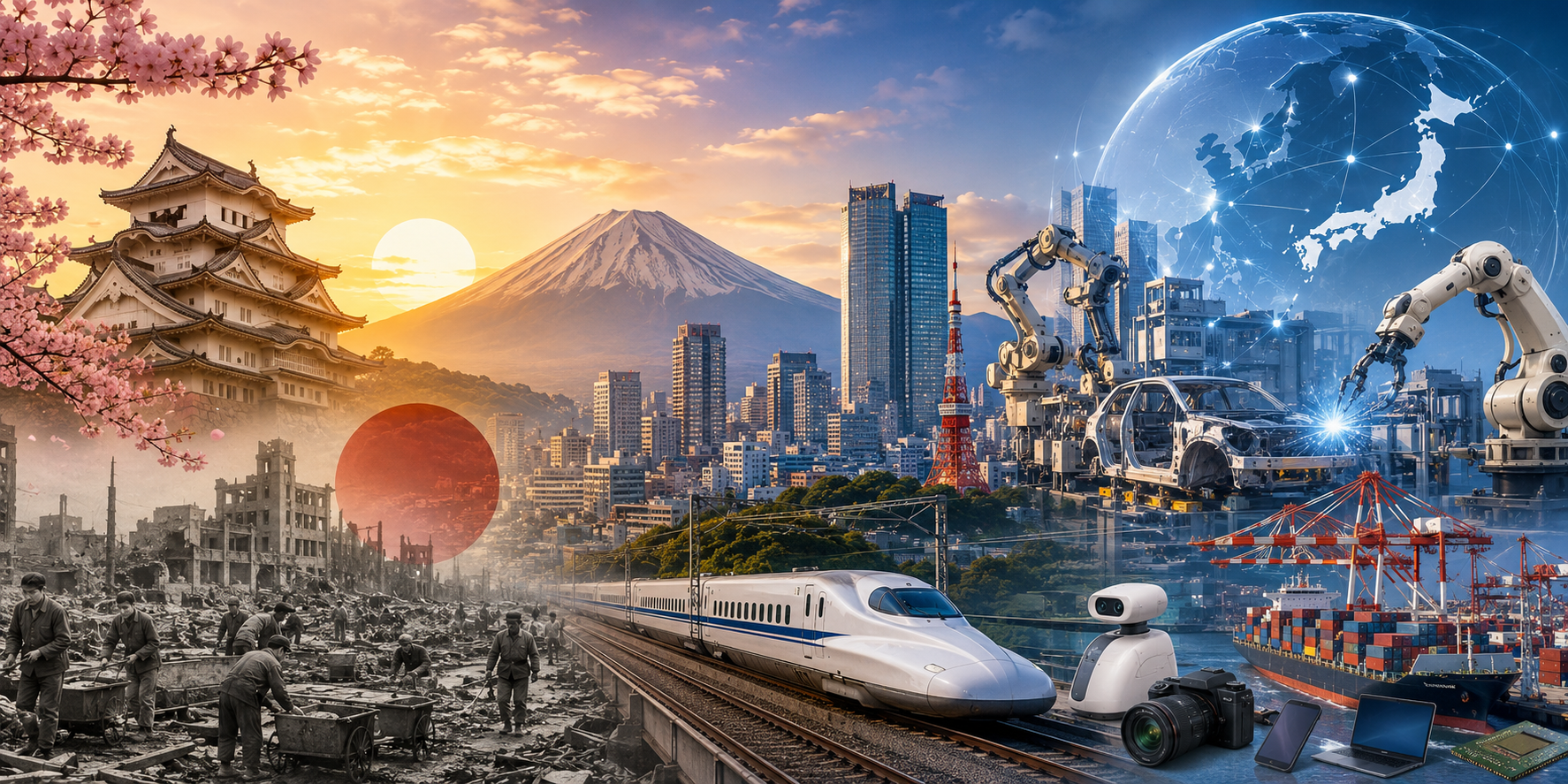
Following the Second World War, Japan’s cities, factories, and transportation infrastructure had been severely damaged. Despite this, the country rebuilt itself within just a few decades and became one of the largest economies in the world.
Postwar Reconstruction
After 1945, Japan implemented major reforms in education, agriculture, industry, and the economy. Production was restarted, infrastructure investment increased, and the country strengthened its connections with the international economy.
The Korean War, which began in 1950, also accelerated Japan’s economic recovery. Japanese factories started producing materials and providing services for American forces. This increased production, employment, and exports.
The Japanese Economic Miracle
From the mid 1950s to the early 1970s, Japan experienced a period of extremely rapid economic growth. This era became known as the “Japanese economic miracle.”
Several key factors contributed to this success:
Japanese companies did not simply use foreign technologies; they transformed them into more durable, higher quality, and more practical products. The philosophy of kaizen, meaning continuous improvement, also became an important part of Japan’s manufacturing system.
The Global Success of Japanese Brands
Companies such as Toyota, Honda, Sony, Panasonic, Canon, and Nikon gradually gained strong positions in global markets. Japanese products became associated with quality, durability, and engineering excellence.
During the same period, infrastructure investments in high speed railways, ports, highways, and energy facilities supported economic growth.
Crises and Economic Slowdown
The 1973 oil crisis negatively affected Japan, which imported a large share of its energy resources. In response, the country shifted toward automotive and electronics industries that consumed less energy and generated higher added value.
In the 1980s, a major economic bubble emerged as stock market and real estate prices rose excessively. When this bubble burst in the early 1990s, it marked the beginning of a prolonged period of low economic growth.
Why Is Japan Still Strong?
Although Japan’s economic growth has slowed compared with previous decades, the country remains highly influential in automobiles, robotics, machinery, electronic components, and advanced technology.
Today, the main challenges facing the Japanese economy are an aging population, a low birth rate, and labor shortages. In response, investments in robotics, artificial intelligence, and automation are becoming increasingly important as potential solutions to these challenges.
Japan’s economic rise cannot be attributed to a single reason. Education, technology, high quality manufacturing, infrastructure, a culture of saving, and long term planning all formed the foundation of this success.
Despite having limited natural resources, Japan succeeded in becoming one of the world’s most powerful economies by investing in its people and in technology.