
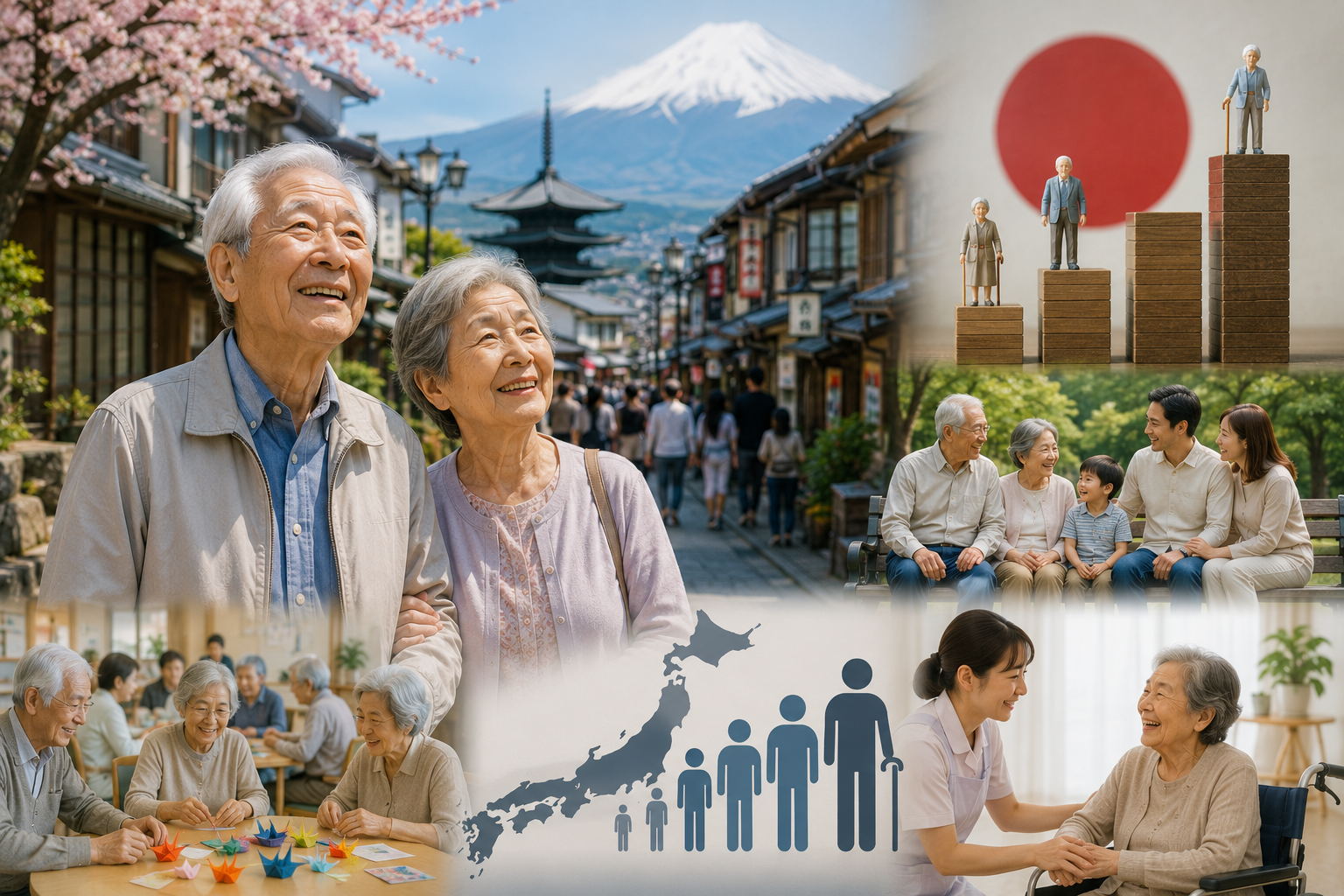
Japan’s Aging Population: One of the World’s Highest Elderly Population Rates
Japan is a country known worldwide for its high proportion of elderly people. Approximately 23% of the country’s total population is aged 65 or older. This rate places Japan among the countries with the highest elderly population ratios in the world. Such a high proportion of older adults has a significant impact on Japan’s social, economic, and cultural structure.
Increase in the Elderly Population and Its Causes
There are several main reasons for the increase in Japan’s elderly population:
- Long Life Expectancy: Japan is one of the countries with the highest life expectancy in the world. Healthcare services, dietary habits, and living standards are among the factors that support this long lifespan.
- Low Birth Rate: Japan’s birth rate has declined in recent years. The decrease in the number of children being born has led to an increase in the proportion of elderly people within the total population.
- Advanced Healthcare Services: Japan’s well developed healthcare system and high level of health awareness help older adults remain healthy for a longer period of time.
Social and Economic Effects of the Aging Population
The high proportion of elderly people in Japan has various social and economic effects:
- Social Security and Pension Systems:
The increase in the elderly population puts pressure on social security systems and pension funds. The government has been implementing various reforms to ensure financial sustainability in areas such as pensions and healthcare services. - Workforce and Economy:
The growth of the elderly population can lead to a shrinking workforce. This may affect economic growth and create a need for older individuals to remain in the workforce for a longer period of time in order to address labor shortages. - Healthcare and Care Services:
The increase in the elderly population raises demand for healthcare and elderly care services. Expansion and improvement are needed in areas such as elderly care facilities and home healthcare services. - Cultural Effects:
Japanese culture places great respect on older adults. Family structures and society are shaped by traditional values that aim to improve the quality of life of elderly individuals.
Policies and Practices for the Elderly in Japan
Japan has developed various policies and practices to support its elderly population:
- Elderly Care Services:
The government provides various social services and care facilities to support elderly care. These facilities help older adults with their daily lives and monitor their health conditions. - Pension Reforms:
Japan has been reforming its pension system by raising the retirement age and working to make the social security system more sustainable. - Community Support Programs:
Various programs and activities are organized to encourage elderly individuals to participate in social life. These programs help older adults maintain social connections and lead active lives.
Future Trends and Challenges
The high proportion of elderly people in Japan may continue to create various challenges in the future:
- Demographic Imbalance:
The increase in the elderly population and the decline in the younger population may lead to demographic imbalances. This situation can affect both social structures and economic stability. - Development and Technology:
Japan continues to develop technological innovations and advanced care systems to support its elderly population. Smart home technologies and robotic assistance help older adults live more independently.
Japan’s elderly population ratio is an important factor shaping the country’s social and economic dynamics. The continued increase in the elderly population requires both the government and society to develop various strategies and expand services for older adults. Japan’s experience in this field offers valuable lessons for other countries in managing aging populations.