



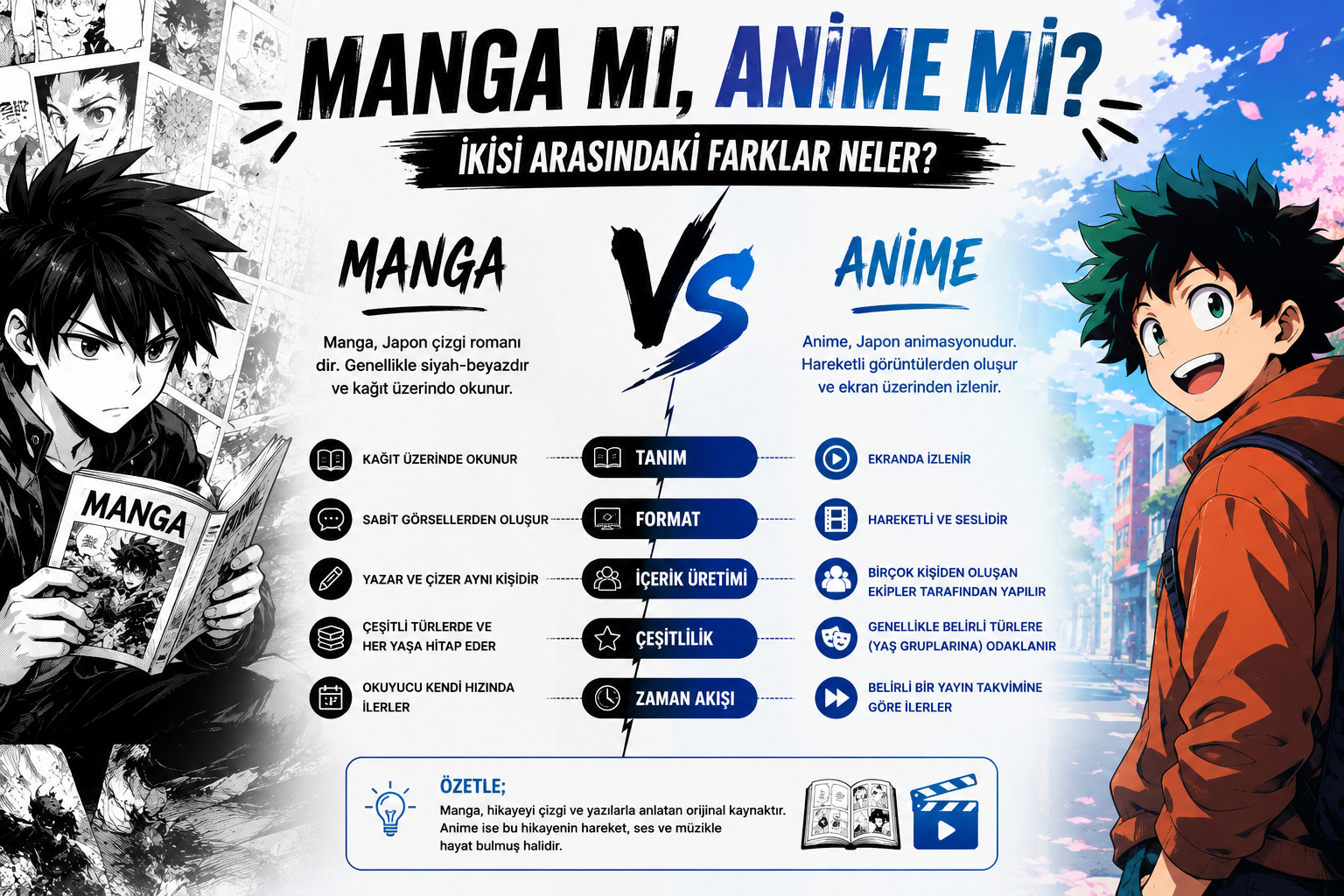
For those who follow Japanese pop culture, manga and anime may seem almost synonymous. However, even when these two formats share the same stories, they offer very different experiences to readers and viewers. So, what are the main differences between manga and anime? Which one is better suited for you? Let’s take a closer look at both.
Manga is a comic book format that originated in Japan and has spread across the world. It usually consists of black and white illustrations and, unlike Western comics, is read from right to left. With a history that goes back more than a century, manga culture now reaches millions of readers around the globe.
One of the things that makes manga special is the depth of its storytelling. Characters’ inner worlds, past experiences, and motivations are often explored in much greater detail. This strengthens the connection between the reader and the story.
Anime is the general term for animated productions made in Japan. It appears in various formats, including television series, films, and OVAs, or original video animations. With colorful visuals, dynamic scenes, professional voice acting, and impressive music, anime offers viewers a rich audiovisual experience.
Many popular anime series are actually adaptations of manga. However, over time, productions based on completely original stories have also become increasingly common.
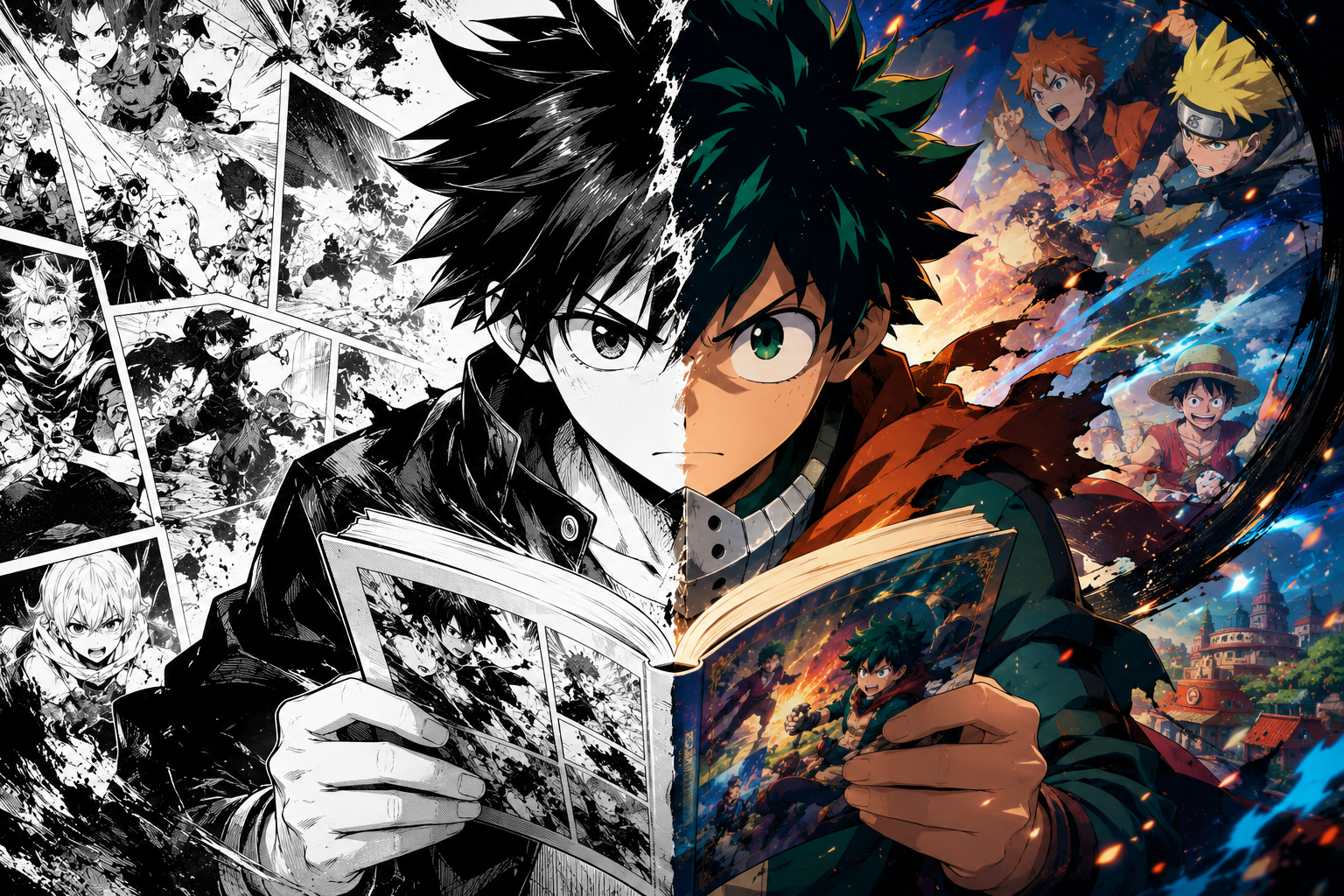
Manga gives readers plenty of room to use their imagination through black and white illustrations. Anime, on the other hand, fills that space with color, movement, and sound. Both have a strong artistic language, but manga uses a static form of storytelling, while anime adopts a more dynamic one.
Manga series can explore stories in detail without the same time restrictions. In anime adaptations, however, some subplots may be shortened or removed entirely due to episode limits and broadcast schedules. For this reason, if you enjoyed an anime, reading the manga often offers a much richer experience.
When reading manga, you control the pace yourself. You can stay on a single panel for as long as you like. In anime, however, the pace is determined for you. Scene transitions, music, and sound effects guide the viewing experience.
Manga is mainly the work of a writer and illustrator, so it can be produced at a relatively lower cost. Anime, on the other hand, involves a production process that requires large studios, teams, and significant budgets.
Many anime series are based on manga or light novels. However, during the adaptation process, new content may be added, scenes may be rearranged, or the story may end in a different direction. This also leads to concepts such as “anime original content” and “filler episodes.”
Both manga and anime are reflections of Japan’s storytelling tradition, so which one is “better” depends entirely on personal preference.