



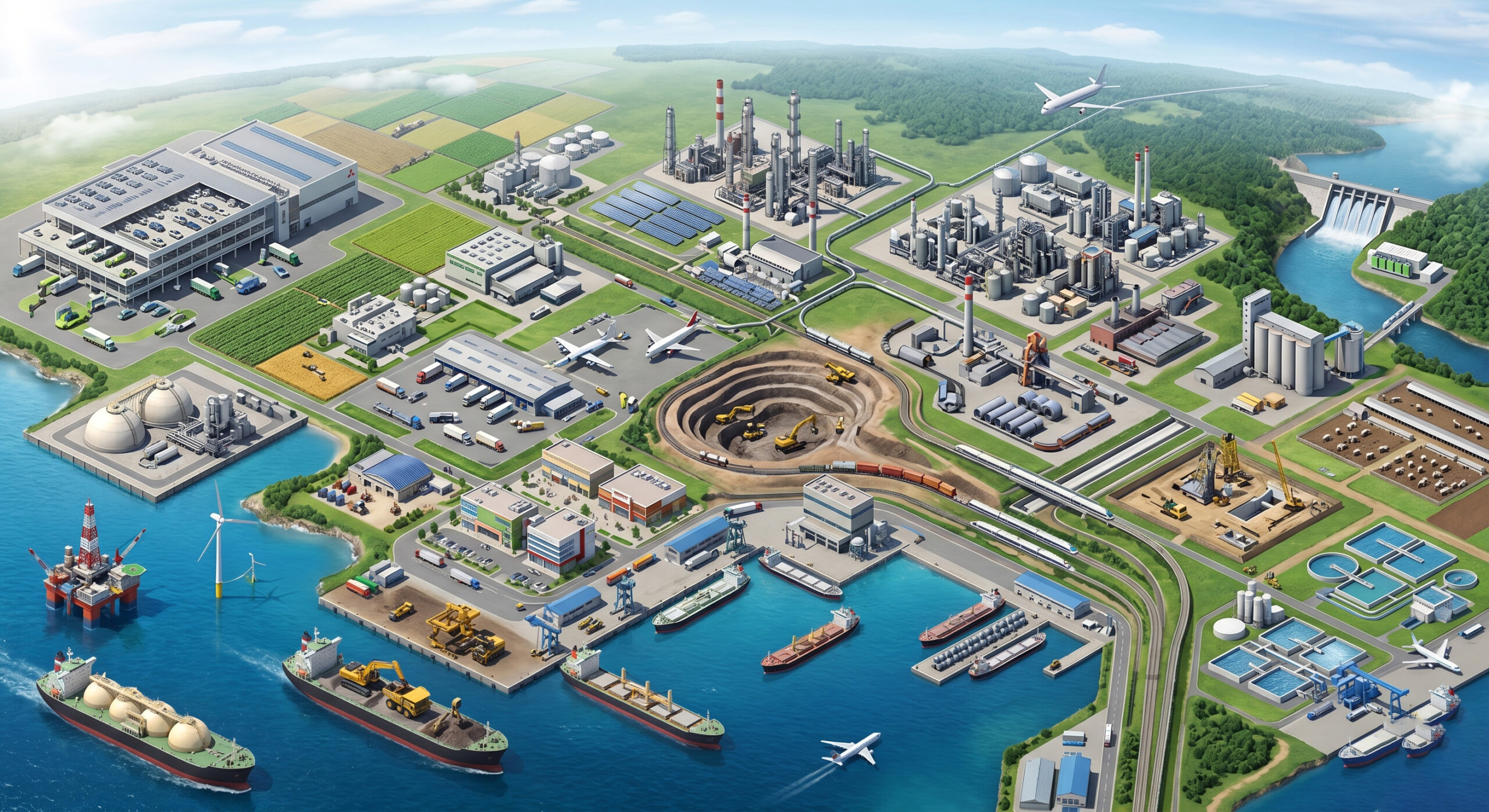
Japan’s Economic Giants: Sogo Shosha and the Architects of Global Trade
Beyond the high technology and automotive giants that come to mind when Japan is mentioned, there are the Sogo Shosha (General Trading Companies), which are the invisible yet most powerful engines of the country’s economy. These entities are not merely intermediaries engaged in trade; they are investment holdings that manage a vast ecosystem ranging from logistics to finance, and from energy production to food supply.
In this article, we take a closer look at Japan’s five largest trading giants that shape the course of global markets and examine their macroeconomic strategies.
| No | Company Name | Year Established | Headquarters | Core Business Areas | Strategic Focus |
| 1 | Mitsubishi Corporation | 1950 | Tokyo | Energy, Metals, Machinery, Chemicals, Food, Finance | Value chain management and strategic raw material investments |
| 2 | Itochu Corporation | 1858 | Tokyo | Textiles, Food, Automotive, Technology, Healthcare | Consumer oriented markets and retail networks |
| 3 | Mitsui & Co., Ltd. | 1947 | Tokyo | Energy, Metals, Mobility, Chemicals, Food, Healthcare | Resource management, global logistics, and healthcare systems |
| 4 | Sumitomo Corporation | 1919 | Tokyo | Metals, Automotive, Chemicals, Agriculture, Construction, Media | Integrated logistics solutions and large-scale infrastructure projects |
| 5 | Marubeni Corporation | 1858 | Tokyo | Energy, Metals, Automotive, Chemicals, Food, Agriculture | Global commodity trade and international agriculture/grain networks |
The success of Japanese trading giants comes from their ability to diversify risk. Here are their main focus areas:
These companies are not just figures within Japan’s GDP; they are also part of the country’s “soft power.”