
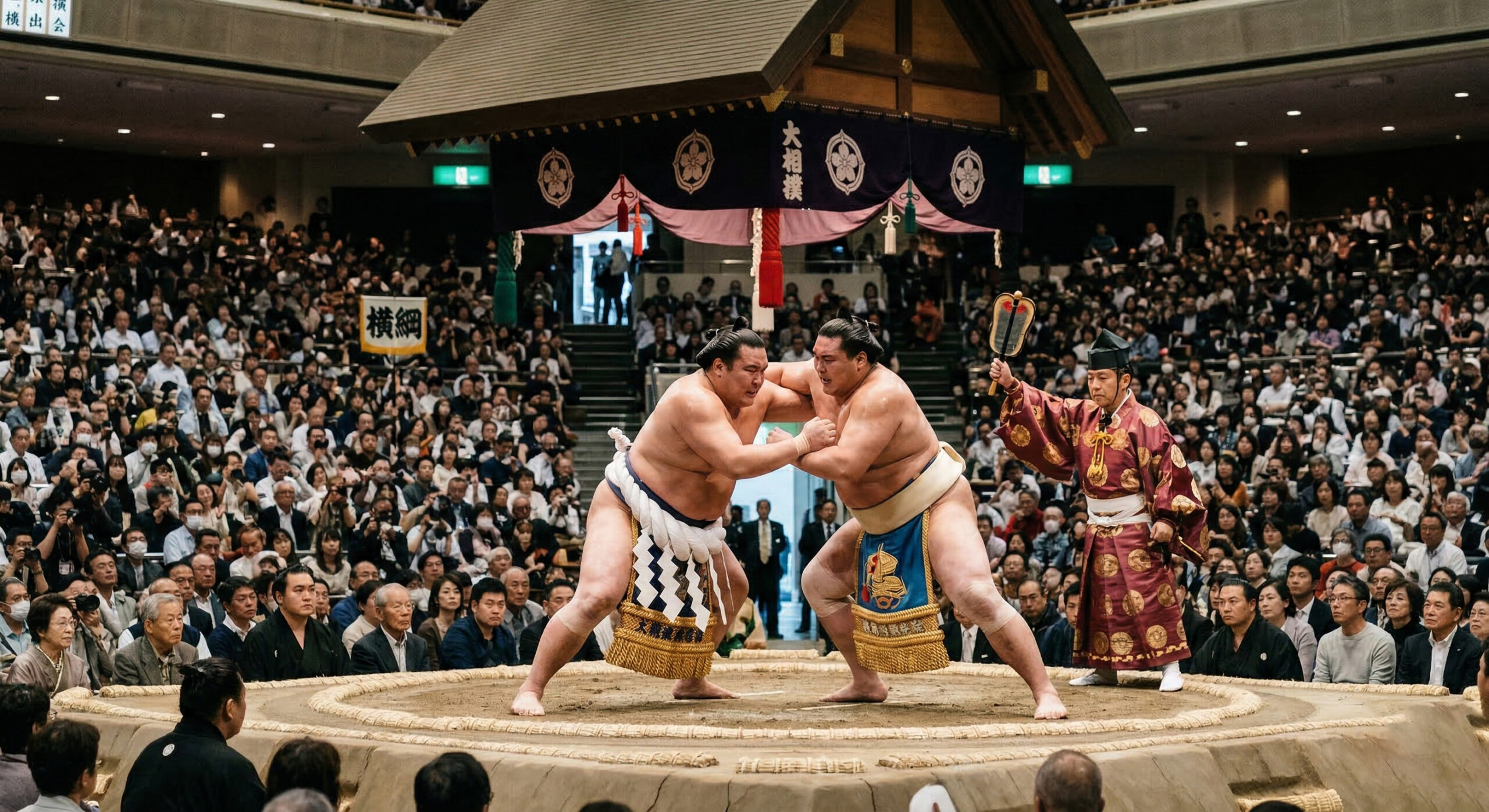
Sumo: More Than a Wrestling Sport, Japan’s Living Legend
In Japan, the word “Sumo” evokes not only massive wrestlers but also incense filled temples and ancient rituals. With roots in shamanistic ceremonies, Sumo is Japan’s most prestigious traditional sport, where physical strength meets spiritual discipline. Here is the remarkable journey of Sumo, from ancient traditions to modern arenas.
- A Tradition Beyond Time: History
The story of Sumo dates back to the founding myths of Japan.
- Ancient Rituals (23 BCE – Heian Period)
Sumo originally emerged as a religious ceremony offered to the gods (Kami) to pray for a successful harvest. Early matches were held in the sacred atmosphere of shrine grounds. - From the Imperial Court to the Public (Edo Period)
During the Edo period, Sumo evolved into both a performance art and a professional sport. The ranking system, rules, and the iconic chonmage hairstyle seen today were standardized during this era.
- Sacred Rules and Rituals on the Dohyo
Sumo is one of the world’s shortest sporting events in terms of match duration, yet it involves an intense ritualistic preparation.
- Basic Objective: In the circular clay ring called the dohyo, covered with sand, the goal is to push the opponent out of the ring or force any body part other than the soles of their feet to touch the ground.
- Mawashi and Attire: The silk belt worn by wrestlers, known as rikishi, is called a mawashi. This belt is the only equipment used to grab, lift, and throw the opponent.
- The Salt Throwing Ritual: Before the match begins, wrestlers throw salt into the ring to purify the space and ward off evil spirits. This ritual clearly reflects the sport’s connection with Shinto beliefs.
- Ranks and the Title of Yokozuna
The world of Sumo is governed by a strict hierarchy. A wrestler’s lifestyle, salary, and prestige depend entirely on their rank.
- Yokozuna: This is the highest rank a sumo wrestler can achieve. A Yokozuna must demonstrate not only physical strength but also impeccable character. The title is held for life and is never revoked, though a Yokozuna whose performance declines is expected to retire with dignity.
- Basho (Tournaments): Professional Sumo hosts six major tournaments each year, each lasting 15 days. A wrestler’s promotion or demotion depends on their win loss record in these tournaments.
- Sumo in the Modern World: A Global Interest
Despite its strong attachment to tradition, Sumo has opened its doors to the world.
- International Success: In recent decades, wrestlers from countries such as Mongolia, Bulgaria, and Georgia have climbed to the highest ranks, giving Sumo a truly global dimension.
- Discipline and Lifestyle: The life of a sumo wrestler revolves around training stables known as heya. Early morning training sessions, strict dietary routines such as chanko nabe, and traditional clothing requirements make Sumo more of a lifestyle than just a sport.
The Endurance of a Cultural Heritage
Sumo is one of the rare traditions that continues to thrive in the technological age without abandoning its roots. Every “Tachi-ai” (the initial clash of wrestlers), represents a tribute to Japan’s past. Understanding this fascinating world means discovering the balance of patience, respect, and strength at the core of the Japanese spirit.