
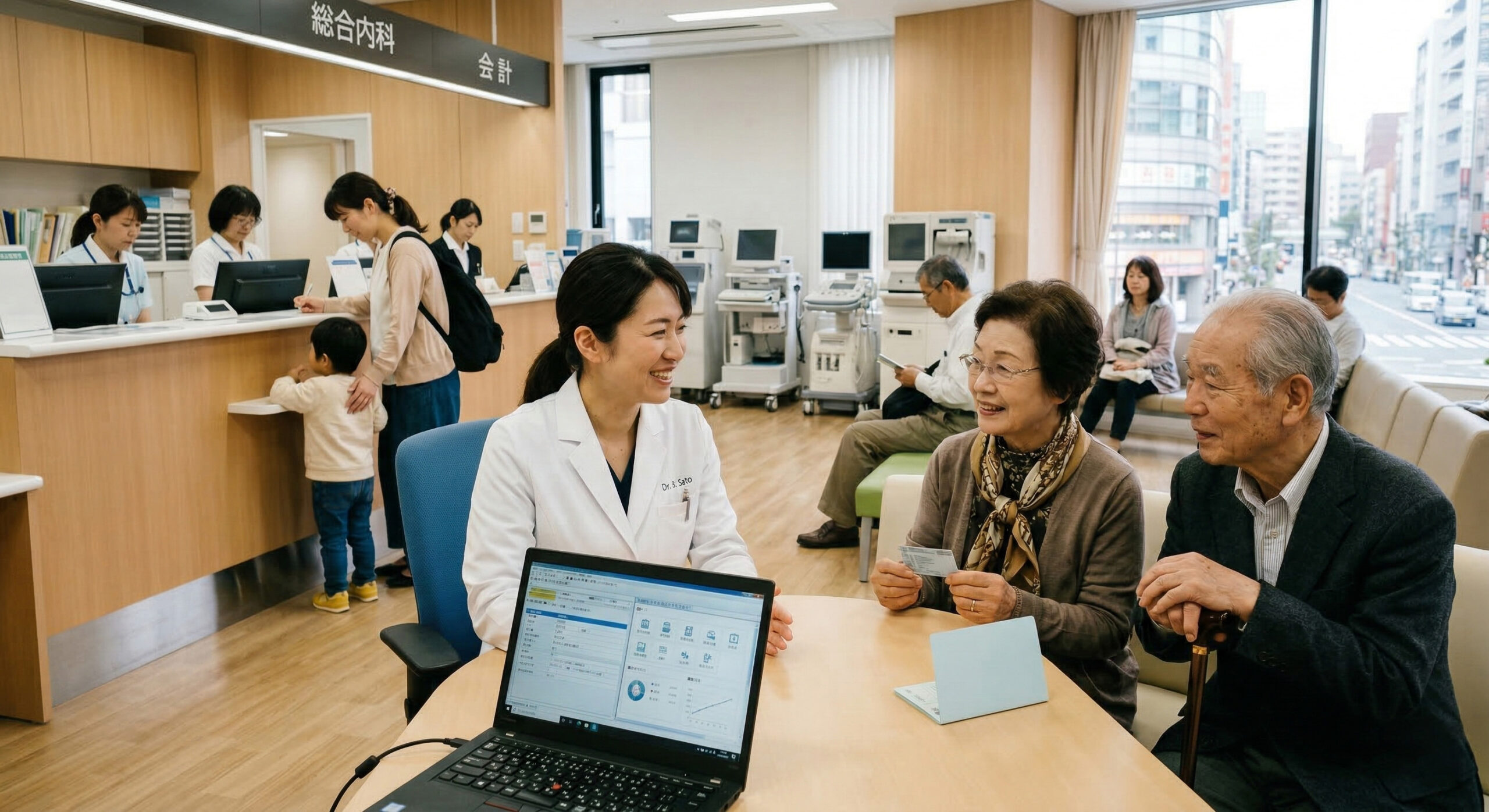
Japan’s Health Policy: The Secret Behind Universal Coverage and Long Life
Japan owes its success in health indicators not only to advanced technology but also to the Universal Health Insurance system that has been carefully implemented since 1961. Guided by the vision of “healthcare for everyone, everywhere,” this policy has placed Japan among the leading nations in global health standards.
- The Foundation of the System: Universal Coverage
The strongest aspect of Japan’s healthcare system is that it protects everyone living in the country regardless of their social status.
- Employee Based Insurance
Company employees and public servants are covered by workplace based insurance systems where premiums are deducted directly from their salaries. - National Health Insurance
Self employed individuals, retirees, and unemployed citizens receive healthcare services through regional insurance programs administered by municipalities. - Government Support
For low income citizens, insurance premiums are subsidized by the government to ensure that no one is excluded from the system.
- Cost Sharing and Accessibility
In Japan, healthcare services are both high quality and structured in a way that prevents financial hardship for patients.
- Co-payment System
As a general rule, patients pay 30 percent of treatment costs out of pocket, while the remaining 70 percent is covered by insurance. - Elderly Friendly Policies
As people age, this contribution rate decreases to around 10 to 20 percent, making healthcare more accessible for elderly citizens. - Price Regulation
The government determines the prices of medical procedures and pharmaceuticals nationwide, maintaining strict control over rising healthcare costs.
- Preventive Healthcare and Early Detection Culture
Japanese healthcare policy focuses not only on treating diseases but also on preventing them before they emerge.
- Mandatory Health Screenings
Annual routine health examinations in schools and workplaces are a legal requirement. - Ningen Dock
This comprehensive and detailed check-up culture, unique to Japan, enables the early detection of diseases such as cancer and heart conditions. - Nutrition Education
Health policy begins in classrooms. Balanced nutrition education known as Shokuiku is actively promoted by the state.
- Modern Challenges: Aging Society and Sustainability
Although the system is often considered exemplary, Japan faces a major demographic challenge: a süper aging society.
- Population Balance
As the young population declines, it becomes increasingly difficult for their insurance contributions to support the growing healthcare costs of the elderly. - Rural Access
Young doctors often move to large cities, increasing the shortage of healthcare professionals in rural areas. - Technological Solutions
To address these challenges, Japan is making major investments in telemedicine, robotic caregivers, and AI-assisted diagnostic systems.
A System Preparing for the Future
Despite economic pressures and the challenges of an aging population, Japan’s healthcare policy remains one of the rare models capable of maintaining universal coverage without compromising quality. The combination of government oversight and a strong sense of social responsibility has turned Japan into a global laboratory for “healthy aging.”